Rivets, Canvas, and a Desperate Letter: The Accidental Birth of America's Favorite Pants
Rivets, Canvas, and a Desperate Letter: The Accidental Birth of America's Favorite Pants
Pull on a pair of jeans this morning and you probably didn't think twice about it. Neither did the roughly 450 million other Americans who own at least one pair. Denim is so woven into everyday life — pun fully intended — that it barely registers as a choice anymore. It's just what you wear. But the story of how that happened is stranger and more accidental than you'd ever guess.
It starts not with a fashion designer, not with a trend, but with a Nevada tailor who was sick of customers complaining that their pants kept ripping.
The Problem Nobody Thought Was Important
By the early 1870s, California's Gold Rush had cooled considerably, but the West was still booming with miners, ranchers, and laborers who needed clothes that could survive brutal physical work. Jacob Davis was a Latvian immigrant tailor working out of Reno, Nevada, and one of his regular customers — a large man whose occupation required serious strain on his clothing — kept coming back with the same complaint: the pockets tore away from the fabric almost immediately.
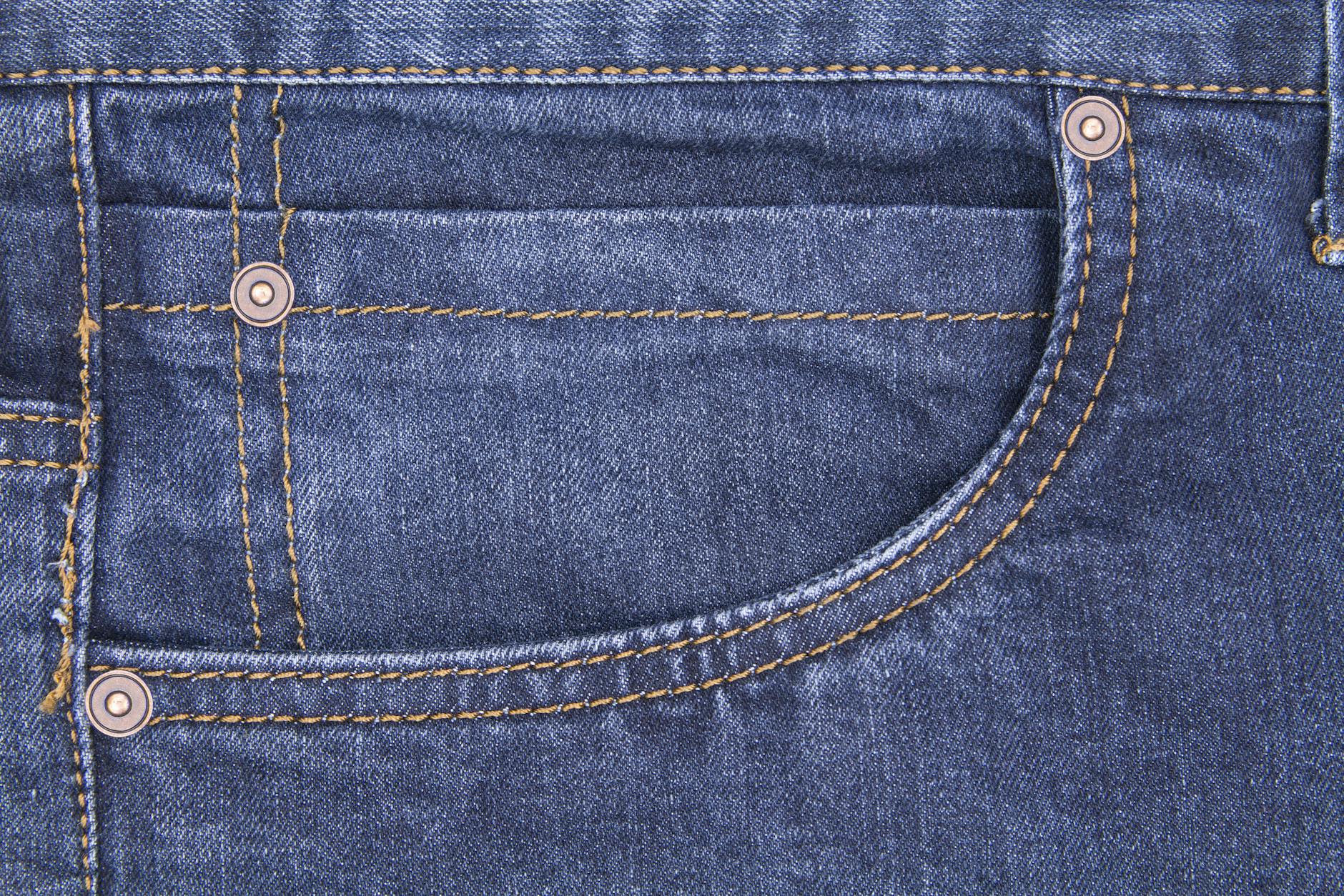
Davis had a practical, almost offhand solution. He'd been using metal rivets to reinforce horse blankets and other heavy goods, and one day he simply applied the same logic to the stress points on a pair of work pants — the corners of the pockets, the base of the fly. It worked immediately. The pants held. Word spread fast among working men who needed clothing that could actually keep up with them.
Davis started selling riveted trousers as fast as he could make them, but he had a problem: he couldn't afford to patent the idea himself. So in 1872, he did something that would quietly change American culture forever — he wrote a letter to his dry goods supplier in San Francisco, a businessman named Levi Strauss, and proposed splitting the patent costs in exchange for a partnership.
The Businessman Who Said Yes
Levi Strauss had arrived in San Francisco in 1853, initially hoping to sell canvas and fabric to the flood of prospectors pouring into California. He'd built a successful wholesale business supplying goods to stores across the West, and Jacob Davis happened to be one of his customers. When that letter landed on his desk, Strauss recognized the opportunity almost immediately.
On May 20, 1873, the United States Patent Office granted patent number 139,121 to Jacob Davis and Levi Strauss & Company for the process of using metal rivets to reinforce work pants. That date is now considered the official birthday of blue jeans — though at the time, nobody called them that, and nobody imagined they were doing anything more significant than solving a very practical problem for very practical people.
The original fabric wasn't even denim. Early versions were made from brown canvas duck cloth. Denim — a sturdy cotton twill originally woven in Nîmes, France (hence de Nîmes, or denim) — came later and proved more popular, particularly once it was dyed with indigo to produce that now-iconic blue.
From Work Wear to Cultural Symbol
For the first several decades of their existence, jeans were purely functional. They were work clothes — worn by miners, cowboys, farmers, and railroad workers. The middle and upper classes wanted nothing to do with them. Department stores didn't stock them. They were associated with labor, with sweat, with the kind of life that required riveted pockets.
Then something shifted. After World War II, returning soldiers who had grown used to practical, durable clothing started reaching for jeans in their civilian lives. Hollywood picked up the thread — literally. Marlon Brando in The Wild One in 1953, James Dean in Rebel Without a Cause in 1955. Suddenly, denim wasn't just workwear. It was attitude. It was youth. It was a quiet rejection of the buttoned-up postwar conformity that a generation of young Americans was already straining against.
By the 1960s, jeans had become the unofficial uniform of the counterculture. By the 1980s, designers like Calvin Klein and Gloria Vanderbilt had turned them into luxury items. By the 1990s, every demographic in America owned a pair — or several. And today, denim has somehow managed to remain simultaneously blue-collar and high fashion, rebellious and mainstream, timeless and constantly reinvented.
Why Denim Still Means Something
There's a reason fashion historians keep coming back to jeans when they talk about democratic clothing. A pair of Levi's looks essentially the same whether you paid $40 for them at Target or $400 at a boutique. They don't signal class in the way that most clothing does. A CEO and a construction worker can both reach for the same garment on a Saturday morning without either of them feeling out of place.
That egalitarian quality wasn't planned. It was accidental — a byproduct of a garment that started at the bottom of the economic ladder and climbed every rung without losing its original character. Jacob Davis just wanted to stop a miner's pockets from tearing. Levi Strauss just wanted to move inventory.
Neither of them could have imagined that a letter about canvas pants and copper rivets would eventually produce the most universally worn garment in American history. But that's how it usually goes with the things that really stick around — they don't start as grand ideas. They start as solutions to small, ordinary problems that turn out to be bigger than anyone realized.