One Architect's Wild Idea in Minnesota Changed Where Americans Spend Their Saturdays
One Architect's Wild Idea in Minnesota Changed Where Americans Spend Their Saturdays
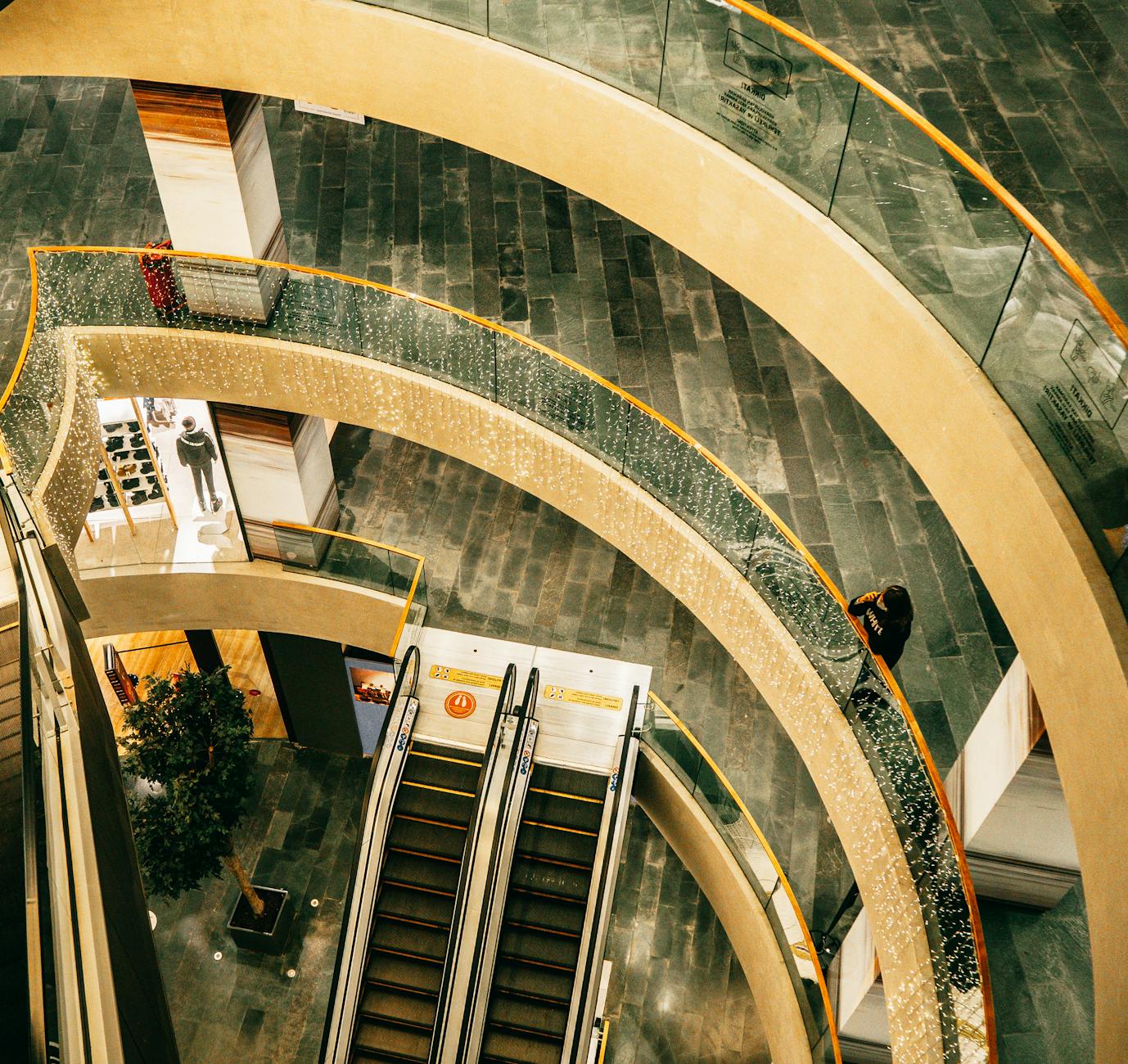
Somewhere in America right now, a teenager is hanging out in a mall food court with no particular intention of buying anything. Somewhere else, a couple is doing laps around an enclosed shopping center for exercise because the parking lot is icy. A few stores down from a shuttered Sears anchor, a Spirit Halloween has moved in for the season. This is the American mall in its current form — part retail, part social space, part ruin, part punchline.
It all started with a man named Victor Gruen, a shopping center in Edina, Minnesota, and an idea that was genuinely radical for its time.
The Man Who Wanted to Build a Town
Victor Gruen grew up in Vienna, where city life meant walkable streets, covered arcades, and public squares where people gathered not just to shop but to exist together. When he emigrated to the United States in 1938, fleeing Nazi-occupied Austria, he arrived in a country that was doing something completely different with its geography. American cities were spreading outward. Suburbs were swallowing farmland. The car was becoming the organizing principle of daily life, and the places people lived were increasingly built around it.
Gruen found this alarming. He was an architect with strong opinions about what made communities function, and he thought the American suburb was getting it badly wrong. Tract housing without centers. Residential streets without destinations. People driving everywhere and gathering nowhere.
His solution was audacious: take the European covered shopping arcade, scale it up dramatically, surround it with parking, and plant it in the middle of the American suburb. Give people a place to go. A place with shops, yes, but also with fountains and greenery and benches and public art — a genuine gathering space that happened to also have retail. He called it a shopping center, but what he was really trying to build was a replacement for the town square that the American suburb had never bothered to include.
Southdale Opens, and Everything Changes
Southdale Center opened in Edina, Minnesota, on October 8, 1956. It was not the first shopping center in America — strip malls and early outdoor shopping plazas had been around since the 1920s — but it was the first fully enclosed, climate-controlled, two-level shopping mall. In Minnesota, where winter is a serious logistical problem, the ability to move between dozens of stores without going outside was not a small thing.
The opening was a genuine cultural event. Time magazine covered it. Architectural journals ran features. Retailers from across the country sent representatives to look at what Gruen had built. What they saw was a 800,000-square-foot space anchored by two major department stores — Dayton's and Donaldson's — connected by interior corridors lined with smaller shops, all of it climate controlled, all of it under one roof. There was a goldfish pond. There were caged birds. There was a sidewalk café. Gruen wanted people to linger.
And people did linger. Southdale was immediately and overwhelmingly popular. Families drove out from Minneapolis to spend entire afternoons there. It wasn't just shopping — it was an outing. An event. Exactly what Gruen had hoped for.
Developers watched the crowds and drew the obvious conclusion. Within a decade, enclosed malls were being built across the country, from the Sun Belt to New England. By the 1970s, the regional shopping mall was a fixture of American suburban life. By the 1980s, there were more than 1,500 of them. The format Gruen had invented in Edina had become as American as the interstate highway that typically ran nearby.
What Got Lost in Translation
Here's where the story gets complicated. Gruen's original vision for Southdale included far more than the mall itself. His full plan for the Edina site called for housing, offices, schools, parks, and medical facilities surrounding the shopping center — a genuine mixed-use community built around a pedestrian core. The mall was supposed to be the heart of a new kind of neighborhood, not a standalone destination surrounded by parking.
The developers stripped all of that away. They built the mall. They built the parking lots. They left everything else on the drawing board. What remained was a retail box — impressive, innovative, wildly successful — but missing the civic connective tissue that Gruen had considered essential.
As the mall format spread across the country, it took the stripped-down version with it. Thousands of enclosed malls were built on the Southdale model, but almost none of them incorporated the surrounding community elements Gruen had envisioned. They were retail destinations, period. You drove to them, you shopped, you drove home. The town square he'd been trying to create was replaced by something that looked like a town square from the inside but functioned like a private commercial space.
Gruen eventually recognized what had happened. By the 1970s, he was publicly criticizing the mall industry he had helped create, calling the proliferation of car-dependent shopping centers an environmental and social catastrophe. He returned to Vienna, reportedly disgusted with what his idea had become.
The Mall as Mirror
The American mall's rise and partial fall tells a story about how the country builds community — or tries to, and sometimes fails. At its peak in the 1980s and early 90s, the mall was genuinely central to American social life, especially for teenagers. It was where you went when you had nowhere else to go. It was heated in winter, air-conditioned in summer, and largely free to exist in as long as you bought something occasionally.
But the same car-dependent, suburb-first logic that made malls possible also made them vulnerable. When online retail started pulling shoppers away, malls had no fallback. They weren't community institutions with deep roots — they were commercial spaces that had been performing the role of community institutions. When the retail economics shifted, the performance stopped.
Today, Southdale Center itself is still operating in Edina, though it looks quite different from what Gruen opened in 1956. Some of the stores are gone. Some have been replaced. The goldfish pond didn't survive the decades. But the basic structure — two levels, enclosed corridors, anchor stores at either end — is still recognizable as the template.
Victor Gruen wanted to give the American suburb a soul. What he actually gave it was a Saturday afternoon destination. That's a meaningful thing, even if it wasn't quite the thing he had in mind.