The Little Striped Sticker That Saved the American Supermarket
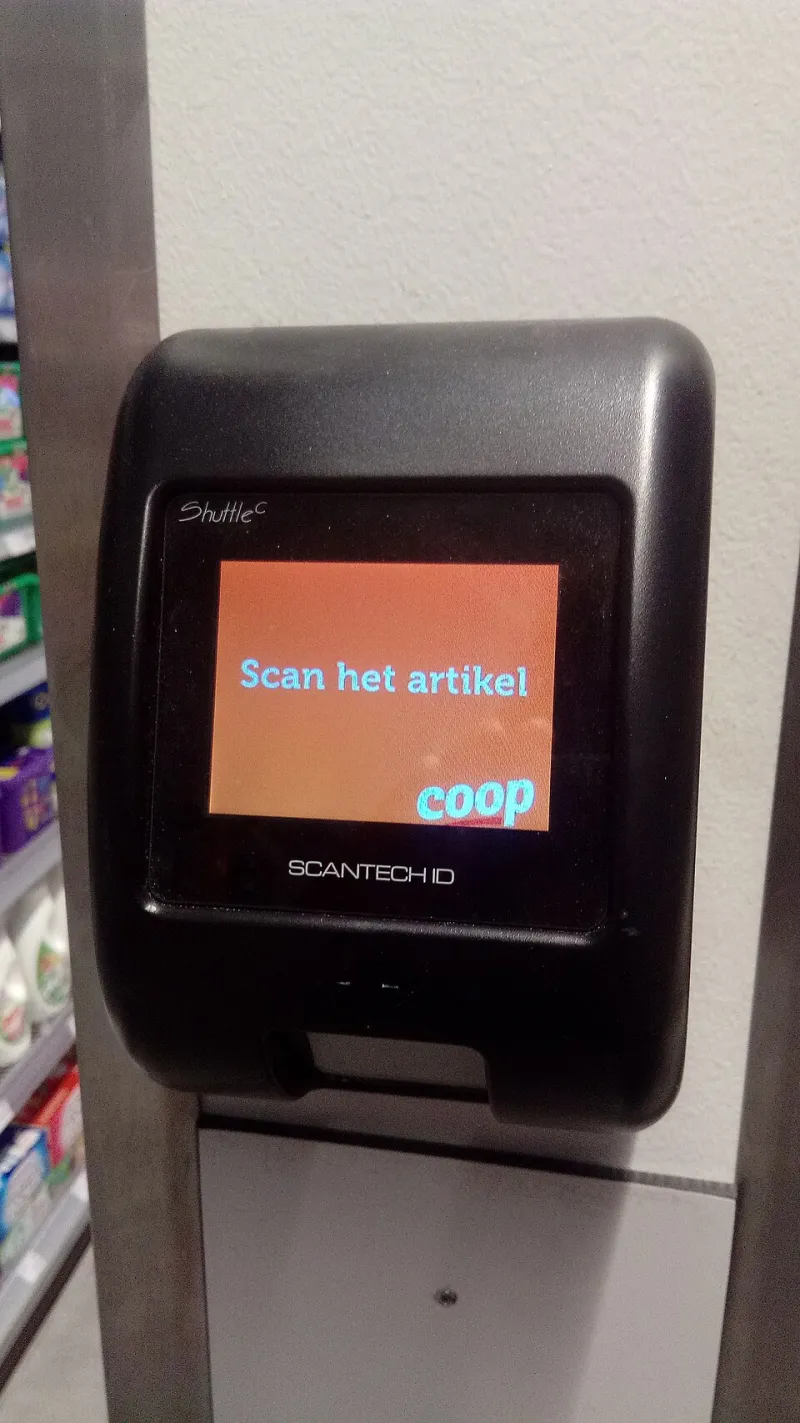
Photo: Donald Trung Quoc Don (Chữ Hán: 徵國單) - Wikimedia Commons - © CC BY-SA 4.0 International.(Want to use this image?)Original publication 📤: --Donald Trung 『徵國單』 (No Fake News 💬) (WikiProject Numismatics 💴) (Articles 📚) 17:34, 20 May 2019 (UTC), CC BY-
You've watched it happen thousands of times. A cashier passes a product over a glass panel, a soft beep sounds, and a price appears on the screen. It takes less than a second. It's so routine that it barely registers as a technology at all — it's just part of the background noise of buying things. But the barcode scanning system that now processes billions of retail transactions every day was not inevitable. It was desperate. And the story of how it got from a beach in Florida to every checkout lane in America is a genuinely strange one.
The Grocery Store Was in Crisis
To understand why the barcode mattered, you need to understand how bad things had gotten in American supermarkets by the early 1970s.
The postwar grocery boom had transformed American retail. Stores that once carried a few hundred products now stocked tens of thousands. The average supermarket in 1970 had somewhere between 8,000 and 10,000 distinct items on its shelves. Each one had to be individually price-stamped by hand. Each one had to be rung up manually at the register by a cashier reading the price tag, entering it on the keys, and moving on. When prices changed — and in the inflationary economy of the early 1970s, they changed constantly — every item on the shelf had to be restamped.
Checkout lines were slow. Errors were frequent. Inventory management was essentially guesswork. Retailers had almost no reliable data on what was selling, what wasn't, and when they needed to reorder. The industry had a problem that was getting worse faster than anyone could solve it by hiring more people.
The Patent That Nobody Wanted
The underlying technology for a solution had actually existed since the late 1940s. In 1948, a graduate student named Bernard Silver overheard a supermarket executive asking a dean at Drexel Institute of Technology if anyone could develop a system to automatically read product information at checkout. The dean wasn't interested. Silver was.
He brought in a fellow student named Norman Woodland, and the two began working on the problem. Woodland, by his own account, was sitting on a Miami beach in 1949 when the concept crystallized. He drew lines in the sand with his fingers — inspired, of all things, by Morse code — and realized that a series of thick and thin lines could encode information that a light sensor could read. He extended the concept into a circular bullseye pattern to make it readable from any angle.
The two men filed a patent in 1949 and received it in 1952. Then almost nothing happened. The technology to reliably read the codes cheaply and quickly didn't yet exist. IBM showed brief interest and then moved on. The patent was eventually purchased by RCA, which sat on it. For nearly two decades, the barcode was an elegant solution looking for a problem that nobody had the tools to solve.
The Supermarket Industry Forced the Issue
By the late 1960s, the grocery industry's operational problems had become impossible to ignore. The Grocery Manufacturers of America and the National Association of Food Chains formed a joint committee specifically to find a technological fix for the checkout and inventory crisis. They weren't looking for the barcode. They were looking for anything.
The committee solicited proposals from technology companies and eventually settled on a standardized code format — what we now call the Universal Product Code, or UPC — developed through a collaborative process involving IBM, RCA, and several other firms. The key engineering contribution came from an IBM engineer named George Laurer, who took Woodland's original concept and redesigned it from a bullseye into the rectangular pattern of parallel lines we recognize today. The linear design was more reliable with the laser scanning technology that had become available by the early 1970s.
On June 26, 1974, a pack of Wrigley's Juicy Fruit gum at a Marsh supermarket in Troy, Ohio became the first retail product in history to be scanned at a checkout using the UPC system. The cashier's name was Sharon Buchanan. The pack of gum is now in the Smithsonian Institution.
The Rollout Nobody Believed In
Here's the part that gets left out of most barcode origin stories: the initial adoption was painfully slow. Retailers were skeptical. Installing the scanning equipment was expensive — somewhere between $100,000 and $350,000 per store in mid-1970s dollars. Consumer advocacy groups were hostile, arguing that removing price tags from individual items would make it harder for shoppers to comparison price. Some states passed laws requiring individual item pricing even after scanning was introduced.
By 1977, only about 200 stores in the entire United States had installed UPC scanning systems. The technology's advocates were starting to worry that the whole project might collapse from indifference.
What changed it was data. Retailers who had installed the systems started reporting something remarkable: they actually knew what was happening in their stores. They knew which products were moving and which were sitting. They could track the impact of promotions in real time. They could manage inventory with a precision that simply hadn't existed before. Word spread through the industry, and by the early 1980s, adoption accelerated sharply.
What It Actually Changed
The barcode didn't just speed up checkout lines. It fundamentally restructured the relationship between retailers and manufacturers. For the first time, stores had granular, real-time data on consumer purchasing behavior. That data became enormously valuable — eventually more valuable, some analysts argue, than the products themselves.
Walmart's rise to dominance in the 1980s and 1990s was built in significant part on its aggressive early adoption of barcode scanning and the supply chain intelligence it enabled. The company used UPC data to squeeze efficiencies out of its logistics that competitors couldn't match. The modern era of just-in-time inventory, targeted promotions, and personalized retail — everything from loyalty card programs to Amazon's recommendation engine — traces a direct line back to that scanner at the Marsh supermarket in Ohio.
The pack of gum cost 67 cents. What it set in motion was worth considerably more.