The Obsessed Inventor, the Kitchen Stove, and the Rubber Sole Under Every Sneaker You Own
The Obsessed Inventor, the Kitchen Stove, and the Rubber Sole Under Every Sneaker You Own
Flip over almost any sneaker and you'll find rubber. It's so standard that it barely registers — of course the sole is rubber. What else would it be? But for most of human history, the answer to that question was leather, wood, or woven plant fiber. Rubber soles are a relatively recent invention, and the story of how they got there runs through one of the most chaotic, financially disastrous, and weirdly obsessive careers in American invention history.
Rubber Before It Was Reliable
Natural rubber had been known to Europeans since explorers brought it back from South America in the 1700s. It was fascinating stuff — stretchy, waterproof, unlike anything found in Europe. By the early 1800s, American and British manufacturers were experimenting with it enthusiastically, making raincoats, boots, and other waterproof goods.
The problem was that natural rubber was deeply unreliable. In summer heat, it melted into a sticky, foul-smelling mess. In winter cold, it turned brittle and cracked. The rubber goods industry of the 1820s and 30s was essentially a boom-and-bust cycle of consumer excitement followed by mass returns and company failures. Investors lost fortunes. The material had enormous promise and no follow-through.
Enter Charles Goodyear, a Connecticut hardware merchant who became fixated on solving rubber's instability at what can only be described as a life-ruining level of commitment.
A Man Who Could Not Let It Go
Goodyear discovered rubber in 1834, almost by accident, when he walked into the New York showroom of the Roxbury India Rubber Company and noticed a defect in one of their life preservers. He went home convinced he could fix it. This was, to put it mildly, an optimistic read of his situation — he had no chemistry background, no laboratory, and was already in significant debt from his hardware business.
What followed was roughly a decade of spectacular failure. He experimented with rubber compounds in his kitchen, his living room, wherever he could find space. His family ate meals next to bubbling rubber experiments. He was arrested for debt multiple times. He pawned his children's schoolbooks to buy supplies. He moved between Philadelphia, New York, and Massachusetts, chasing funding and workspace, losing both regularly.
He tried mixing rubber with magnesia, with nitric acid, with bronze powder. Some combinations looked promising for a few days before falling apart. He was laughed at publicly, dismissed by investors, and watched more than one business partner give up and walk away.
The Stove, the Spill, and the Breakthrough
The moment that changed everything is one of the great accidental discoveries in American industrial history. In 1839 — accounts vary slightly on the exact circumstances — Goodyear was working with a mixture of rubber and sulfur when it made contact with a hot stove. Maybe he dropped it. Maybe it fell. Either way, instead of melting or burning as raw rubber would, the compound charred slightly but held its structure. It remained flexible when cooled.
Goodyear had stumbled onto vulcanization, the chemical process by which rubber is treated with sulfur and heat to create a stable, elastic, durable material that doesn't melt in summer or crack in winter. He didn't fully understand the chemistry of what had happened — that understanding came later — but he recognized immediately that this was different.
It still took years to refine the process and find a manufacturer willing to back him. He patented vulcanized rubber in 1844, but spent the rest of his life fighting patent infringement cases, often successfully, while somehow remaining perpetually broke. He died in 1860, roughly $200,000 in debt. The Goodyear Tire and Rubber Company, founded in 1898, was named in his honor but had no direct connection to his family.
From Industrial Material to the Sole of Culture
Vulcanized rubber transformed industries almost immediately — medical equipment, industrial machinery, telegraph wire insulation, and yes, footwear. By the mid-1800s, rubber-soled and rubber-heeled boots were being produced for workers and soldiers. The material was grippy, waterproof, and far more durable than leather on hard or wet surfaces.
The leap toward what we'd recognize as a sneaker came in the late 19th century, when manufacturers started attaching rubber soles to canvas uppers — light, flexible shoes designed for recreational use. The term "sneakers" reportedly emerged around this time because the rubber soles were quiet enough to sneak up on someone, unlike the clack of leather-soled shoes on hard floors.
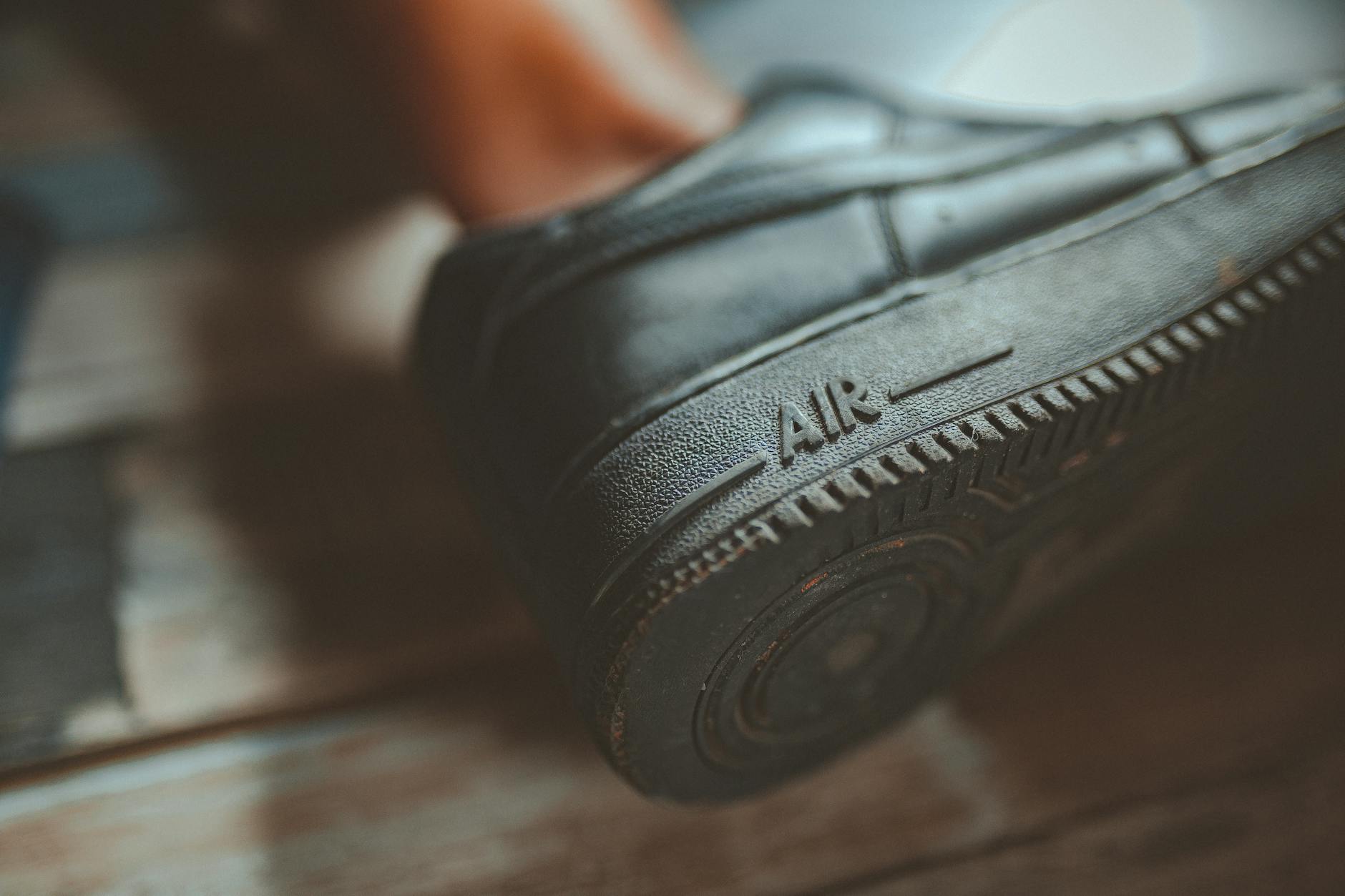
By the early 20th century, companies like Keds and Converse were mass-producing canvas-and-rubber athletic shoes. The 1917 debut of the Converse All Star — still in production today — was a direct descendant of Goodyear's kitchen experiments. When Nike launched in the 1970s and the modern sneaker industry exploded into a multi-billion dollar cultural force, rubber soles remained the non-negotiable foundation.
The Hidden Backbone
There's something quietly poetic about the fact that the material most Americans associate with car tires is also what's been cushioning their feet through every decade of sneaker culture. From Chuck Taylors to Air Jordans to whatever's on your feet right now, the rubber sole is the constant — the unglamorous, overlooked piece of engineering that makes the whole thing work.
Goodyear never got rich off his discovery. He never saw sneakers, or basketball culture, or the $100 billion global athletic footwear industry that his accidental stovetop moment helped make possible. But the next time you lace up, the connection is real — a broke, obsessed inventor dropping a rubber compound on a hot stove in 1839, and somehow changing the way a country gets dressed.