Before the Mall Existed, This Forgotten Store Taught Americans How to Shop
Before the Mall Existed, This Forgotten Store Taught Americans How to Shop
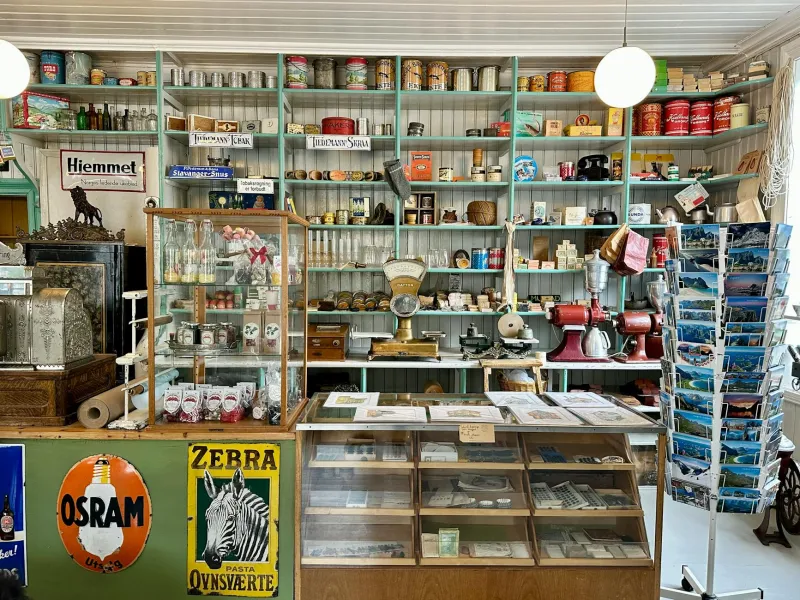
If you've ever walked into a store with no intention of buying anything and left with three things you didn't know you needed, you have the nineteenth-century dry goods store to thank. Or blame. Depending on your credit card statement.
The dry goods store doesn't get much attention in histories of American retail. It tends to get skipped over in favor of the more glamorous department store, or treated as a primitive precursor to something more sophisticated. But that framing misses what actually happened. The dry goods store didn't just predate modern shopping — it invented it. The habits, the layouts, the psychological logic of browsing — all of it has roots in a retail format that flourished across America from roughly the 1820s through the late 1800s, and then quietly disappeared into the stores it helped create.
What Exactly Was a Dry Goods Store?
The name is confusing to modern ears, so let's clear it up. "Dry goods" referred to non-perishable goods sold by measurement rather than weight — fabrics, ribbons, buttons, thread, lace, notions, ready-made clothing, and household textiles. As opposed to "wet goods," which were liquids: oil, molasses, alcohol. The distinction made practical sense in an era before modern packaging, when most goods arrived in bulk and were portioned out at the point of sale.
In the early nineteenth century, dry goods stores were everywhere. Every town of any size had at least one. They were the primary place where American families — particularly women, who were typically responsible for household provisioning — went to acquire the materials needed to clothe and outfit a home. In rural areas, the dry goods store often doubled as the social hub of the community, a place to linger, catch up on news, and handle several errands at once.
But what made these stores genuinely revolutionary wasn't the merchandise. It was the way they invited customers to interact with it.
The Radical Idea of Browsing
Before the dry goods store format solidified, retail in America operated very differently. Most transactions were negotiated — you came in knowing what you wanted, stated your need, the shopkeeper retrieved it from behind a counter, and you haggled over a price. There was no expectation that you would wander. The goods were not laid out for your inspection. You didn't touch anything until a price was agreed upon, and in many cases, you didn't see the merchandise at all until the shopkeeper produced it.
Dry goods stores began to change this, particularly in urban centers like New York, Philadelphia, and Boston, where competition between merchants forced shopkeepers to attract customers more aggressively. Fabrics and trimmings were displayed openly on counters and in windows. Customers were encouraged to handle bolts of cloth, to compare colors and textures, to spend time in the store without any immediate pressure to commit to a purchase.
This sounds ordinary now. In the 1830s, it was genuinely novel. It shifted the entire dynamic of retail from a transactional negotiation into something closer to an experience — and it planted a seed that would grow into the entire modern shopping apparatus.
Fixed Prices and the End of the Haggle
Another quietly significant innovation associated with the dry goods trade was the move toward fixed, marked prices. For most of commercial history, the price of goods was a starting point for negotiation, not a final answer. What you paid depended on who you were, how persuasive you were, what the merchant thought you could afford, and how badly either party needed the deal.
Some dry goods merchants — particularly those operating at higher volume in growing cities — began experimenting with posted prices that applied equally to everyone. No negotiation. The number on the tag was the number you paid. This felt strange at first, even slightly impersonal. But it also made shopping faster, more predictable, and — crucially — more comfortable for customers who weren't skilled negotiators. Women, who made up a large portion of dry goods shoppers, were often at a disadvantage in the traditional haggling system. Fixed prices leveled the floor.
A. T. Stewart, whose dry goods operation in New York eventually grew into one of the first true department stores in America, was among the early adopters of this model. His Marble Palace, opened in 1848, carried the principles of the dry goods trade — open display, accessible browsing, fixed prices — and scaled them into something that would directly inspire Marshall Field, John Wanamaker, and every department store that followed.
The Layout You Still Walk Through Today
Spend a few minutes thinking about how a modern retail store is organized, and the dry goods DNA becomes surprisingly visible. Accessible displays. Goods arranged by type. Clear sightlines that encourage movement through the space. The placement of high-demand items toward the back, so that customers pass through more merchandise on the way to what they actually came for. The use of the storefront window as a seduction tool, pulling in passersby before they've made any decision at all.
None of these things were invented by twentieth-century retail consultants. They evolved organically in dry goods stores throughout the nineteenth century, refined by trial and error, by watching which layouts moved more merchandise and which left customers cold.
Even the social function of the store — as a place to spend time, to be seen, to participate in a kind of public life — traces back to this format. The dry goods store in a small American town was, for many women especially, one of the few legitimate public spaces available to them. The act of shopping was also the act of being part of community life. That emotional dimension of retail — the idea that going to a store is about more than the transaction — has never really left us.
Why Nobody Talks About It
Part of the reason the dry goods store gets overlooked is that it didn't disappear dramatically. It evolved. The most successful dry goods operations simply became department stores, absorbing and expanding on everything they'd already built. The less successful ones were absorbed by competitors or replaced by newer formats. There was no single moment when dry goods ended and modern retail began — it was a continuous transformation, which makes it harder to pinpoint in the historical narrative.
But the habits it established — browsing as leisure, fixed prices as fairness, the store as a social space, the display as an invitation — are so thoroughly embedded in how Americans shop that they feel like common sense. They aren't. They were invented, piece by piece, in a format most people today couldn't describe if asked.
Next time you walk into a store just to look around, know that you're doing exactly what someone in 1845 was learning to do for the first time. The impulse buy has very old roots.