
The Soundtrack to American Anxiety
In 1922, a retired U.S. Army general named George Owen Squier made an observation that would reshape American commercial life: people were terrified of elevators. These new mechanical marvels were shooting passengers dozens of floors into the sky, and the experience was making them physically ill. Squier, who had spent his military career solving logistical problems, saw an opportunity.
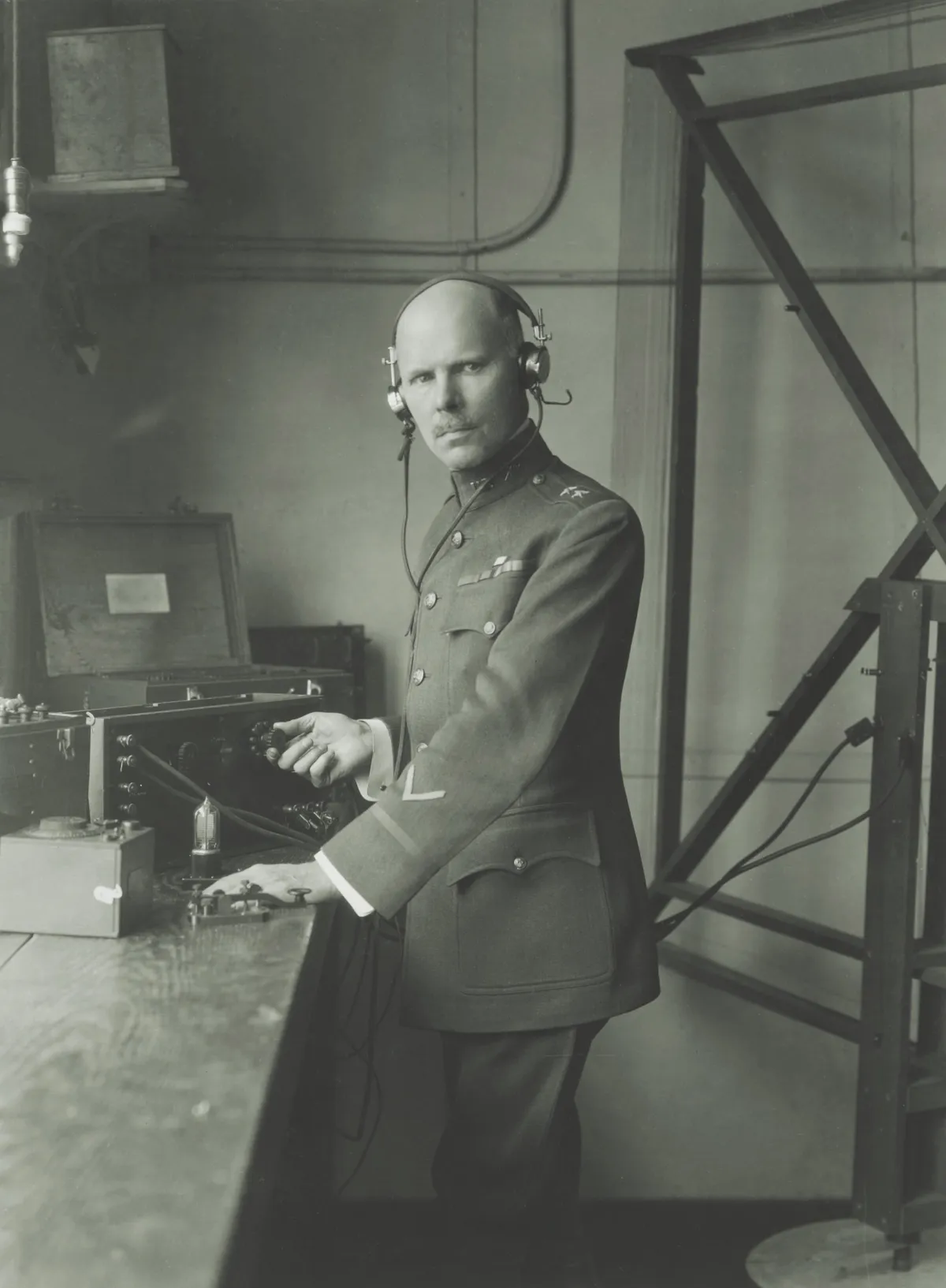 Photo: George Owen Squier, via www.historynet.com
What if, he wondered, you could calm people's nerves with carefully chosen background music? Not music they had to pay attention to, but something that would unconsciously ease their anxiety while they rode between floors. Squier's company, which he called Muzak (a combination of "music" and "Kodak"), began piping instrumental melodies into elevator cars across New York City.
 Photo: New York City, via wallpapertag.com
The results were immediate and remarkable. Elevator anxiety decreased, complaints dropped, and building managers began requesting the service. But Squier had accidentally discovered something much bigger than elevator therapy—he had found a way to influence human behavior through barely perceptible audio manipulation.
The Science of Invisible Influence
By the 1930s, Muzak had evolved far beyond simple elevator entertainment. The company hired psychologists, acoustics engineers, and behavioral researchers to develop what they called "Stimulus Progression"—a scientific method for using background music to influence mood, energy levels, and decision-making.
The theory was elegant: carefully orchestrated instrumental music, played at specific volumes and tempos, could subtly guide human behavior without listeners even realizing it was happening. Slow, calming melodies could relax anxious customers. Upbeat rhythms could energize tired workers. Strategic silence could focus attention on important announcements.
Muzak's researchers discovered that the human brain processes background music differently than foreground music. While people actively listen to songs on the radio, they unconsciously absorb ambient sound, allowing it to influence their emotional state without triggering conscious resistance. It was psychological manipulation disguised as customer service.
The Productivity Experiments
During World War II, Muzak found its most dramatic application in American factories. With the country desperate to maximize war production, industrial psychologists partnered with Muzak to test whether background music could increase worker efficiency. The results exceeded everyone's expectations.
Factory workers exposed to Muzak's "Stimulus Progression" showed measurable increases in productivity, with some plants reporting efficiency gains of 10-15%. The music was programmed to match the natural rhythm of the workday—gentle melodies during morning start-up, energetic arrangements during mid-morning productivity peaks, calming sounds during lunch, and motivational music to combat afternoon fatigue.
By 1943, over 5,000 American factories were using Muzak to boost war production. The company's slogan became "Music the Way You Want It, When You Want It, Where You Want It," but the reality was more sinister: music designed to make you behave the way someone else wanted you to behave.
The Mall Soundtrack Revolution
The post-war suburban boom created Muzak's greatest opportunity: shopping centers. Retail psychologists had discovered that background music could dramatically influence consumer behavior, affecting everything from how long customers stayed in stores to how much money they spent.
Slow music made shoppers move more slowly, browse more thoroughly, and purchase more items. Fast music encouraged quick decisions and rapid turnover. Familiar melodies created emotional comfort that translated into brand loyalty. Strategic silence drew attention to specific products or displays.
By the 1960s, Muzak was the invisible soundtrack of American consumer culture. The company's music played in supermarkets, department stores, restaurants, banks, and office buildings across the country. An estimated 100 million Americans heard Muzak programming daily, most without realizing they were part of the largest behavioral modification experiment in human history.
The Algorithm Before Algorithms
Decades before Spotify and Apple Music began using data to curate personalized playlists, Muzak was using primitive computing technology to create the perfect background soundtrack for specific situations. The company maintained a library of over 250,000 songs, each catalogued according to tempo, key, instrumentation, and emotional impact.
Muzak's programmers—long before that job title existed in tech—would create custom "Environmental Music" programs for different types of businesses. A grocery store received a different mix than a luxury hotel, which received different programming than a factory floor. Each playlist was scientifically designed to optimize the specific behaviors that business wanted to encourage.
The company's research was so sophisticated that they could predict with remarkable accuracy how different musical arrangements would affect customer behavior in specific demographic markets. They knew, for example, that string arrangements increased sales to middle-aged women, while brass sections motivated young male shoppers.
The Backlash and the Legacy
By the 1970s, Muzak had become so ubiquitous that it generated its own cultural rebellion. Musicians, intellectuals, and consumer advocates began criticizing "elevator music" as a form of psychological pollution. The term "muzak" (lowercase) entered the dictionary as a pejorative, synonymous with bland, manipulative background music.
Critics argued that Muzak represented everything wrong with corporate America: the reduction of art to commerce, the manipulation of public spaces for private profit, and the assumption that human behavior should be engineered for economic efficiency. Anti-Muzak societies formed in major cities, demanding "acoustic ecology" and the right to public silence.
But the damage was already done. Muzak had permanently changed American expectations about public space. By the time the company filed for bankruptcy in 2009, its core innovation—using curated background music to influence behavior—had been adopted by every major retailer, restaurant chain, and service business in the country.
The Spotify Connection
Today's streaming platforms are essentially Muzak's digital descendants, using algorithms instead of psychologists to curate mood-based playlists designed to influence listener behavior. "Focus" playlists boost productivity, "Chill" playlists encourage relaxation, and "Workout" playlists motivate exercise—all following principles that Muzak pioneered nearly a century ago.
The difference is that modern listeners choose their own behavioral modification, actively seeking out playlists designed to manipulate their mood and productivity. What Muzak imposed on unwilling elevator passengers, Americans now eagerly subscribe to for $9.99 per month.
General Squier's solution for elevator anxiety accidentally created the template for how background music shapes modern life. Every coffee shop playlist, retail store soundtrack, and office environment audio program traces its psychological foundations back to those first nervous elevator rides in 1922. The man who wanted to calm people's fear of heights ended up teaching an entire culture how to use music as an invisible tool of influence.