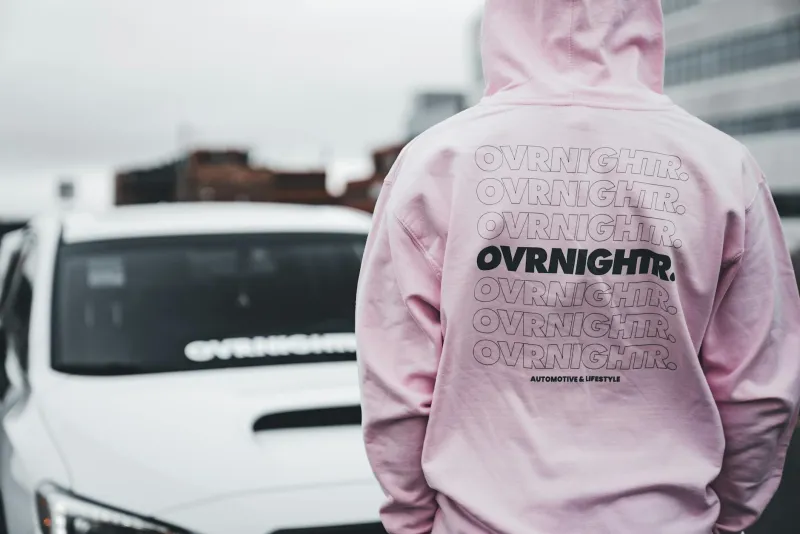
The Freezing Problem Nobody Talks About
In 1930, workers at the Knickerbocker Ice Company in upstate New York had a problem that sounds almost quaint today: they were freezing to death on the job. The company's massive refrigeration warehouses kept perishable goods fresh, but they turned eight-hour shifts into endurance tests against hypothermia.
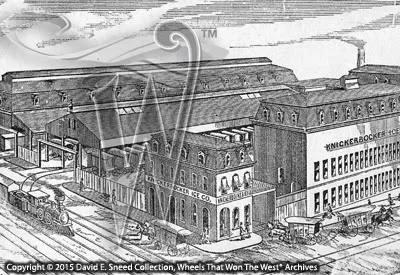 Photo: Knickerbocker Ice Company, via wheelsthatwonthewest.com
Existing work clothes weren't cutting it. Heavy coats restricted movement while loading trucks. Wool sweaters got soaked and stayed wet. Hats fell off constantly, and scarves were safety hazards around machinery. The workers needed something that would keep them warm without getting them killed.
That's when Champion Products, a small athletic wear company founded by the Feinbloom brothers, got an unusual request. The ice company wanted them to design something that had never existed before: a sweatshirt with a hood.
The Accidental Innovation
The Feinbloom brothers weren't trying to create a fashion statement. They were solving a specific industrial problem with the tools they had available. Champion already made sweatshirts for college athletes—simple cotton-polyester blend garments designed to absorb sweat during practice.
Adding a hood was mechanically straightforward but conceptually radical. Hoods belonged on raincoats and medieval robes, not work clothes. But the ice workers didn't care about fashion conventions. They needed their ears covered and their necks protected, and a sewn-on hood did both without falling off.
The first hooded sweatshirts were purely functional: thick gray cotton, reinforced seams, and a simple drawstring to tighten the hood. Champion called them "hooded pullovers" and marketed them exclusively to industrial clients dealing with cold-weather work environments.
The College Invasion
The hoodie might have stayed in warehouses forever if not for Champion's existing relationships with college athletic departments. By the mid-1930s, football and track coaches began ordering hooded sweatshirts for their athletes, who appreciated the extra warmth during outdoor practices in fall and winter.
College students noticed what the athletes were wearing. The hoodie offered something that dormitory life desperately needed: a garment that was warm, comfortable, and could hide the fact that you'd just rolled out of bed. By the 1940s, hooded sweatshirts were showing up in college bookstores alongside school-branded t-shirts and pennants.
This transition from industrial workwear to campus casual wear established a pattern that would repeat throughout the hoodie's history: practical clothing adopted by people who weren't doing the original work, but who found the garment useful for their own purposes.
The Hip-Hop Transformation
The hoodie's next major evolution happened in the 1970s South Bronx, where it became essential equipment for an emerging cultural movement. Hip-hop artists and breakdancers adopted hooded sweatshirts for reasons that had nothing to do with athletics or cold weather.
 Photo: South Bronx, via images-wixmp-ed30a86b8c4ca887773594c2.wixmp.com
The hood provided anonymity in a culture that was often criminalized. It protected against both police surveillance and rival crews. The loose fit allowed for the athletic movements that breakdancing required. And the blank canvas of a hoodie's front provided space for the kind of bold graphics and logos that hip-hop culture was creating.
Run-DMC, LL Cool J, and other early hip-hop artists made the hoodie into a uniform of rebellion and authenticity. This wasn't borrowed from college campuses or inherited from factory floors—it was a conscious adoption of working-class clothing as a statement about staying true to street origins even as the music gained mainstream success.
The Tech Uniform
By the 1990s, the hoodie had acquired enough cultural associations to mean almost anything: athletic dedication, college spirit, urban authenticity, or simple comfort. That flexibility made it perfect for Silicon Valley's emerging tech culture, which wanted to signal that it was different from traditional corporate America.
Mark Zuckerberg didn't invent the tech hoodie, but he certainly perfected its symbolism. His gray hoodies became a uniform that communicated several messages simultaneously: I'm too focused on changing the world to worry about dress codes. I'm still connected to my college roots. I'm not like those suit-wearing executives on Wall Street.
 Photo: Mark Zuckerberg, via www.businessoutreach.in
The tech industry's adoption of the hoodie completed its transformation from industrial workwear to cultural signifier. When billionaire CEOs wear the same garment that warehouse workers invented in 1930, clothing has transcended its original function entirely.
The Garment That Absorbed Everything
What makes the hoodie unique in American clothing history is how completely it absorbed the identity of every subculture that adopted it. Industrial workers needed warmth. College students wanted comfort. Hip-hop artists sought authenticity. Tech executives desired differentiation. The hoodie provided all of these things without losing its essential character.
This adaptability explains why the hoodie became controversial in ways that other casual clothing never did. When Trayvon Martin was killed while wearing a hoodie in 2012, the garment itself became part of the national conversation about race, class, and assumptions. The hoodie had accumulated so many cultural meanings that it could simultaneously represent threat and innocence, privilege and marginalization.
The Democracy of Design
Today, hoodies are manufactured by everyone from luxury fashion houses to discount retailers, worn by everyone from professional athletes to Supreme Court justices (at least off the bench). This universality reflects something that the Feinbloom brothers probably never anticipated: they had created one of the most democratically accessible garments in American history.
A hoodie costs roughly the same whether you buy it at Walmart or order it online. It fits people of different body types equally well. It works in different climates and social situations. Most importantly, it carries whatever meaning the wearer brings to it—working-class authenticity, athletic performance, creative rebellion, or simple comfort.
The next time you pull on a hoodie, you're wearing a piece of clothing that connects you to Depression-era ice workers, 1970s hip-hop pioneers, and Silicon Valley entrepreneurs. That's a lot of history for a garment that was never supposed to mean anything more than staying warm while moving frozen food.