Death Dressed America: How Victorian Undertakers Created the Modern Business Suit
The Undertaker's Uniform Problem
In 1850s America, death was a chaotic, unprofessional affair. When someone died, family members handled everything—washing the body, building the coffin, digging the grave. There were no funeral homes, no professional mourning services, and definitely no standardized dress code for dealing with grief.
That began changing when ambitious entrepreneurs saw opportunity in America's growing urban centers. As cities expanded and families became more scattered, people needed professional help managing death. But these early funeral directors faced a credibility problem: how do you convince grieving families to trust a stranger with their most vulnerable moments?
The answer came through clothing.
Dressing for Trust
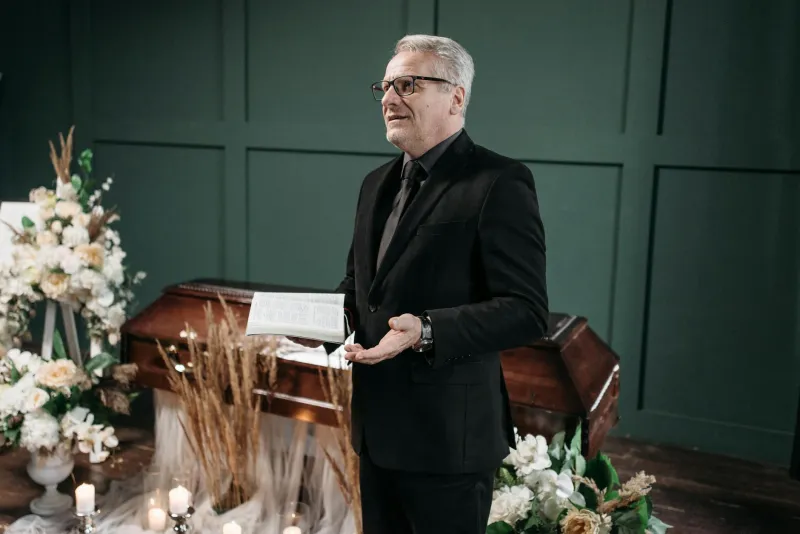
American funeral directors in the 1860s made a calculated decision that would accidentally reshape men's fashion forever. They adopted a strict uniform: dark wool suits in black or deep navy, white shirts, conservative ties, and polished black shoes. Nothing flashy, nothing that might suggest profit over compassion.
This wasn't arbitrary fashion choice—it was strategic business psychology. Grieving families needed to see competence, respectability, and solemn professionalism. The dark suit communicated all three instantly. It said: "I'm serious about this work, I respect your loss, and I won't embarrass you in front of your community."
The strategy worked brilliantly. Within a generation, American funeral directors had professionalized death and established themselves as essential community figures. Their uniform became so associated with trustworthiness that other professions began copying it.
The Corporate Migration
As America industrialized in the late 1800s, new businesses faced similar credibility challenges. Banks needed customers to trust them with life savings. Insurance companies needed to project stability. Law firms needed to appear serious and competent.
These industries looked around for visual cues that already communicated trustworthiness in American culture. The funeral director's dark suit was the obvious choice. If this outfit could comfort grieving widows and convince families to spend significant money during emotional crises, it could probably work for other sensitive business relationships.
By the 1890s, American bankers, lawyers, and insurance agents were dressing like undertakers. They might not have realized the connection, but they were adopting a uniform originally designed for managing death.
The Standardization Spreads
What happened next was pure cultural momentum. As more professions adopted the dark suit uniform, it became the default symbol of American business seriousness. Men who wanted to be taken seriously in any professional context—from real estate to retail management—started wearing funeral director uniforms to work.
The transformation accelerated in the early 1900s as department stores began selling "business suits" to middle-class consumers. These weren't marketed as funeral attire, obviously, but they were identical in style and color to what undertakers had been wearing for decades.
American men were unknowingly dressing for death every morning.
The Psychology Persists
The funeral industry's influence on American business dress runs deeper than most people realize. Consider the psychological associations we still make with dark suits: seriousness, respect, formality, trustworthiness. These are exactly the qualities funeral directors wanted to project when they created this uniform.
Even the specific details carry over. The conservative tie, the white shirt, the polished shoes—all elements designed to reassure people during their worst moments. Now they're worn to job interviews, board meetings, and court appearances for the same psychological reasons.
Modern Echoes
Today's American business culture still operates on principles established by 19th-century funeral directors. When someone says "dress professionally," they usually mean: wear the outfit that undertakers designed to comfort grieving families.
This connection explains some oddities in modern dress codes. Why do American offices still expect dark suits for serious meetings? Why do job candidates instinctively reach for black or navy outfits? Why does a bright colored suit seem "unprofessional" even if it's well-tailored and expensive?
Because we're still following rules written by people whose job was managing death.
The Forgotten Foundation
Most American men own at least one dark business suit without knowing they're wearing a funeral director's uniform from the 1860s. The style has evolved—lapels change, fits get updated, fabrics improve—but the basic template remains identical to what undertakers wore when they were professionalizing death.
It's a remarkable example of how specialized professional clothing can become general cultural standard. What started as one industry's solution to a credibility problem became the foundation of American business dress for the next 150 years.
Next time you put on a dark suit for work, remember: you're wearing a uniform designed by funeral directors who needed to convince grieving families to trust them with their dead. That outfit has been communicating seriousness, respectability, and professional competence since before your great-grandfather was born. The undertakers who created it never imagined their death-management uniform would become the default outfit for American success.
But every morning, millions of men prove them right by choosing clothes originally designed for dealing with corpses to handle the business of living.