When the World Ran Out of Blue: The Chemistry Crisis That Nearly Changed American Workwear Forever
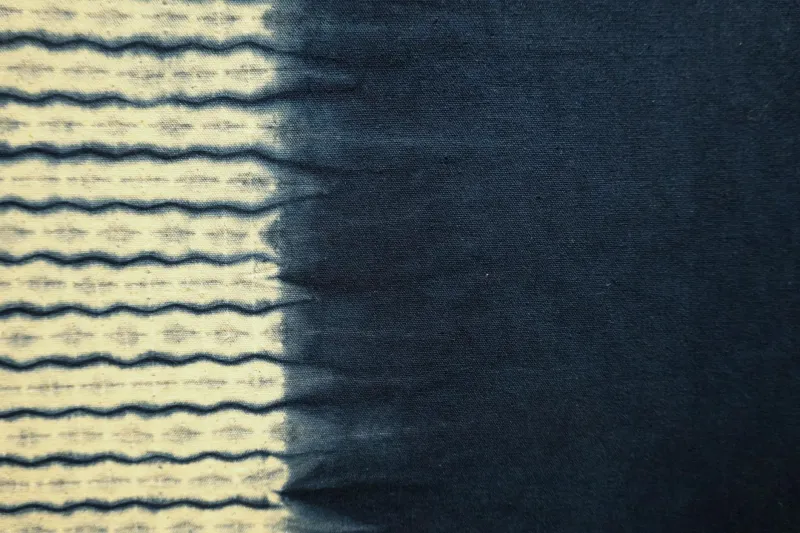
The Day Blue Almost Disappeared
Picture this: you walk into a general store in 1895, looking for sturdy work pants, and instead of the familiar deep blue denim, you're offered brown, gray, or muddy green alternatives. It sounds impossible now, but for a brief moment in American history, the iconic blue jean almost became something else entirely.
The culprit? A worldwide shortage of indigo that brought the textile industry to its knees and forced manufacturers to scramble for alternatives that nobody really wanted.
Three Continents, One Precious Plant
For centuries, that distinctive blue came from a plant called Indigofera tinctoria, cultivated primarily in India, Guatemala, and later the American South. The process was labor-intensive and unpredictable—farmers would harvest the plants, ferment the leaves in vats, and extract a blue paste that would eventually become the dye that colored everything from sailor uniforms to work clothes.
By the 1880s, American textile mills were consuming massive quantities of natural indigo. Levi Strauss & Company alone was importing tons of the stuff to keep up with demand from miners, railroad workers, and farmers who had fallen in love with those sturdy blue pants.
But natural indigo had always been vulnerable. Crop failures, political instability, and shipping disruptions could send prices soaring overnight. What nobody expected was how quickly the entire system would collapse.
The Perfect Storm of 1890
In 1890, everything went wrong at once. A series of monsoon failures devastated indigo crops in India. Political unrest in Guatemala disrupted trade routes. Meanwhile, American indigo production, which had never fully recovered from the Civil War, was practically nonexistent.
Suddenly, the price of natural indigo skyrocketed by 400%. Textile manufacturers faced an impossible choice: absorb crushing costs or find alternatives.
Many chose door number two.
The Great Dye Experiment
What followed was a frantic period of experimentation that would have made any chemistry lab jealous. Manufacturers tried everything: logwood for deep purples, catechu for browns, even iron-based compounds that produced muddy greens.
Some mills pivoted to entirely different colors. Brown duck canvas became popular for work clothes. Gray wool gained traction among railroad companies. For a brief moment, it looked like American workwear might abandon blue altogether.
But consumers had other ideas.
When Chemistry Saved the Day
Meanwhile, in a German laboratory, chemist Adolf von Baeyer was working on something that would change everything. He'd been tinkering with synthetic indigo since the 1860s, but commercial production had always been too expensive to compete with natural sources.
The indigo crisis changed that math overnight.
In 1897, BASF began producing synthetic indigo at scale. Unlike the unpredictable natural version, synthetic indigo was consistent, reliable, and—crucially—could be produced anywhere there was a chemical plant.
American manufacturers jumped on it immediately.
The Stubborn Power of Habit
Here's where the story gets interesting. By the time synthetic indigo hit the market, American workers had already rejected most of the alternative colors. They wanted their pants blue, period.
It wasn't just about tradition—blue had become functionally important. The indigo dye process created a unique characteristic where the color sat on the surface of the cotton fibers rather than penetrating completely. This meant blue jeans would fade gradually with wear and washing, creating the lived-in look that workers preferred.
Brown or gray pants just didn't behave the same way.
The Accidental Lock-In
What happened next was pure accident. BASF's synthetic indigo wasn't just chemically identical to natural indigo—it was actually more consistent. The synthetic version produced a more reliable blue, batch after batch, than natural indigo ever had.
American manufacturers, desperate to win back customers who had briefly flirted with other colors, embraced synthetic indigo with enthusiasm. They marketed it as "true blue" and "authentic indigo color," emphasizing continuity with the pre-crisis era.
Consumers bought it—literally and figuratively.
The Blue That Built America
By 1900, synthetic indigo had completely replaced natural sources in American denim production. What started as a crisis response became the foundation of modern jean manufacturing.
The shortage that nearly killed blue jeans instead cemented blue as their permanent identity. When World War I created new disruptions in global trade, American manufacturers didn't panic—they already had their synthetic solution locked in.
That blue became so associated with American workwear that when Levi's started marketing jeans as casual fashion in the 1950s, they didn't even consider changing the color. Blue wasn't just functional anymore—it was iconic.
The Color That Wouldn't Quit
Today, synthetic indigo dominates global denim production, with manufacturers producing hundreds of thousands of tons annually. The chemistry has been refined, but it's essentially the same process that saved blue jeans in 1897.
Every time you slip on a pair of jeans, you're wearing the result of a 19th-century supply chain crisis that forced an entire industry to reinvent itself. The blue that almost disappeared instead became so permanent that most people can't imagine denim in any other color.
Sometimes the best accidents are the ones that preserve what we didn't realize we couldn't live without.