The Sandwich That Changed Everything
In 1943, a well-dressed Black woman walked into the lunch counter at Wanamaker's department store in Philadelphia and ordered a chicken salad sandwich. The moment was unremarkable except for one detail: she was served without incident, without protest, and without making history—because Wanamaker's had been quietly serving Black customers at their lunch counter for over a decade.
While the South maintained strict segregation and even many northern establishments practiced informal exclusion, a handful of department store lunch counters had discovered something revolutionary: integration was profitable. These retail pioneers weren't motivated by civil rights ideology—they were motivated by the simple math of customer volume and the realization that money spent on lunch was the same color regardless of who spent it.
The story of how lunch counters became unlikely battlegrounds for equality begins not with activism, but with the practical needs of retail business and the unique position department stores occupied in American commercial life.
The Economics of Empty Seats
Department store lunch counters existed for one primary reason: to keep shoppers in the building longer. Store executives had learned that customers who ate lunch on-site spent significantly more money than those who left to eat elsewhere. The lunch counter wasn't primarily a food business—it was a customer retention strategy.
This business model created a unique economic pressure toward inclusion. Unlike restaurants that could survive by serving only white customers, department store lunch counters needed maximum throughput during peak hours. Empty seats meant lost revenue twice over: no food sales and potentially lost retail sales when hungry customers left the building.
Some forward-thinking store managers began to notice something their competitors missed: well-dressed Black shoppers had money to spend on lunch, and they often shopped in groups that could fill multiple seats during busy periods. The math was simple, even if the social implications were complex.
Stores like Wanamaker's in Philadelphia, Gimbels in New York, and Marshall Field's in Chicago began quietly serving Black customers at their lunch counters in the 1930s and early 1940s. They didn't advertise this policy—in fact, they were often deliberately vague about it—but they didn't refuse service either.
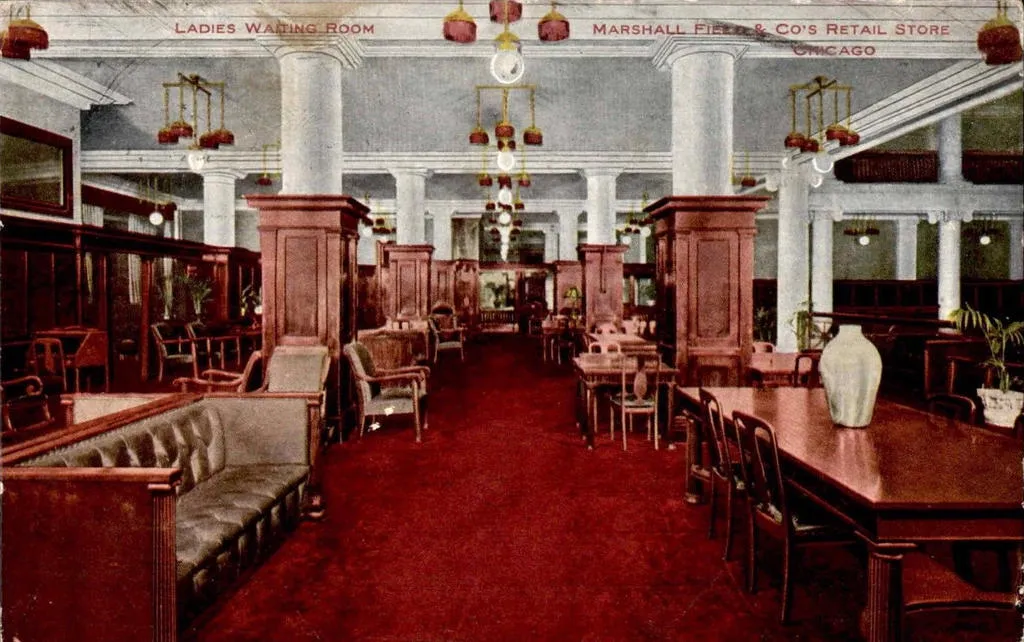 Photo: Marshall Field's, via images-wixmp-ed30a86b8c4ca887773594c2.wixmp.com
The Unspoken Integration
The integration of these lunch counters happened gradually and without fanfare. Store managers developed informal policies: Black customers were welcome during busy periods when their presence was less noticeable, and staff were instructed to serve them politely but without drawing attention to the fact that this was unusual.
This quiet integration created some of the first integrated public dining spaces in America outside of a few progressive cities. Black and white customers sat side by side, eating the same food, served by the same staff, in spaces that were technically public accommodations but felt commercial rather than political.
The experience was different from what would later happen during the famous sit-ins of the 1960s. These early integrated lunch counters weren't sites of protest or confrontation—they were simply places where the logic of retail business had overcome social convention. Black customers weren't making statements; they were buying lunch.
For many Black Americans, especially those traveling for business or shopping in unfamiliar cities, these department store lunch counters became known safe spaces where they could expect to be served. Word spread through Black communities about which stores would serve them and which wouldn't, creating an informal network of integrated commercial spaces decades before the civil rights movement made integration a national cause.
The Southern Contrast
The difference between northern department store integration and southern segregation was stark and telling. While stores like Rich's in Atlanta and Maison Blanche in New Orleans maintained strict segregation at their lunch counters well into the 1960s, their northern counterparts had discovered that integration could be both profitable and manageable.
This regional difference wasn't just about different social attitudes—it reflected different business calculations. Northern department stores competed in more diverse urban markets where Black customers represented significant purchasing power. They also faced less social pressure to maintain segregation and could experiment with integration without risking their core customer base.
The contrast became even more apparent when the sit-in movement began in 1960. The famous protests at Woolworth's lunch counters in Greensboro and Nashville made headlines precisely because segregation at lunch counters was still the norm in the South. Meanwhile, many northern department stores had been serving integrated customers for decades without anyone considering it newsworthy.
The Quiet Revolution
The department store lunch counter integration of the 1930s and 1940s represented a different model of social change than the activism that would later capture national attention. It was integration driven by market forces rather than moral imperatives, by business logic rather than civil rights strategy.
This quiet revolution had lasting effects that extended far beyond lunch service. Black customers who were welcomed at department store lunch counters often became loyal shoppers, spending money throughout the store and bringing friends and family members. Store managers noticed that integration at the lunch counter led to increased comfort and spending in other departments.
The success of these early integrated lunch counters also provided a practical model for later civil rights activists. When sit-in organizers planned their protests in the 1960s, they could point to northern department stores as proof that integration was both possible and profitable.
The Legacy of the Lunch Counter
By the time the Civil Rights Act of 1964 made lunch counter segregation illegal nationwide, many northern department stores had been serving integrated customers for over two decades. The law simply codified what these businesses had already discovered: that serving all customers was good business.
The department store lunch counters that quietly integrated in the 1930s and 1940s demonstrated something important about American social change: sometimes progress happens not through grand gestures or dramatic confrontations, but through the quiet logic of commerce and the simple recognition that exclusion is expensive.
Today, when we remember the lunch counter sit-ins of the 1960s, we should also remember the lunch counters that integrated decades earlier—not because their owners were civil rights heroes, but because they were businesspeople who understood that empty seats were lost opportunities. Sometimes the most powerful revolutions begin not with protests, but with the simple act of serving everyone who walks through the door.