From Battlefield to Boardroom: How Medieval Knights Accidentally Designed Your Favorite Dress Shoe Detail
The Knight's Dilemma
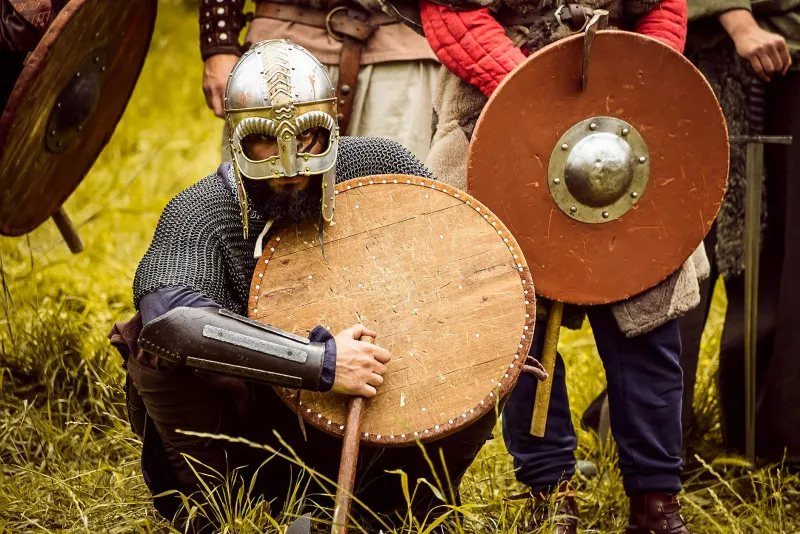
Picture a medieval knight suiting up for battle in 1300s England. Between the chainmail, plate armor, and weapons, he's dealing with dozens of leather straps that need to stay secure during combat. One loose buckle could mean the difference between life and death. These weren't decorative accessories—they were survival gear.
The buckle itself was ingeniously simple: a metal frame with a hinged pin that could slide through pre-punched holes in leather. It held tight under stress but released quickly when needed. For centuries, this basic mechanism kept armor attached to bodies across European battlefields.
But here's where the story gets interesting. As warfare evolved and armor became obsolete, these functional buckles didn't disappear—they migrated to civilian clothing.
The Puritan Paradox
When English colonists arrived in America, they brought more than just religious convictions. They packed their European fashion sense, including an unexpected obsession with shoe buckles. This created a fascinating contradiction in Puritan society.
Puritan dress codes banned most forms of decoration as sinful vanity. No lace, no bright colors, no jewelry. But shoe buckles? Those got a pass. Somehow, the same religious leaders who condemned colorful ribbons as immoral allowed elaborate silver buckles on footwear.
By the 1700s, wealthy American colonists were sporting shoe buckles made from precious metals, often encrusted with stones. These weren't the simple iron clasps of medieval knights—they were status symbols that cost more than most people's annual wages.
From Function to Fashion Statement
The transformation wasn't immediate. Early American buckles still served a purpose, securing shoes that laced differently than modern footwear. But as shoemaking techniques improved and laces became more reliable, buckles gradually shifted from necessity to ornament.
Revolutionary War era Americans took buckle culture to extremes. George Washington owned dozens of pairs, ranging from simple pewter to ornate gold designs. Benjamin Franklin's shoe buckles were so famous that French aristocrats copied his style. The buckle had become America's first widely adopted fashion accessory.
Then came the 1790s fashion revolution that nearly killed the buckle entirely. Younger Americans, inspired by French Revolutionary ideals, rejected elaborate accessories as symbols of aristocratic excess. Shoe laces suddenly seemed more democratic than buckles.
The Victorian Revival
Just when buckles seemed destined for history's dustbin, Victorian-era Americans rediscovered them in the 1850s. But this time, the context was completely different. Industrial manufacturing made decorative buckles affordable for middle-class consumers who wanted to signal respectability and success.
American shoe manufacturers began incorporating buckles not as functional elements, but as pure decoration. They served no mechanical purpose—shoes now had reliable lacing systems—but they communicated something important about the wearer's taste and social aspirations.
The Modern Mutation
Today's dress shoe buckles would puzzle both medieval knights and colonial aristocrats. They're usually fake—decorative metal pieces attached to leather straps that don't actually buckle anything. The functional pin-and-hole mechanism has been replaced by purely aesthetic metal shapes.
Yet somehow, this non-functional descendant of battlefield gear still signals formality and professionalism in American culture. Walk into any corporate office and you'll spot dozens of buckled loafers, each one carrying the genetic memory of medieval armor clasps.
The Irony of Evolution
The buckle's journey reveals something fascinating about how functional objects become cultural symbols. What started as life-or-death battlefield equipment became a religious exception, then a revolutionary statement, then a class marker, and finally a decorative element that most wearers never think about.
Modern Americans spend billions annually on shoes featuring buckles that don't buckle, descended from armor clasps designed for combat they'll never see. It's a perfect example of how yesterday's survival gear becomes tomorrow's fashion statement, even when nobody remembers why.
Next time you slip on those buckled dress shoes for a business meeting, remember: you're wearing a piece of medieval military technology that somehow survived centuries of cultural evolution to end up in your closet. The knight who invented that clasp never imagined it would outlast his sword, his armor, and his entire civilization—but there it is, still decorating American feet six hundred years later.