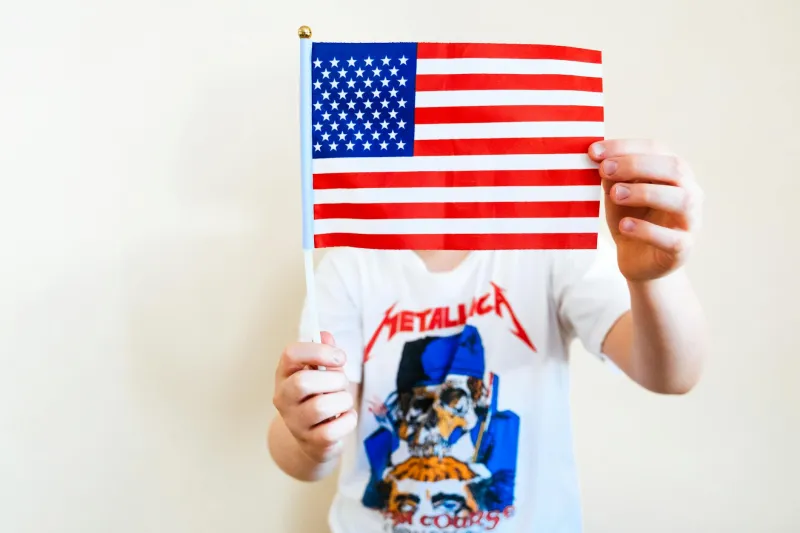
The Underwear America Wasn't Allowed to See
In 1913, the U.S. Navy issued its sailors a revolutionary new undergarment: a lightweight, short-sleeved cotton shirt designed to be worn beneath their wool uniforms. There was just one catch—sailors were strictly forbidden from wearing this "T-Type" shirt in public. It was underwear, plain and simple, and showing it off would result in disciplinary action.
The military had stumbled onto something brilliant without realizing it. This simple cotton tube with sleeves was cooler than traditional union suits, easier to wash than wool, and infinitely more comfortable in the cramped quarters of naval vessels. But like most great American innovations, it took a world war to push it into the mainstream.
When War Made Underwear Acceptable
World War II changed everything about American fashion, including what counted as proper clothing. Millions of servicemen had grown accustomed to wearing their T-shirts during off-duty hours on military bases, especially in the sweltering heat of Pacific islands and North African deserts. When these veterans returned home, they brought their casual military habits with them.
Suddenly, American streets were filled with young men who had spent years thinking of the T-shirt not as underwear, but as practical everyday wear. The generation that had stormed beaches and liberated countries wasn't about to let social conventions dictate their wardrobe choices. They'd earned the right to be comfortable.
But it wasn't just returning soldiers who normalized the T-shirt. The garment industry, desperate to find new markets for military surplus cotton, began marketing T-shirts to civilians as "sport shirts" and "leisure wear." By 1948, Sears was selling them as outerwear, complete with the tagline "You don't need a shirt with it!"
Hollywood's Rebel Uniform
The T-shirt might have remained a working-class garment if not for a handful of Hollywood rebels who turned it into a symbol of youthful defiance. When Marlon Brando strutted across movie screens in 1951's "A Streetcar Named Desire" wearing nothing but jeans and a tight white T-shirt, American teenagers took notice.
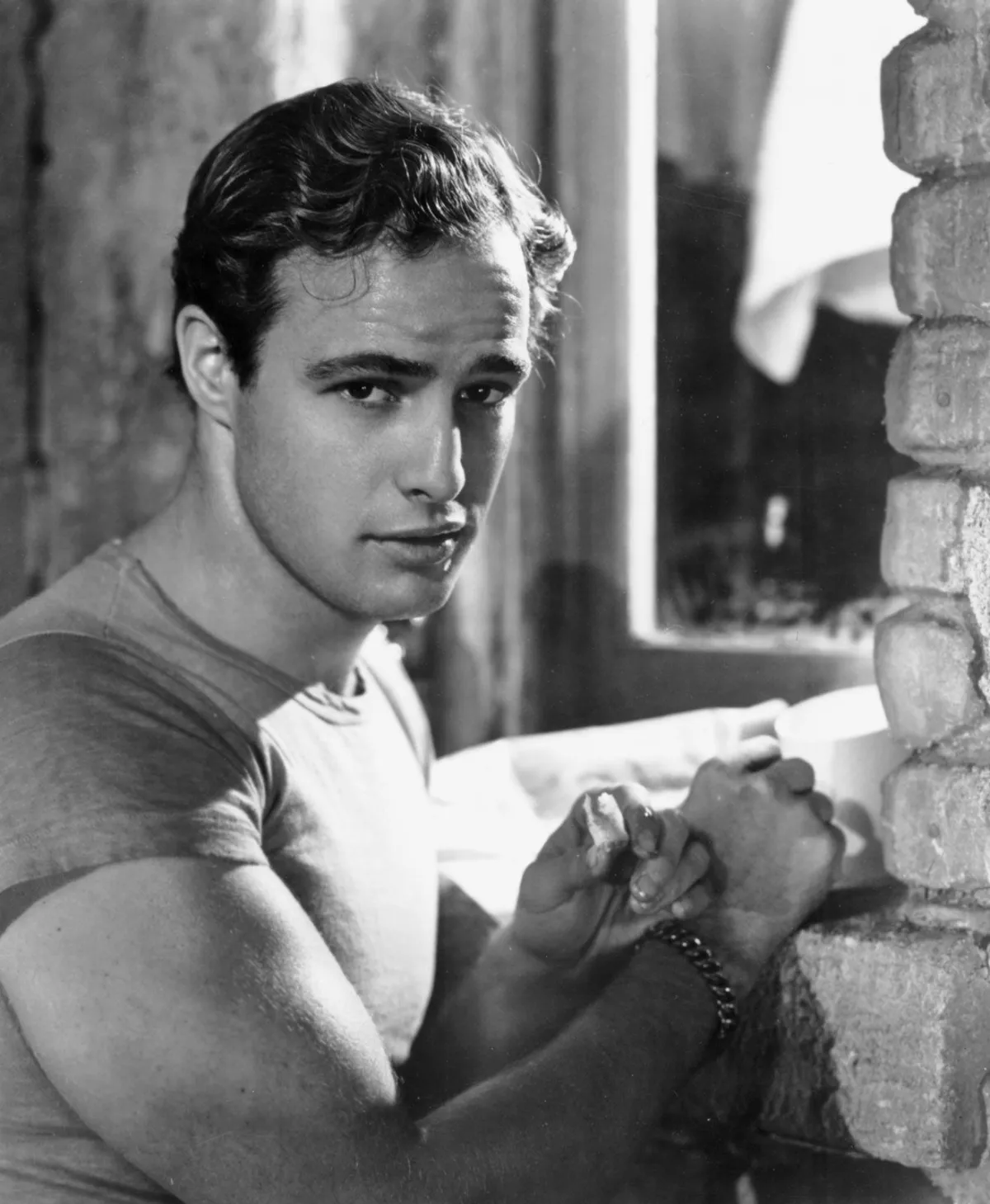 Photo: Marlon Brando, via cdn.britannica.com
Two years later, "The Wild One" cemented the T-shirt's reputation as the unofficial uniform of rebellion. Brando's motorcycle gang leader made the simple cotton shirt look dangerous, sexual, and undeniably cool. Parents across America suddenly found themselves in the strange position of forbidding their children from wearing what was essentially underwear in public—exactly what the Navy had been doing forty years earlier.
James Dean sealed the deal in 1955 with "Rebel Without a Cause." His character's plain white T-shirt became as iconic as his red leather jacket, proving that the simplest garments could carry the most powerful messages. The T-shirt had evolved from military necessity to teenage rebellion in less than a decade.
The Democracy of Cotton
What made the T-shirt truly revolutionary wasn't its association with rebels or veterans—it was its radical equality. Unlike dress shirts with their complex construction, expensive materials, and class associations, the T-shirt was cheap, simple, and utterly classless. A factory worker could wear the same basic garment as a movie star.
This democratic quality made the T-shirt the perfect canvas for American self-expression. By the 1960s, screen-printing technology had advanced enough to make custom T-shirts affordable, and suddenly everyone could wear their beliefs, affiliations, and personality on their chest. Political campaigns, rock bands, tourist destinations, and social movements all discovered that the T-shirt was the most effective billboard in human history.
The garment that the Navy had once considered too informal for public wear had become America's primary medium for public communication. From "I Love NY" to band merch to corporate logos, the T-shirt transformed from underwear into a walking advertisement for individual identity.
The Fabric of American Life
Today, the average American owns more than a dozen T-shirts, making it perhaps the most ubiquitous garment in the nation's closets. It's worn by toddlers and grandparents, CEOs and construction workers, at formal events and gym sessions. The T-shirt has achieved something no other piece of clothing has managed: complete social acceptance across every demographic and occasion.
The irony is perfect. A garment once banned from public view because it was too informal has become so universal that its absence is now more notable than its presence. The Navy's forbidden underwear accidentally created the most democratic piece of clothing in American history—a blank canvas that lets 330 million people tell their individual stories while wearing exactly the same thing.
In a nation built on the promise that anyone can reinvent themselves, perhaps it's fitting that our most characteristic garment started as something else entirely. The T-shirt's journey from military underwear to cultural icon mirrors America's own transformation from rigid social hierarchies to a more casual, egalitarian society. Sometimes the most revolutionary changes start with the simplest things: a few pieces of cotton sewn together in a way no one had quite thought of before.