Rivets, Ruin, and the Gold Rush Gamble That Gave America Its Favorite Pants
Rivets, Ruin, and the Gold Rush Gamble That Gave America Its Favorite Pants
You probably own at least one pair right now. Maybe you're wearing them. Blue jeans are so embedded in American life that they barely register as a choice anymore — they're just there, in every closet, at every age, for every occasion. But the story of how denim became America's unofficial uniform starts not in a design studio, not on a runway, and definitely not with anyone trying to make something stylish. It starts in the mud and misery of a California gold rush camp, where pants kept falling apart.
A Merchant With Fabric and No Plan B
Levi Strauss arrived in San Francisco in 1853, a 24-year-old Bavarian immigrant with a shipment of dry goods and a sharp eye for opportunity. The California Gold Rush was already a few years in, and the city was chaotic, overcrowded, and hungry for supplies. Strauss set up a wholesale business, selling fabric, thread, and clothing to the merchants and miners flooding the region.
He wasn't a designer. He wasn't even particularly interested in clothing as a craft. He was a businessman trying to move inventory in a boomtown. The heavy canvas fabric he brought — originally intended for wagon covers and tents — wasn't moving fast enough, so he started having it made into trousers for miners. Practical, sturdy, nothing revolutionary. The pants sold, the business grew, and Strauss mostly got on with things.
For the next two decades, that's more or less where the story sat.
The Tailor Who Couldn't Keep Pants Together
Jacob Davis was a Latvian-born tailor working out of Reno, Nevada, in the early 1870s. He was a customer of Levi Strauss & Co., buying denim and other fabrics wholesale. In 1872, a local woman came to him with a problem: her husband, a large man who worked with his hands, kept destroying his pants. The seams blew out. The pockets tore. Nothing lasted.
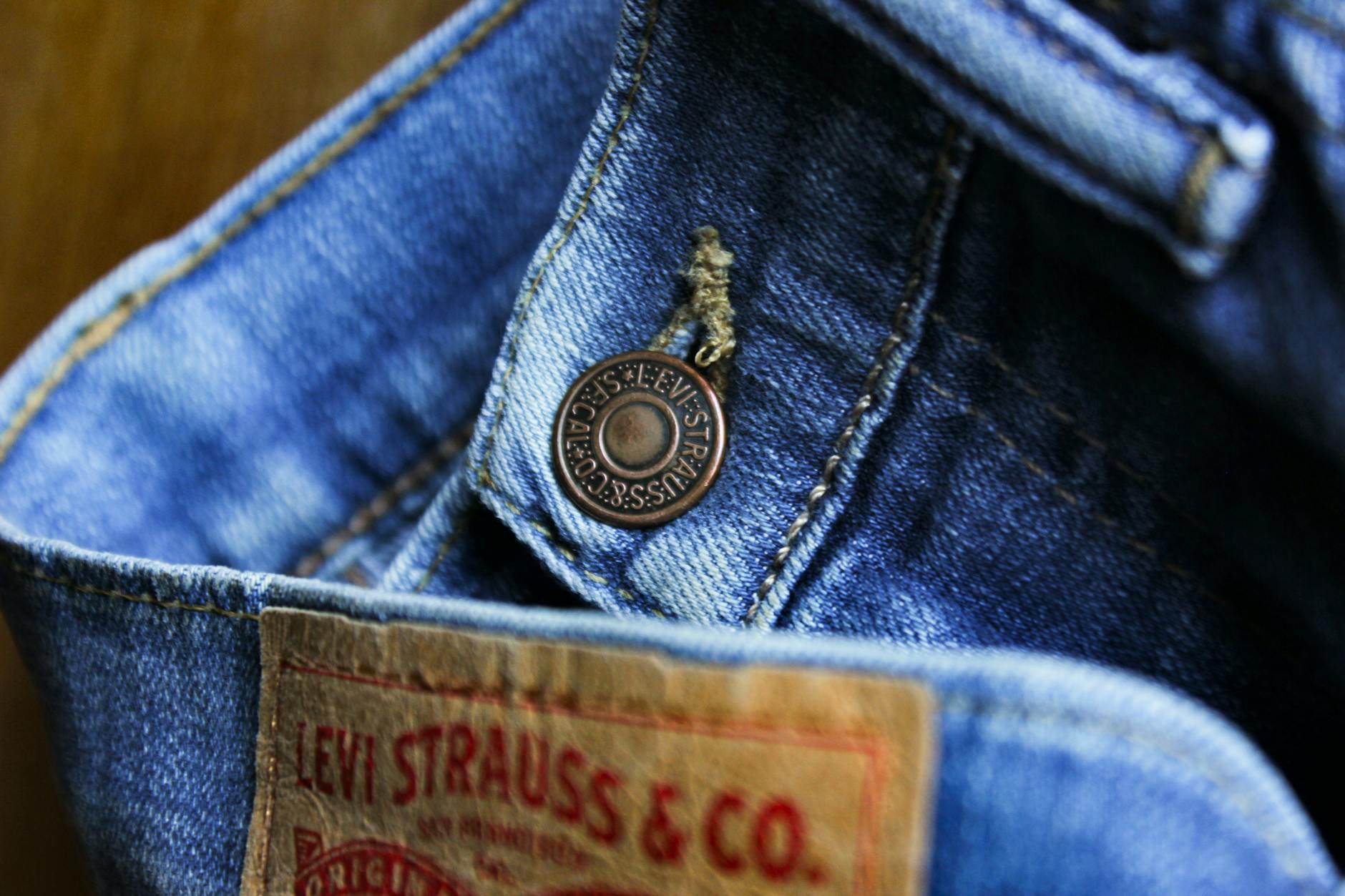
Davis tried something almost offhand. He grabbed some copper rivets — the kind used to fasten horse blankets — and reinforced the stress points on the trousers. The pockets. The base of the fly. The spots that always gave out first.
It worked. Word spread fast. Other miners and laborers wanted the same thing. Within months, Davis was selling riveted pants as fast as he could make them and getting nervous about someone stealing the idea.
Here's where Strauss comes back in. Davis wanted to patent the design but didn't have the $68 filing fee. So he wrote to his fabric supplier — Levi Strauss — and proposed a partnership. Strauss said yes. On May 20, 1873, the two men received U.S. Patent No. 139,121 for "an Improvement in Fastening Pocket-Openings." That date is now officially recognized as the birthday of blue jeans.
From Mineshaft to Main Street
For the first few decades, these riveted denim trousers were strictly workwear. Cowboys wore them. Railroad workers wore them. Farmers wore them. The idea that anyone would put on a pair for anything other than hard labor would have seemed bizarre.
The cultural shift came slowly, then all at once. In the 1930s, dude ranches in the American West started attracting city tourists who wanted the cowboy experience — and they brought their jeans home with them. Hollywood picked up the thread, with Western films turning denim into the visual shorthand for rugged American independence.
By the 1950s, something bigger was happening. James Dean wore jeans in Rebel Without a Cause. Marlon Brando wore them in The Wild One. Suddenly, denim wasn't just practical — it was a statement. It said something about who you were, or at least who you wanted to be. Schools started banning them. Parents got nervous. Which, of course, only made teenagers want them more.
The 1960s and 70s turned jeans into a full-blown cultural symbol. Protesters wore them. Rock musicians wore them. They crossed race, class, and geography in a way almost no other garment ever had. You could find the same Levi's on a factory worker in Detroit and a college student in Berkeley and a rancher in Wyoming.
The Democratic Fabric
What's remarkable about denim — and what Strauss and Davis couldn't possibly have planned — is how stubbornly classless it remains. Fashion has tried, repeatedly, to make jeans aspirational. Designer denim in the 1970s and 80s, $400 raw selvedge pairs in the 2000s, distressed and embroidered and embellished versions that cost more than a car payment. And yet the basic blue jean refuses to belong to any one group.
Presidents wear them on vacation. Rockstars wear them onstage. Kids wear them to school. Retirees wear them to the grocery store. The garment has survived disco, grunge, the athleisure takeover, and every trend cycle in between.
That durability — literal and cultural — traces directly back to what Strauss and Davis were actually solving for in 1873. They weren't chasing style. They were chasing strength. And in doing so, they accidentally built something that outlasted every fashion moment that came after it.
The rivets are still there, by the way. Check your back pockets.