The Survival Stitch That Became a Status Symbol
When Every Thread Counted
In the winter of 1847, somewhere along the Oregon Trail, a settler's wool blanket began to fray at the edges. Without the blanket stitch—a simple looping technique that locks raw fabric edges in place—that fraying could mean the difference between survival and death in sub-zero temperatures.
Today, that same stitch decorates the edges of $3,000 Hermès scarves and appears as a "heritage detail" on jackets that cost more than most people's monthly rent. But the blanket stitch didn't start as a fashion statement. It began as frontier insurance.
The Original Makers
Long before European settlers arrived in North America, Indigenous craftspeople had perfected the art of edge finishing. The blanket stitch—sometimes called the buttonhole stitch—appeared on everything from buffalo hide clothing to woven plant fiber blankets. The technique was simple but ingenious: thread loops through itself to create a continuous binding that prevents fabric from unraveling.
When traders began exchanging wool blankets with Native American tribes in the 1600s, they quickly learned that these European textiles needed reinforcement to survive harsh winters. The blanket stitch became the go-to solution, turning trade goods into survival gear.
Military Precision Meets Frontier Necessity
By the mid-1800s, the U.S. military had standardized the blanket stitch for field equipment. Army surplus blankets—recognizable by their distinctive blanket-stitched edges—flooded civilian markets after the Civil War. Suddenly, this utilitarian finishing technique was everywhere: on horse blankets, camp bedding, and the rough wool coats worn by railroad workers and cattle ranchers.
The stitch earned its name during this period, when "blanket" referred not just to bedding but to any heavy wool fabric designed for outdoor use. Cowboys, miners, and frontier families all relied on blanket-stitched edges to keep their gear intact through months of hard use.
From Function to Fashion
The transformation from survival skill to style element began in the 1920s, when American sportswear designers started romanticizing frontier aesthetics. Brands like L.L.Bean and Pendleton began incorporating blanket stitching into their designs—not because it was necessary, but because it suggested authenticity and craftsmanship.
The stitch gained serious fashion credibility in the 1970s when Ralph Lauren built an entire aesthetic around "authentic" American heritage. His blanket-stitched leather jackets and wool coats weren't meant for cattle drives, but they carried the visual DNA of frontier practicality. The message was clear: this wasn't just clothing, it was a connection to something real.
The Luxury Paradox
By the 1990s, high-end European fashion houses had discovered the blanket stitch's appeal. Hermès began using it on leather goods, Chanel incorporated it into tweed jackets, and suddenly a technique born from necessity became a symbol of luxury craftsmanship.
The irony is striking: a stitch developed to make cheap trade blankets last longer now serves as proof that you can afford to pay someone to hand-finish your accessories. A single Hermès bag with blanket-stitched edges might cost more than a frontier family's entire annual income.
The Modern Revival
Today's fashion landscape has embraced the blanket stitch with renewed enthusiasm. Heritage brands like Filson and Barbour use it to signal authenticity, while contemporary designers like Gabriela Hearst and Wales Bonner incorporate it as a nod to craft traditions. Even fast fashion has adopted simplified versions, though machine-made "blanket stitching" misses the point entirely.
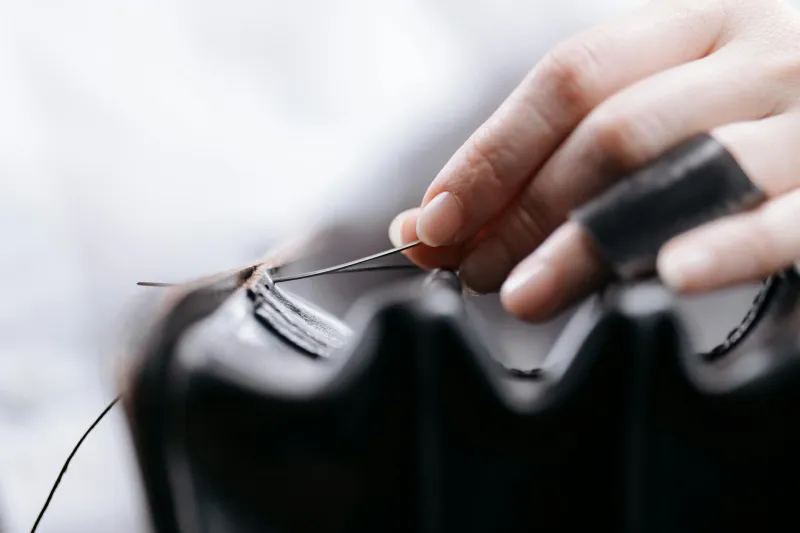
The technique has also found new life in the maker movement. Instagram is full of DIY enthusiasts learning to blanket stitch by hand, often unaware they're practicing a skill their great-great-grandparents might have used to survive winter on the plains.
Why It Endures
The blanket stitch's journey from frontier necessity to fashion statement reflects something deeper about American culture's relationship with authenticity. In an increasingly digital world, we're drawn to things that feel handmade, historical, and real. The blanket stitch offers all three.
Every time you see those distinctive loops along the edge of a jacket or bag, you're looking at a direct line back to the American frontier—to people who understood that good craftsmanship wasn't about style, it was about staying alive. The stitch hasn't changed in 200 years. Only its purpose has shifted from survival to symbol.
In a world where most things are designed to be disposable, the blanket stitch still promises permanence. It's a small act of faith that some things are worth making to last—whether you're facing a Wyoming winter or just want your handbag to outlive the trends.