Sticky Situation: The Factory Mishap That Accidentally Invented the Sneaker
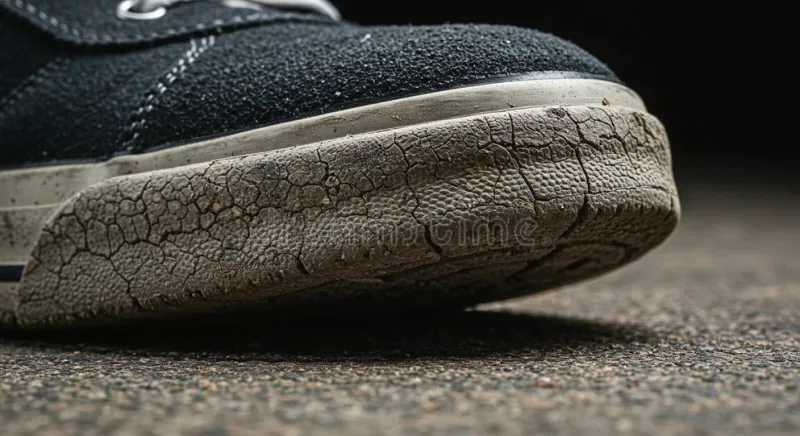
Photo: vintage rubber sole sneaker close up worn canvas shoe, via thumbs.dreamstime.com
Somewhere in America right now, someone is paying $180 for a pair of sneakers they will never exercise in. They might wear them to brunch, to a gallery opening, to a job interview at a company with a ping-pong table in the lobby. The sneaker has become so thoroughly detached from its athletic origins that we barely register the word sneak inside it anymore — the original reference to how quietly rubber soles moved across floors compared to leather.
But before any of that cultural weight accumulated, before Nike and Adidas and the resale market and the Instagram unboxing videos, there was a pot of rubber boiling over in a workshop in Massachusetts. And that accident changed everything.
Rubber Before It Was Ready
Natural rubber in the early 19th century was a material full of promise and completely full of problems. It came from South American rubber trees, it was waterproof, it was flexible — and it was absolutely useless in any real temperature extreme. In summer heat, rubber goods turned soft and sticky, leaving a trail of melted shoe soles and collapsed raincoats behind them. In winter cold, they cracked and shattered. Investors had poured money into rubber products through the 1820s and 1830s, and almost all of them had lost it.
Charles Goodyear — yes, that Goodyear, a Connecticut-born inventor with no chemistry training and an almost deranged level of persistence — had been obsessed with solving rubber's temperature problem for years. He experimented constantly, mixing rubber with everything from magnesia to witch hazel to cream cheese (reportedly). Nothing worked. He went bankrupt multiple times. His family reportedly survived on fish he caught himself.
Then, around 1839, something happened in his workshop that accounts vary on but agree was unplanned. Goodyear was heating a rubber and sulfur mixture — possibly to show off a sample, possibly mid-experiment — and it came into contact with a hot stove. Instead of melting into useless goo the way rubber always had, the material charred slightly at the edges but held its form in the middle. It was firm. It was flexible. It didn't go sticky in heat or brittle in cold.
He'd accidentally invented vulcanization — the chemical process of treating rubber with sulfur and heat to stabilize it — and he didn't entirely understand what he'd done or why it worked. But he knew it worked.
From Factory Floor to Footwear
Goodyear patented vulcanized rubber in 1844, and the applications came quickly. Hoses, gaskets, tires, medical equipment. But footwear was an early and obvious use case. A sole that wouldn't crack in winter or stick to the floor in summer was genuinely revolutionary for an era when most shoes were soled in leather, which wore down fast and offered almost no grip on wet surfaces.
The first rubber-soled shoes were purely utilitarian — croquet shoes, gym shoes, beach shoes. They were quiet on floors in a way leather never was, which is precisely where the word sneaker came from. An 1887 Boston Journal article used the term to describe how rubber-soled shoes let the wearer move without being heard. The name stuck because the thing was true.
In the United States, a company called U.S. Rubber Company began mass-producing rubber-soled canvas shoes in the 1890s under various brand names, eventually consolidating them under the label Keds in 1916. These were simple, cheap, and democratic — available to nearly anyone. Around the same time, a young Adi Dassler in Germany was stitching together athletic shoes in his mother's laundry room, a project that would eventually split into Adidas and Puma and reshape the entire industry. But in America, the rubber-soled canvas sneaker was already becoming a fixture of childhood, of gym class, of summer.
The Moment Sneakers Became Something Else
For most of the early 20th century, sneakers knew their place. They were for sport, for play, for activities where you needed grip and didn't care about looking formal. Then two things happened that changed the equation permanently.
The first was the postwar athletic boom. Returning veterans in the late 1940s and 1950s brought with them an enthusiasm for organized sport and physical fitness that the country hadn't quite seen before. Sneakers rode that wave. Converse's Chuck Taylor — originally a basketball shoe endorsed by the eponymous player in 1923 — became a cultural touchstone, worn on courts across the country.
The second was Nike. Founded in 1964 as Blue Ribbon Sports by a University of Oregon track coach and his former runner, Nike didn't just sell athletic shoes — it sold aspiration. The famous waffle sole, created when co-founder Bill Bowerman poured rubber into his wife's waffle iron to experiment with grip patterns, was another accidental innovation in a long line of them. By the 1980s, Nike had turned the sneaker into a status object, a collector's item, a cultural artifact. The Air Jordan launched in 1985 wasn't just a shoe. It was a statement.
The Accidental Empire
The global sneaker market is now worth over $100 billion annually. Limited-edition releases cause lines around city blocks. Sneakers are worn to weddings, to offices, to red carpets. A pair of vintage Nikes can sell at auction for more than a used car.
None of that was in the plan. Goodyear was trying to make rubber useful in cold weather. The early shoe manufacturers were trying to give people a cheap, practical alternative to leather. The cultural elevation of the sneaker from gym floor to status symbol happened gradually, accidentally, through a series of commercial decisions, athletic endorsements, and shifting ideas about what it means to dress well.
The rubber that spilled onto a hot stove in 1839 is still, in a very real sense, underneath us. We just forgot to notice.