The Machine That Couldn't Thread Straight: How Wonky Stitches Became Denim's Signature Look
The Stitch That Almost Wasn't
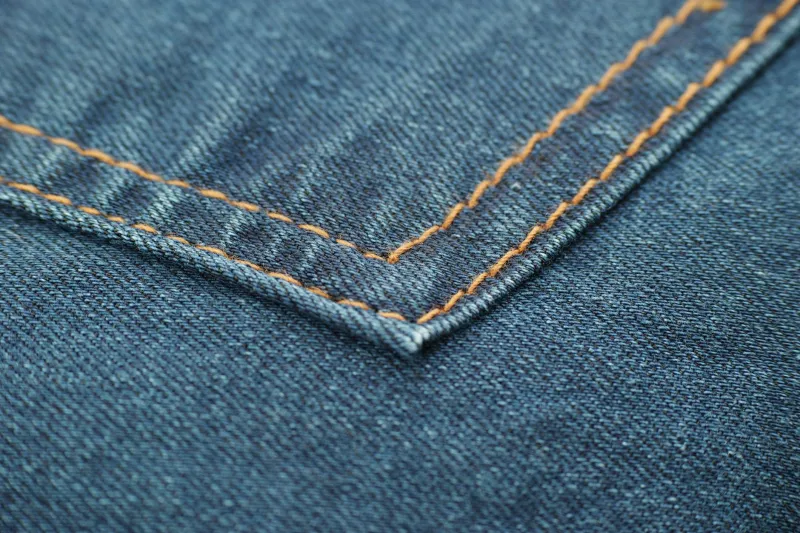
Every pair of jeans you've ever owned carries the DNA of a mechanical failure. Those distinctive zigzag stitches running down the seams, the reinforced patterns at stress points, the way the thread seems to dance rather than march in perfect lines—none of it was supposed to happen.
In the spring of 1851, Ezra Whitman was having the worst week of his professional life. His textile workshop in Lowell, Massachusetts, had just taken delivery of three brand-new industrial sewing machines, the latest marvel of American manufacturing. These machines promised to revolutionize how clothing was made, stitching faster and more precisely than any human hand.
There was just one problem: they wouldn't cooperate.
When Perfect Machines Go Wrong
The machines, manufactured by the Wheeler & Wilson company, had a peculiar defect. The tension mechanism that controlled thread flow was wildly inconsistent. Instead of creating the neat, uniform stitches that factory owners demanded, these particular units produced an erratic pattern. Sometimes the thread pulled tight, creating small puckers in the fabric. Other times it loosened, leaving visible loops. The stitching wandered slightly left and right as the fabric fed through, creating what one frustrated seamstress called "drunk thread."
Whitman's first instinct was to return the machines. His workshop specialized in fine clothing for Boston's merchant class—crooked seams were absolutely unacceptable. But the manufacturer was backlogged for months, and Whitman had contracts to fulfill.
So he made a decision that would accidentally shape American fashion: he kept sewing.
The Workwear Experiment
Whitman's solution was pragmatic. He couldn't use the faulty machines for his regular clientele, but he had recently received an unusual order from a California gold prospector named Jacob Davis. Davis needed sturdy work pants for miners—durability mattered more than appearance.
Whitman figured the wonky stitching might actually help. The irregular tension created natural stress distribution along the seams. Where traditional straight stitches might snap under pressure, these wandering threads seemed to flex and hold.
He was right. The pants shipped to California in late 1851 came back with glowing reviews. Miners reported that the seams held up better than anything they'd worn. Word spread through the goldfields about these peculiar pants with the "snake-stitch" seams.
The Accident Becomes Intentional
By 1852, Whitman was deliberately reproducing the defective stitching pattern. He had figured out how to manipulate his machines to create controlled imperfection—tight enough for strength, loose enough for flexibility, wandering enough to distribute stress.
When Levi Strauss partnered with Jacob Davis in 1873 to patent the rivet-reinforced jean, they adopted Whitman's stitching technique. But they took it further, turning the mechanical flaw into a design feature. The distinctive orange thread that became Levi's signature was chosen specifically because it highlighted the irregular stitch pattern.
What had started as a manufacturing defect became a mark of authenticity.
The Psychology of Imperfect Stitches
The wandering stitches did something unexpected to the human eye. Perfectly straight seams looked machine-made, sterile, almost cheap. The slight irregularity of the "defective" stitching suggested handcraft, even though it was entirely mechanical.
Consumers began associating the imperfect stitches with quality and durability. The randomness felt honest, authentic in a way that perfect seams couldn't match. When other manufacturers tried to compete with machine-perfect stitching, their products looked inferior by comparison.
From Flaw to Feature
By the 1880s, every major denim manufacturer in America was trying to replicate Whitman's accidental discovery. Some bought deliberately misaligned machines. Others trained operators to create controlled variations in their stitching.
The technique spread beyond workwear. By the 1920s, the "heritage stitch" was appearing on everything from hunting jackets to women's skirts. The imperfection had become so associated with American-made quality that European manufacturers began copying it.
The Modern Legacy
Today, every major denim brand uses some version of Whitman's accidental stitching pattern. Premium jeans often emphasize their "irregular" seams as a selling point. Japanese denim manufacturers, famous for their attention to detail, spend considerable effort reproducing the exact type of controlled imperfection that frustrated a Massachusetts tailor 170 years ago.
Modern sewing machines are programmed to introduce subtle variations in tension and alignment, carefully recreating what was once a mechanical flaw. The most expensive jeans in the world feature stitching that deliberately mimics a broken machine from 1851.
The Thread That Binds
Next time you look at a pair of jeans, pay attention to the seams. Those slightly wandering lines of thread, the way they seem to breathe rather than march in formation, the subtle variations that make each pair unique—that's the ghost of Ezra Whitman's temperamental sewing machine.
An accident became an aesthetic. A flaw became a feature. And a frustrated tailor's worst week became the foundation of how America learned to dress.
Sometimes the most enduring designs aren't planned at all—they're just happy accidents that someone was smart enough not to fix.