Grout Lines and Germ Panic: The Postwar Anxiety That Tiled America's Bathrooms
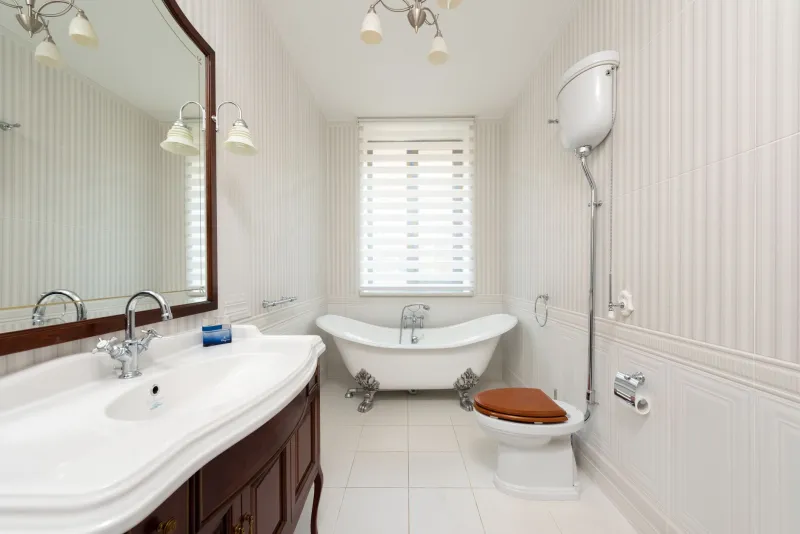
There's a particular look that most American bathrooms share, whether they're in a 1950s ranch house in Ohio or a 1970s apartment in Los Angeles. Small white or off-white tiles, usually four inches square or smaller, marching up the walls in neat rows. Thin grout lines running between them like a grid. Maybe a decorative border at shoulder height. The whole effect is crisp, institutional, and faintly medical.
This is not a coincidence. That bathroom aesthetic was deliberately constructed — not by interior designers chasing beauty, but by manufacturers, public health campaigns, and a postwar American culture that had developed a serious, almost evangelical relationship with the concept of cleanliness.
Before the Tile Grid
For most of American domestic history, the bathroom was not a tiled room. Through the 19th century, bathing often happened in portable tubs in bedrooms or kitchens. When indoor plumbing became more common in the late 1800s, dedicated bathroom spaces emerged, but they were finished in ways that look almost unrecognizable today — painted plaster walls, wood paneling, linoleum floors, sometimes just bare painted concrete.
Ceramic tiles existed, but they were expensive and associated with public buildings: hospitals, train stations, department stores. The idea that a private home bathroom should be tiled from floor to ceiling was not yet part of the American imagination.
That started to change in the early 20th century, when the bathroom began its long transformation from a functional utility space into a room with cultural weight.
The Germ Theory Remodel
The widespread acceptance of germ theory — the understanding that microscopic organisms caused disease — had been gradually reshaping American domestic life since the late 1800s. By the early 20th century, it had become a marketing force. Soap companies, cleaning product manufacturers, and appliance makers all leaned into the language of hygiene, bacteria, and contamination to sell their products.
The bathroom became ground zero for this anxiety. It was where bodily functions happened, where waste was managed, where the line between clean and unclean felt most immediate. Public health messaging reinforced the idea that the domestic bathroom needed to be as sterile as possible — not just clean, but visibly, demonstrably, undeniably clean.
This is where tile entered the picture. Ceramic tile, unlike painted plaster or wood, was non-porous. It could be wiped down. It didn't absorb moisture or harbor mold (in theory). It gleamed. And crucially, it looked clean in a way that other materials simply didn't.
By the 1920s and 1930s, tile manufacturers were aggressively marketing ceramic tile for home bathrooms, and the messaging was almost entirely built around hygiene. Advertisements showed sparkling white tile bathrooms alongside language about health, purity, and modern living. The tiled bathroom wasn't just stylish — it was responsible.
The Postwar Boom and the Grout Grid
The real turning point came after World War II, when the American housing market exploded. Millions of new homes were built in the late 1940s and 1950s, and bathroom design became standardized at a scale that had never existed before.
Developers building tract housing needed materials that were durable, affordable, and fast to install. Small ceramic tiles — typically the four-inch squares that still dominate American bathrooms — fit all three criteria. They were cheaper than larger format tiles, easier to cut around fixtures, and could be installed by semi-skilled labor without specialized expertise.
The grout lines that resulted from using small tiles were, in the beginning, largely a byproduct of the format. Small tiles meant more joints, and more joints meant more grout. But something interesting happened: the grout lines became part of the aesthetic rather than just a structural necessity.
Marketing stepped in to explain why this was actually desirable. The visible grid of grout lines, manufacturers argued, demonstrated thoroughness. You could see every joint. You could inspect every line. A bathroom with visible grout was a bathroom that had nothing to hide — a bathroom you could audit. The grout lines became a symbol of hygienic transparency.
The Cleaning Crisis That Reinforced Everything
In the 1950s, as these tiled bathrooms proliferated across American suburbs, a secondary anxiety emerged: grout staining. Grout, being porous and light-colored, absorbed soap scum, mineral deposits, and mildew with impressive efficiency. The very feature that was supposed to signal cleanliness became a record of everything that had ever happened in the bathroom.
The cleaning product industry responded with a wave of grout-specific cleaners, bleach-based sprays, and scrubbing tools designed specifically for tile joints. These products reinforced the idea that grout maintenance was a serious domestic responsibility. Magazine articles in publications like Better Homes and Gardens offered detailed grout-cleaning regimens. The grout line had become both a status symbol and a chore.
This feedback loop — tile signals cleanliness, grout requires maintenance, maintenance products reinforce the importance of clean grout, which reinforces the value of tile — kept the small-tile aesthetic locked in place through the 1960s, 70s, and well into the 80s.
Why We're Still Living With It
Larger format tiles, which produce fewer grout lines and a cleaner visual surface, have been technically available for decades. European bathroom design moved toward them significantly earlier than American design did. In Scandinavia and much of Western Europe, large-format tiles and minimal grout lines became the standard aesthetic well before they caught on here.
In American bathrooms, the shift has been slower, partly because of the sheer volume of existing tile work that would need replacing, and partly because the small-tile aesthetic became so deeply associated with the idea of a proper bathroom that departing from it felt, to many homeowners, vaguely wrong.
The grid of grout lines still reads, at some level, as serious. Trustworthy. Clean. Even as newer tile formats, epoxy grouts that resist staining, and completely different wall materials offer alternatives, the postwar bathroom template persists in millions of American homes.
It turns out that selling a nation on a single vision of cleanliness is a remarkably durable business model. The tiles are still there. The grout is still there. And somewhere, there's still a magazine article telling you how to scrub it properly.