The Pocket That Was Never There: A 300-Year-Old Fashion Lie
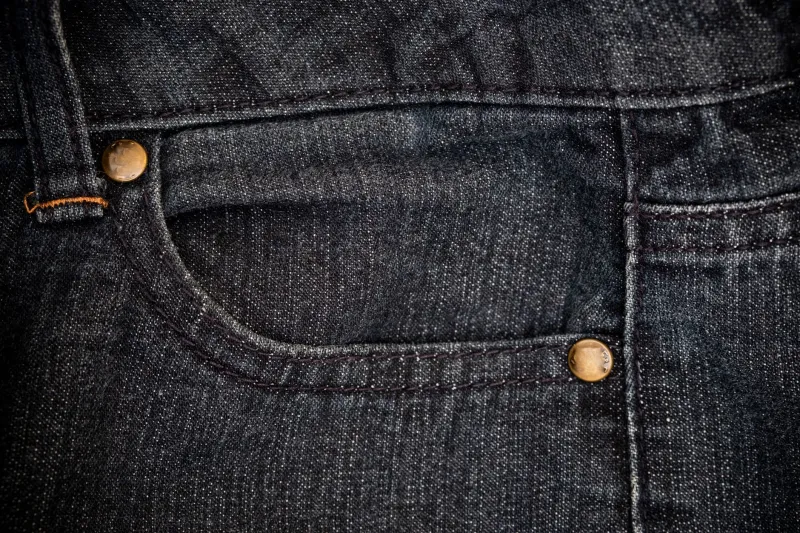
At some point, almost every woman has done it. You reach into the pocket of a new pair of jeans or a blazer, fingers searching for the bottom — and find nothing. Flat fabric. A decorative flap. The suggestion of a pocket without the reality of one.
It's a joke that stopped being funny around the third or fourth time it happened. But fake pockets aren't a modern manufacturing shortcut or a cost-cutting measure. They're the tail end of a design philosophy that stretches back three centuries, rooted in silhouette obsession, theft anxiety, and a long, slow assumption that women didn't need to carry things the same way men did.
When Pockets Were Separate Garments
To understand how we got here, you have to go back to a time when pockets weren't part of clothing at all.
In 17th and 18th century Europe — and in the American colonies — women carried their belongings in small fabric bags called pocket ties. These were essentially flat pouches worn underneath the skirt, accessed through slits in the outer fabric. They were hidden, practical, and entirely separate from the dress itself. Women could load them up with coins, keys, sewing supplies, letters, and snacks without anyone being the wiser.
Men's clothing, meanwhile, had begun incorporating sewn-in pockets directly into coats and trousers. It was a design distinction that seemed minor at the time but would prove to have enormous staying power.
The trouble started in the late 18th century, when women's fashion took a dramatic turn toward the body.
The Silhouette Problem
Around the 1790s, the voluminous skirts and structured bodices of earlier decades gave way to a slimmer, more column-like silhouette inspired by ancient Greek and Roman dress. These new styles — light, flowing, and pressed close to the body — had no room for the bulky pocket ties women had relied on for generations.
Fashion won. The pocket ties disappeared.
In their place came the reticule, a small handbag carried openly in the hand. It was decorative, impractical, and held almost nothing. Contemporary satirists had a field day with it — cartoons mocked women fumbling with tiny bags that couldn't fit a handkerchief. But the reticule became fashionable precisely because of its uselessness. It signaled that a woman was refined enough not to need to carry much.
Tailors, responding to demand for sleek silhouettes, began sewing pockets shut on women's garments to prevent the fabric from bunching. Some dresses had pocket openings that led nowhere — the appearance of function without any of the reality. The fake pocket had arrived.
The Victorian Tightening
Through the 19th century, the relationship between women's fashion and practical pockets grew steadily more hostile. Victorian-era dresses were engineered around the waist — corsets, bustles, and layers of fabric that made internal pockets structurally complicated. The few pockets that did appear in women's skirts were often positioned awkwardly, too shallow to hold anything significant, or tucked so deep in the layers that accessing them required a minor excavation.
Men's suits, meanwhile, were evolving into pocket-rich environments. Jacket breast pockets, trouser pockets, waistcoat pockets — the well-dressed Victorian man could carry a watch, a wallet, a card case, and a folded letter without breaking the line of his coat. Women carried handbags.
This wasn't entirely accidental. There was a persistent anxiety, voiced openly in Victorian-era fashion writing, that visible pocket bulk was unfeminine — that a woman who carried too much was somehow transgressing against the decorative function her clothes were meant to serve. The handbag industry grew directly from this gap, positioning itself as the practical solution to a problem that fashion itself had created.
The 20th Century Didn't Fix It
You might expect that the 20th century — with its suffrage movements, workplace integration, and women wearing trousers — would have resolved the pocket question. It didn't, not really.
When women's trousers became fashionable in the 1930s and 40s, they often borrowed the silhouette of men's pants without the pocket architecture. Manufacturers discovered that consumers couldn't easily compare pocket depth when shopping, and that smaller or absent pockets saved on fabric and maintained a cleaner line through the hip and thigh — an area women's fashion remained fixated on controlling.
By the time denim jeans became a wardrobe staple for everyone in the mid-20th century, the pocket disparity was already baked in. Women's jeans were cut differently from men's, and the pockets followed the cut — smaller, shallower, and sometimes purely decorative. Studies conducted as recently as 2019 found that women's jeans pockets are, on average, 48 percent shorter and 6.5 percent narrower than men's. Some can't fit a smartphone. Many can't fit a hand past the knuckles.
Why It Still Matters
At first glance, the fake pocket seems like a trivial complaint — a minor inconvenience, nothing more. But it's a surprisingly clean illustration of how design choices accumulate meaning over time.
The original decision to shrink or eliminate women's pockets wasn't made out of malice. It was made out of a specific set of aesthetic priorities that placed appearance above utility. But those priorities encoded an assumption — that women's clothing should prioritize how it looked over what it could do — and that assumption kept getting passed forward, generation after generation, without anyone stopping to question it.
The handbag industry, now worth over $50 billion globally, exists in significant part because women's clothing still doesn't reliably hold their belongings. It's a solution to a manufactured problem, and the problem was manufactured by fashion.
There's something almost elegant about the irony: the fake pocket started as a way to maintain a silhouette. Three hundred years later, it's still doing exactly that — and we're still reaching in, still finding nothing, still slightly surprised every time.