The Chemistry Mistake That Turned Victorian Grief Into Royal Fashion
The Teenager Who Changed Color Forever
In 1856, eighteen-year-old William Henry Perkin was supposed to be curing malaria. Instead, he accidentally created the most coveted color in human history.
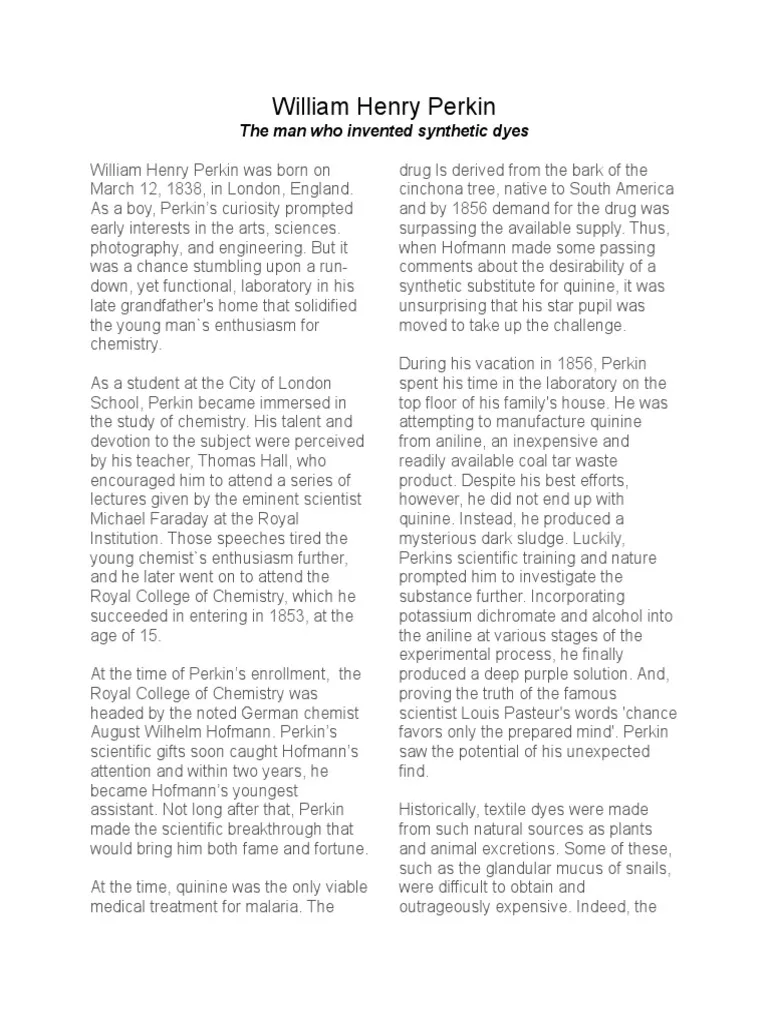 Photo: William Henry Perkin, via imgv2-2-f.scribdassets.com
Working in his makeshift home laboratory in London, Perkin was trying to synthesize quinine—the anti-malarial drug extracted from South American tree bark. What he got instead was a sticky, dark residue at the bottom of his flask. Most scientists would have thrown it away. Perkin dipped a cloth into it.
The fabric emerged a brilliant, shimmering purple unlike anything the world had ever seen. He had just invented mauveine—the first synthetic dye.
When Lilac Meant Death
Before Perkin's accident, purple was practically impossible to produce. The ancient Phoenicians made it from thousands of crushed murex shells, making purple cloth more expensive than gold. By the Victorian era, the closest most people got to purple was lilac—the pale, mournful shade of the common flower.
And lilac meant grief.
Victorian Americans wore lilac during "half-mourning," the prescribed period when full black was considered too dramatic but regular colors were still inappropriate. Widows graduated from black to lilac after their first year of mourning. Young women wore lilac ribbons to funerals. The color became so associated with death that many Americans avoided it entirely in everyday life.
Lilac flowers themselves were planted in cemetery gardens and given to grieving families. The scent was supposed to provide comfort, but the color served as a constant reminder of loss. It was beautiful, but it carried baggage.
The Color That Broke the Internet of 1857
Perkin's synthetic purple changed everything overnight. Within months of his discovery, "mauve fever" swept through London and jumped the Atlantic to New York. For the first time in history, ordinary people could afford to wear the color of emperors.
But here's where it gets interesting: Americans didn't just embrace purple—they completely flipped the meaning of lilac along with it.
Suddenly, lilac wasn't just for mourning. Fashion magazines declared it "refined" and "sophisticated." Department stores in Boston and Philadelphia created entire "mauve sections." Society ladies threw "purple parties" where everything from the tablecloths to the flower arrangements had to be some shade of purple.
The transformation was so rapid that by 1860, wearing lilac to a funeral was considered almost disrespectful—too fashionable for genuine grief.
From Suffrage to Status Symbol
The real cultural shift happened during the women's suffrage movement. Suffragettes adopted purple as one of their official colors, alongside white and gold. But they specifically chose deeper purples, leaving lilac to evolve into something entirely different: a symbol of refined femininity.
By the 1890s, American women wore lilac to garden parties and afternoon teas. The Gibson Girl illustrations that defined American beauty standards often featured women in soft purple dresses. Lilac had completed its journey from death to life, from mourning to celebration.
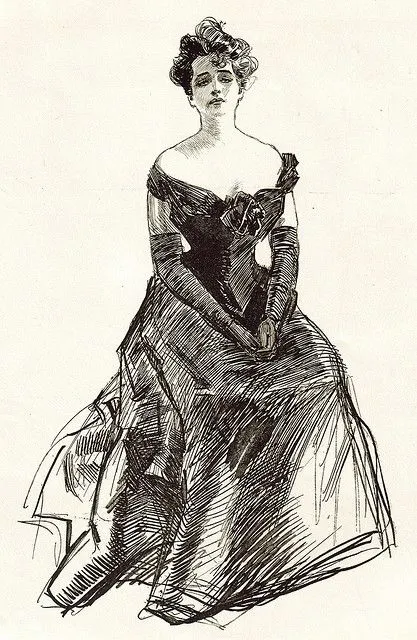 Photo: Gibson Girl, via i.pinimg.com
This wasn't just changing fashion—it was changing how Americans thought about color itself. For the first time, people began to understand that the meaning of a color could be manufactured, marketed, and completely transformed within a single generation.
The Psychology of Manufactured Meaning
What makes the lilac story fascinating isn't just the color change—it's how quickly Americans accepted the new meaning without questioning the old one. Within twenty years, most people had completely forgotten that lilac once meant grief.
Color psychologists today know that our emotional responses to colors are almost entirely learned, not instinctive. The lilac transformation was one of the first large-scale demonstrations of this principle in American culture. A single chemical breakthrough didn't just create new fashion possibilities—it proved that cultural meanings could be rewritten as easily as mixing dyes in a lab.
The Modern Legacy
Today, most Americans associate lilac with spring, femininity, and romance. Wedding planners recommend it for "soft, elegant" ceremonies. Interior designers use it in nurseries and bedrooms for its "calming" properties. Fashion brands market lilac as "timeless" and "classic."
None of these associations existed before 1856.
The next time you see lilac—whether it's a bridesmaid's dress, a paint chip at Home Depot, or actual lilac flowers in someone's yard—remember that you're looking at one of history's most successful rebranding campaigns. A teenager's chemistry mistake didn't just create a new dye. It proved that even our most basic emotional responses to the world around us can be completely rewritten by whoever controls the narrative.
And in America, that's usually whoever controls the market.