The Dot That Changed How America Thinks About Paper
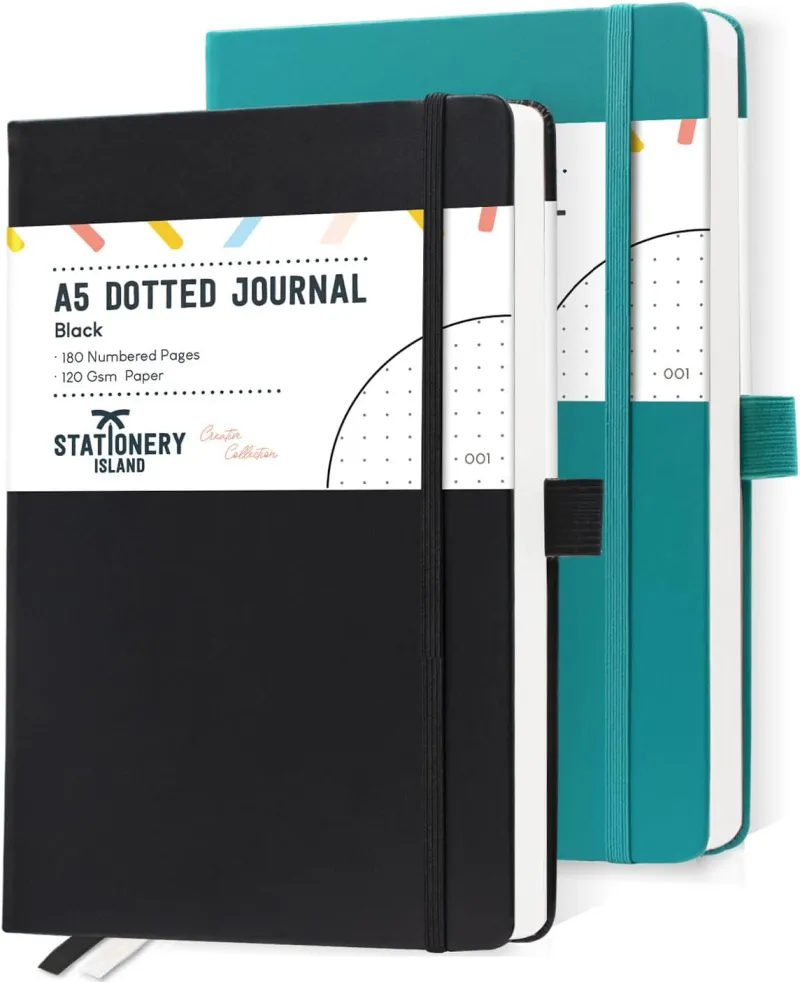
Photo: dotted grid notebook bullet journal flat lay desk stationery, via m.media-amazon.com
The Paper Nobody Wanted
Somewhere in a Japanese printing facility in the early 1960s, a quality control worker stared at a sheet of paper and frowned. The dots were wrong. Not lines, not a clean blank page — just a faint, evenly spaced grid of tiny points, the result of a calibration error during a run meant to produce standard ruled stationery. The batch was flagged. Some of it was discarded. Some of it, quietly, was not.
For most of the twentieth century, dotted paper existed in the margins of the stationery world — occasionally turning up in engineering notebooks, sometimes used by graphic designers who needed a subtle alignment guide without the visual noise of full graph lines. It was a tool for specialists. Nobody was writing manifestos about it. Nobody was posting about it online, because there was no online.
That changed faster than anyone expected.
A Designer, A Notebook, and a Problem With Screens
By 2013, Ryder Carroll was a digital product designer living in New York City, surrounded by apps, notifications, and the low-grade anxiety that comes from maintaining seventeen different productivity systems simultaneously. He had ADHD, a demanding job, and a brain that didn't cooperate with the linear structure of most planners. He also had a notebook.
Carroll had been quietly developing a personal organization method for years — a hybrid of to-do lists, journaling, and scheduling that used symbols and rapid notation to capture tasks before they slipped away. When he finally sat down to share the system online in a simple YouTube video, the response blindsided him. Within days, the video had been shared thousands of times. The comment sections filled with people saying some version of the same thing: I didn't know I needed this until right now.
The system Carroll described became known as bullet journaling. And the paper he recommended — dotted grid, faint and unobtrusive — became its quiet centerpiece.
Why the Dot Grid Hit Different
It sounds almost too simple to explain. But the dotted grid solved a specific problem that neither blank paper nor ruled lines could fully address.
Ruled paper pushes you toward linearity. Everything wants to be a sentence, a list, a paragraph. Graph paper is rigid — it implies precision, math, structure. Blank paper is intimidating for people who aren't confident artists or free-form thinkers.
Dotted paper is permissive. The dots suggest a grid without enforcing one. You can write in straight lines if you want them. You can draw a box, sketch a calendar, map out a week, or doodle a floor plan for a room you're redesigning. The page doesn't judge you. It just holds space.
For a generation that had spent a decade trying to squeeze their inner lives into apps, that flexibility felt almost radical.
The Analog Backlash Nobody Saw Coming
The bullet journal craze didn't emerge in a vacuum. It arrived at a specific cultural moment — one where smartphones were ubiquitous, screen time was rising, and a growing number of Americans were quietly exhausted by the frictionlessness of digital life.
There's a real irony here. The bullet journal community grew almost entirely on Instagram and Pinterest, platforms where people posted elaborate spreads of hand-lettered weekly layouts and color-coded habit trackers. The analog revival was documented digitally, shared digitally, and monetized digitally. Leuchtturm1917, a German notebook brand that began producing dotted-grid notebooks in response to demand, saw sales surge dramatically. Hobonichi, the Japanese planner company, found a devoted American audience almost overnight. Entire YouTube channels devoted to "plan with me" videos racked up millions of subscribers.
The stationery industry, which had been quietly declining for years, got an unexpected lifeline.
The Billion-Dollar Mistake
Today the global planner and stationery market is worth well over $20 billion, with dotted notebooks representing a significant and growing slice of that figure. Amazon lists hundreds of dotted-grid journals. Specialty stationery stores that might have struggled a decade ago now stock entire walls of them. The bullet journal method has its own bestselling book, its own dedicated app, and a community of practitioners who number in the millions.
All of it traces a line back to a calibration error in a Japanese print run that was supposed to produce something else entirely.
That's the part of the story that gets lost in the aesthetic Instagram posts and the productivity YouTube deep-dives. The dotted grid wasn't engineered as the perfect creative tool. It wasn't the result of extensive user research or a clever design sprint. It was, at its origin, a mistake — paper that didn't come out right, quietly set aside and mostly forgotten.
Why the Root Matters
There's something worth sitting with in that history. Americans have spent the last decade being told that the future is digital-first — that apps will organize us, algorithms will prioritize us, and screens will eventually replace every analog tool we have left. And for a while, it looked like that might be true.
Then a New York designer picked up a notebook and a pen, and millions of people followed him back to paper.
The bullet journal craze is partly about productivity and partly about aesthetics. But at its deepest level, it's about the particular pleasure of making a mark that stays where you put it — on a page that doesn't send you notifications, doesn't drain a battery, and doesn't remember your browsing history.
The dot grid made that possible. A factory worker in 1960s Japan would probably be baffled to learn what their mistake eventually became. But then again, the most useful things often start that way.