The Teardrop That Traveled Everywhere: How Paisley Became America's Unofficial Pattern
The Teardrop That Traveled Everywhere: How Paisley Became America's Unofficial Pattern
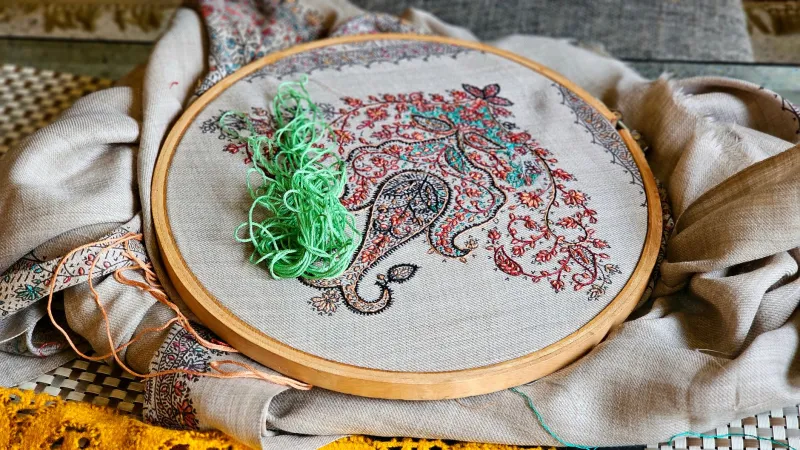
Ask ten people what the paisley shape represents and you'll get ten different answers. A teardrop. A kidney bean. A curved leaf. A sprouting seedling. A mango. A pine cone. A flame. Nobody agrees, and that ambiguity is part of what makes it one of the most fascinating shapes in fashion history — a motif so recognizable that it became iconic before anyone fully understood what they were looking at.
Paisley is on neckties in law offices and bandanas at county fairs. It's on the lining of blazers, the surface of throw pillows, the wallpaper of boutique hotels, and the album art of 1960s rock records. It has been high fashion and counterculture shorthand, luxury signifier and working-class staple, sometimes simultaneously. Its journey from the courts of ancient Persia to a gas station bandana rack in rural Kansas is one of fashion's more improbable stories.
It Started Somewhere in Iran
The shape itself is genuinely ancient. Scholars trace early versions of the motif to the Sassanid Persian Empire, which ruled from roughly the 3rd to 7th centuries AD. The curved, pointed teardrop shape appears in Persian art, textiles, and architecture across centuries, often interpreted as a stylized cypress tree or a Zoroastrian symbol of life and eternity. Some historians connect it to the shape of a date palm frond. Others see it as an abstracted flame.
By the time the Mughal Empire was flourishing across the Indian subcontinent in the 16th and 17th centuries, the motif had traveled east and evolved considerably. Mughal artisans wove extraordinarily complex versions of the shape into Kashmir shawls — luxury textiles made from the fine undercoat of Himalayan goats, so soft and delicate they could be pulled through a finger ring. These shawls were status objects of the highest order, given as royal gifts and traded along routes that stretched from Central Asia into Europe.
When the British East India Company began importing Kashmiri shawls to Europe in the late 1700s, wealthy European women went slightly mad for them. A genuine Kashmir shawl cost the equivalent of a middle-class annual salary. Demand was enormous. Supply was limited. Somebody had to figure out how to make more of them, cheaper.
The Scottish Shortcut That Changed Everything
The town of Paisley, Scotland — just outside Glasgow — had been a textile manufacturing center since the 17th century. By the early 1800s, its Jacquard loom operators were attempting to replicate the Kashmir shawl's intricate patterns for a European market that wanted the look without the price tag.
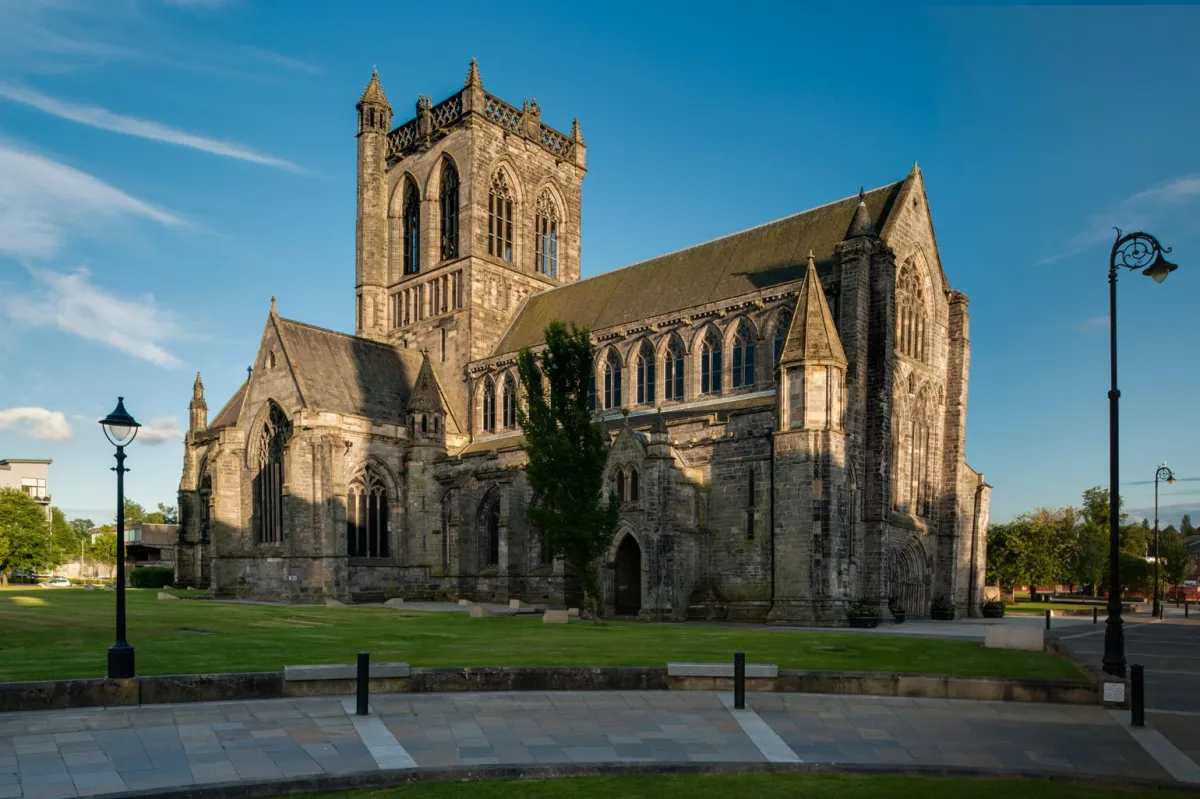 Photo: Paisley, Scotland, via paisley.is
Here's where the accident enters the story. Recreating the Kashmir pattern accurately was extraordinarily difficult. The original shawls were woven using a twill tapestry technique that allowed for subtle color gradations and precise curves. Scottish mills working with different equipment and different thread simply couldn't replicate the original's complexity faithfully.
So they adapted. They simplified. They flattened the curves, standardized the repeating units, and worked within what their looms could actually do. The result was a pattern that resembled the Kashmiri original but was distinctly different — bolder, more graphic, with harder edges and a more rigid repeat structure. It was, in a sense, a manufacturing error elevated into an aesthetic.
The pattern became so associated with the Scottish town that produced it in such volume that Europeans simply started calling it "paisley." The name stuck even though the design originated thousands of miles away in a completely different culture. Kashmiri weavers who had been making versions of this motif for generations had no say in the naming.
Woodstock, Wall Street, and the Gas Station Rack
Paisley shawls fell somewhat out of fashion in Europe by the late 19th century, but the pattern never fully disappeared. It migrated into men's neckwear, where it found a durable home — the slightly exotic, vaguely artistic quality of the motif made it acceptable as a subtle flourish in otherwise conservative suiting culture.
Then the 1960s happened. The counterculture's fascination with Eastern philosophy, Indian spirituality, and anything that felt like a rejection of straight-laced Western convention made paisley an obvious choice. The Beatles wore it. Jimi Hendrix wore it. It showed up on everything from concert posters to Volkswagen vans. What had been a Victorian luxury textile became a symbol of psychedelic rebellion, which is a remarkable identity shift for a pattern invented by Scottish factory workers trying to cut costs.
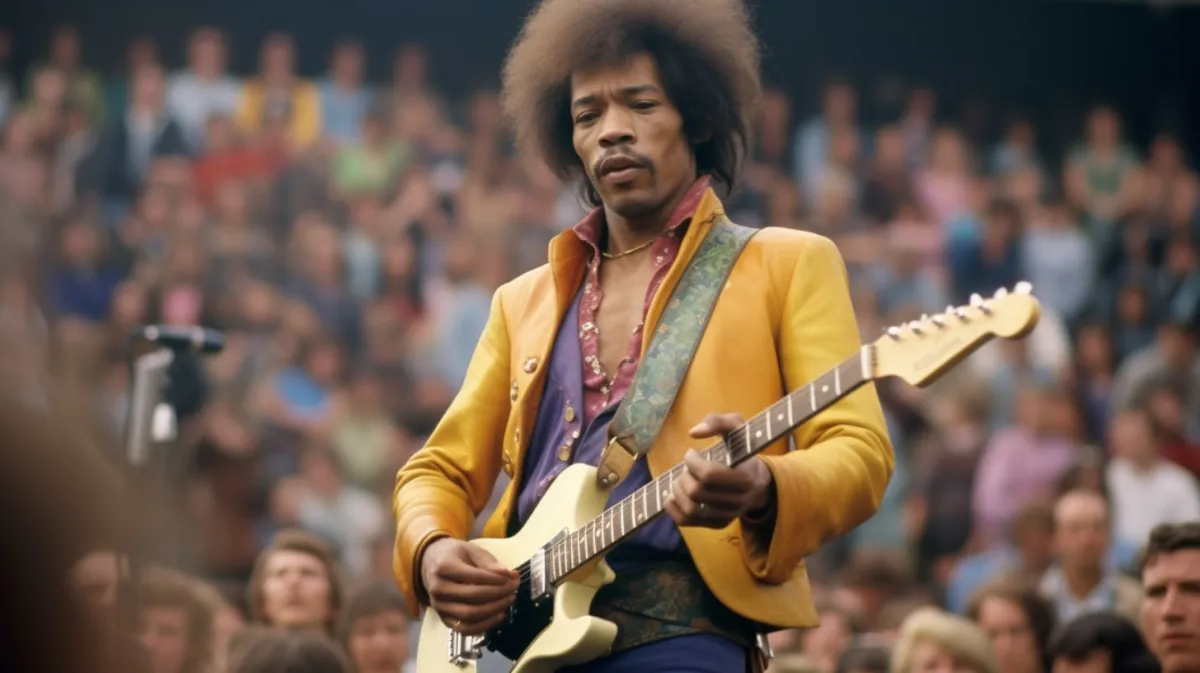 Photo: Jimi Hendrix, via songpier.com
American bandana manufacturers picked up the pattern and ran with it. Paisley bandanas became ubiquitous working-class accessories — worn by railroad workers, farmers, and eventually every subculture from cowboys to hip-hop artists. The red paisley bandana in particular developed its own complicated cultural life, appearing in contexts ranging from Rosie the Riveter imagery to gang identification codes.
Meanwhile, the pattern kept cycling back through high fashion. Ralph Lauren used it. Versace used it. Hermès built entire scarf collections around it. Every decade or so, paisley gets rediscovered by some corner of the fashion industry and declared newly relevant.
A Shape Without a Country
What's genuinely strange about paisley is that it belongs to everyone and no one. It has Persian roots, Indian refinement, Scottish manufacturing DNA, and American cultural ubiquity. It has no single agreed-upon name in its culture of origin. It has no fixed meaning. It has been royal, countercultural, corporate, and working-class, often within the same decade.
Fashion historians sometimes use paisley as a case study in how patterns outlive the contexts that created them. The Persian cypress tree, the Mughal garden, the Glasgow mill floor — none of those worlds exist anymore, but the shape keeps showing up, in $300 silk pocket squares and $4 gas station bandanas alike.
That kind of staying power doesn't happen by accident. Except, in this case, it sort of did.