The Storage Crisis That Accidentally Created Scotland's Liquid Gold
When Desperation Met Destiny
In 1750, Scottish distillers faced a crisis that would accidentally reshape global drinking culture forever. They were producing more whisky than ever, but they had run out of new oak barrels. What happened next wasn't planned—it was pure necessity.
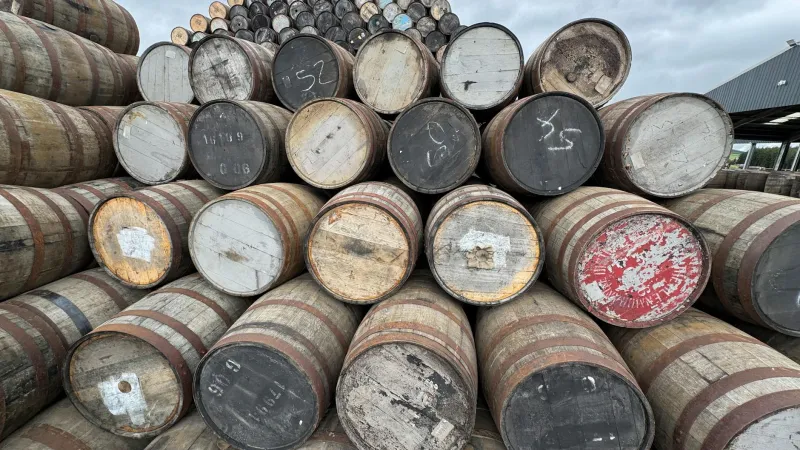
Facing mounting inventory and dwindling storage options, distillers began grabbing whatever barrels they could find. Spanish sherry casks, sitting empty in Scottish ports after delivering their sweet cargo, became the solution to an immediate problem. Nobody expected these used containers to transform their product—they just needed somewhere to put the whisky.
The Accidental Alchemy
What those distillers discovered by accident would become the foundation of a multi-billion-dollar industry. The residual sherry in those barrels didn't just store the whisky—it fundamentally changed it. The clear, harsh spirit that went into those casks emerged months later as something entirely different: amber-colored, smooth, and complex.
The transformation wasn't instant magic. Over time, the whisky pulled flavors from the sherry-soaked wood—vanilla, caramel, dried fruits, and spices that no distiller had ever intentionally added. The alcohol also extracted tannins from the oak itself, creating layers of flavor that made the spirit not just palatable, but genuinely sophisticated.
What started as a storage shortage had accidentally created the world's first aged whisky. But nobody called it that yet—they were just trying to manage their inventory.
From Accident to Tradition
By the 1800s, Scottish distillers realized they had stumbled onto something extraordinary. Customers began specifically requesting whisky that had been stored in those sherry casks. What began as a practical workaround was becoming a selling point.
The industry slowly codified what had been accidental. Distillers started deliberately seeking out used sherry barrels, paying premium prices for containers they had once accepted out of desperation. The aging process that had emerged from necessity became the standard—eventually enshrined in law.
Today, Scotch whisky must be aged in oak barrels for a minimum of three years. What's remarkable is that this legal requirement stems directly from that 18th-century storage crisis. An accident became tradition, tradition became regulation, and regulation became the global standard for quality spirits.
The American Connection
When Prohibition hit America in 1920, Scotch whisky's reputation as a sophisticated drink proved crucial to its survival. While American distilleries shuttered, Scottish producers found their aged, complex spirit perfectly suited to the speakeasy culture that emerged.
The sherry cask aging that had been born from Scottish desperation aligned perfectly with American aspirations during the Jazz Age. Drinking aged Scotch became a statement—it suggested worldliness, sophistication, and defiance of puritanical restrictions.
After Prohibition ended, that association stuck. American whiskey culture had been fundamentally altered by those accidentally-aged Scottish spirits. The idea that good whiskey should be aged, complex, and amber-colored became deeply embedded in American drinking culture.
The Modern Legacy
Today, the global whiskey industry treats barrel aging as sacred tradition. American bourbon distillers use new oak barrels, Japanese whisky makers experiment with various wood types, and craft distillers worldwide obsess over barrel selection—all because Scottish distillers once ran out of storage space.
The irony is profound: what we now consider the height of whisky sophistication—single malts aged in carefully selected casks, bottles selling for thousands of dollars, tasting notes describing "sherry influence"—all traces back to a moment when distillers grabbed whatever barrels they could find.
Walk into any American whiskey bar today, and you'll see the legacy of that 18th-century storage crisis. The amber liquid in those bottles, the complex flavors that justify premium prices, the entire culture of whiskey appreciation—it all stems from one desperate moment when Scottish distillers couldn't afford to be picky about their containers.
The Billion-Dollar Accident
The global whisky market is now worth over $60 billion annually, with aged expressions commanding the highest prices. Collectors pay tens of thousands for bottles that showcase decades of barrel aging. What began as a storage shortage has become the industry's most valuable process.
Every time someone orders a neat whisky and comments on its "beautiful amber color" or "complex sherry notes," they're celebrating an accident. The sophistication we associate with aged spirits—the ritual of nosing, the appreciation of color, the vocabulary of tasting notes—all grew from a moment when Scottish distillers simply ran out of new barrels and made do with what they had.
That desperate improvisation didn't just solve a storage problem—it accidentally created the template for luxury spirits that still dominates global drinking culture today.