Four Little Words That Built a Wedding Empire
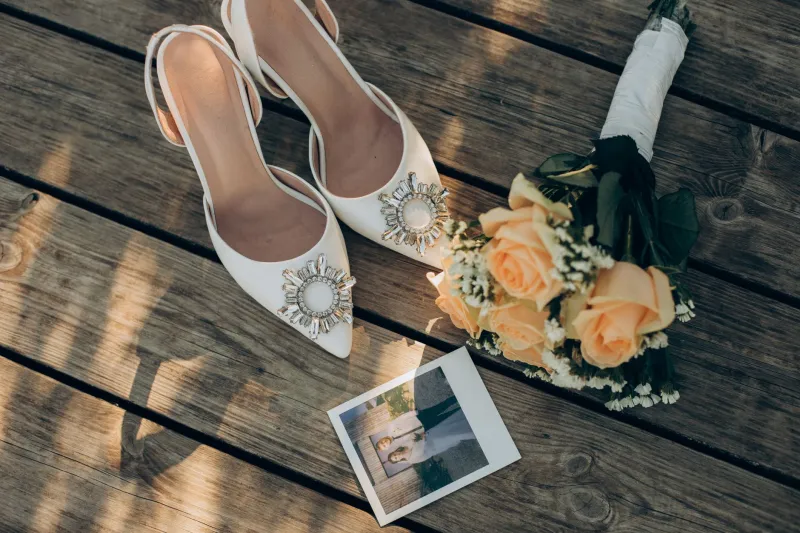
The Spell That Became a Sale
Every year, millions of American brides dutifully check off a list: something old, something new, something borrowed, something blue. They hunt for vintage jewelry, purchase new accessories, borrow heirloom pieces from family, and incorporate blue details into their wedding day look. What they don't realize is that they're participating in what was originally a medieval protection spell—one that has quietly generated billions of dollars for the wedding industry.
The rhyme that now drives countless shopping trips and gift purchases began as a deadly serious piece of folk magic, designed to protect brides from supernatural threats that people genuinely believed could destroy marriages, cause infertility, or even kill newlyweds on their wedding night.
Medieval Magic Meets Victorian Anxiety
The earliest versions of this tradition trace back to medieval Scotland and Northern England, where weddings were considered particularly vulnerable moments when evil spirits might attack. The original charm was more elaborate: "Something old, something new, something borrowed, something blue, and a silver sixpence in her shoe." Each element served a specific magical purpose.
 Photo: Northern England, via static.vecteezy.com
"Something old" connected the bride to her family's protective lineage and ancestral spirits. "Something new" represented the fresh start and new life she was entering. "Something borrowed" had to come from a happily married woman, transferring her good fortune to the new bride. "Something blue" invoked the Virgin Mary's protection—blue being her traditional color in Christian iconography. The silver sixpence was meant to ensure financial prosperity.
 Photo: Virgin Mary, via brandstruck.co
By the Victorian era, these beliefs had softened into "tradition" rather than genuine supernatural protection, but the anxiety remained. Victorian society was obsessed with proper procedures and social rituals, and weddings became increasingly elaborate affairs where following the correct customs was seen as essential for a successful marriage.
The Atlantic Crossing
When British immigrants brought these traditions to America in the 19th century, they found fertile ground. American society, still relatively young and hungry for established customs, eagerly adopted European wedding traditions as markers of sophistication and respectability. But it was the rise of American bridal magazines in the early 1900s that transformed a folk superstition into a commercial imperative.
Publications like "The Modern Bride" and "Bride's Magazine" didn't just mention the something old, new, borrowed, blue tradition—they turned it into a checklist. Articles began appearing with titles like "How to Find Your Perfect Something Blue" and "Something Borrowed: Etiquette for Modern Brides." What had been a flexible folk custom became a rigid requirement with specific rules about what counted and what didn't.
The Department Store Discovery
American retailers were quick to recognize the commercial potential. By the 1920s, department stores had entire sections dedicated to "bridal necessities," with displays specifically organized around the four-item tradition. Jewelry counters featured "something blue" sapphire pieces, vintage departments highlighted "something old" antique brooches, and gift sections promoted "something new" accessories designed specifically for brides.
The genius of the tradition from a retail perspective was its flexibility. Unlike other wedding requirements that might be fulfilled with a single purchase, the four-item rule created multiple buying opportunities across different price points and product categories. A bride might spend $20 on blue garter or $2,000 on sapphire earrings—both fulfilled the same traditional requirement.
The Borrowed Economy
Perhaps the most interesting commercial evolution involved "something borrowed." What began as a way to share good fortune between married women became a driver for an entire rental and lending market. Bridal shops began offering "heirloom" jewelry rental services. Wedding planners started maintaining inventories of "something borrowed" items for brides whose families lacked appropriate pieces.
Even more cleverly, the wedding industry began manufacturing new items designed to look old or borrowed. "Vintage-inspired" became a major category in bridal accessories, allowing brides to purchase new items that fulfilled the "something old" requirement while still being specifically chosen for their wedding.
The Modern Multiplication
Today's wedding industry has expanded the tradition far beyond its original four items. Wedding websites and magazines now feature articles about "creative ways" to incorporate each element, multiplying the purchasing opportunities. "Something blue" might be blue shoes, blue nail polish, blue flowers, blue ribbon, blue jewelry, and blue embroidery on the dress—all for the same bride.
Social media has amplified this trend, with brides posting photos of their "something old, new, borrowed, blue" collections, creating social pressure to make each element Instagram-worthy. What was once a simple protective charm has become a curated aesthetic experience that can easily cost hundreds or thousands of dollars.
The Irony of Tradition
The ultimate irony is that most modern brides have no idea they're participating in what was essentially a medieval insurance policy against supernatural attack. They follow the tradition because it feels timelessly romantic and properly bridal, not because they're worried about evil spirits disrupting their marriage.
Yet the tradition's commercial success comes precisely from that transformation—from genuine belief to aesthetic choice. When people believe in magic, they're satisfied with simple talismans. When they believe in tradition, they want perfect, photogenic, personalized versions of everything.
A Scottish superstition designed to protect medieval brides from supernatural threats has become one of the American wedding industry's most reliable profit centers, generating revenue across multiple product categories while feeling completely natural and non-commercial to the brides who participate. It's perhaps the most successful example of folk magic being transformed into market forces—and most people involved have no idea it happened.