How a Surgeon's Cleaning Fluid Convinced America It Had a Disease
How a Surgeon's Cleaning Fluid Convinced America It Had a Disease
Somewhere in your bathroom right now, there's probably a bottle of mouthwash. You use it without thinking much about it — a quick swish, a gargle, done. It's just part of the routine. But that routine didn't exist for most Americans until someone decided to invent a problem they could sell you the solution to.
The story starts not in a bathroom, but in a hospital.
A Formula Built for Operating Tables
In 1879, a chemist named Joseph Lawrence was working in St. Louis on a formula inspired by the antiseptic theories of British surgeon Joseph Lister. Lister had been pushing the idea that surgical infections could be dramatically reduced by keeping wounds clean — a concept that sounds obvious now but was genuinely revolutionary at the time. Lawrence developed a liquid antiseptic that surgeons could use to sterilize instruments and clean wounds. He named it Listerine, a nod to the man whose theories had inspired the whole project.
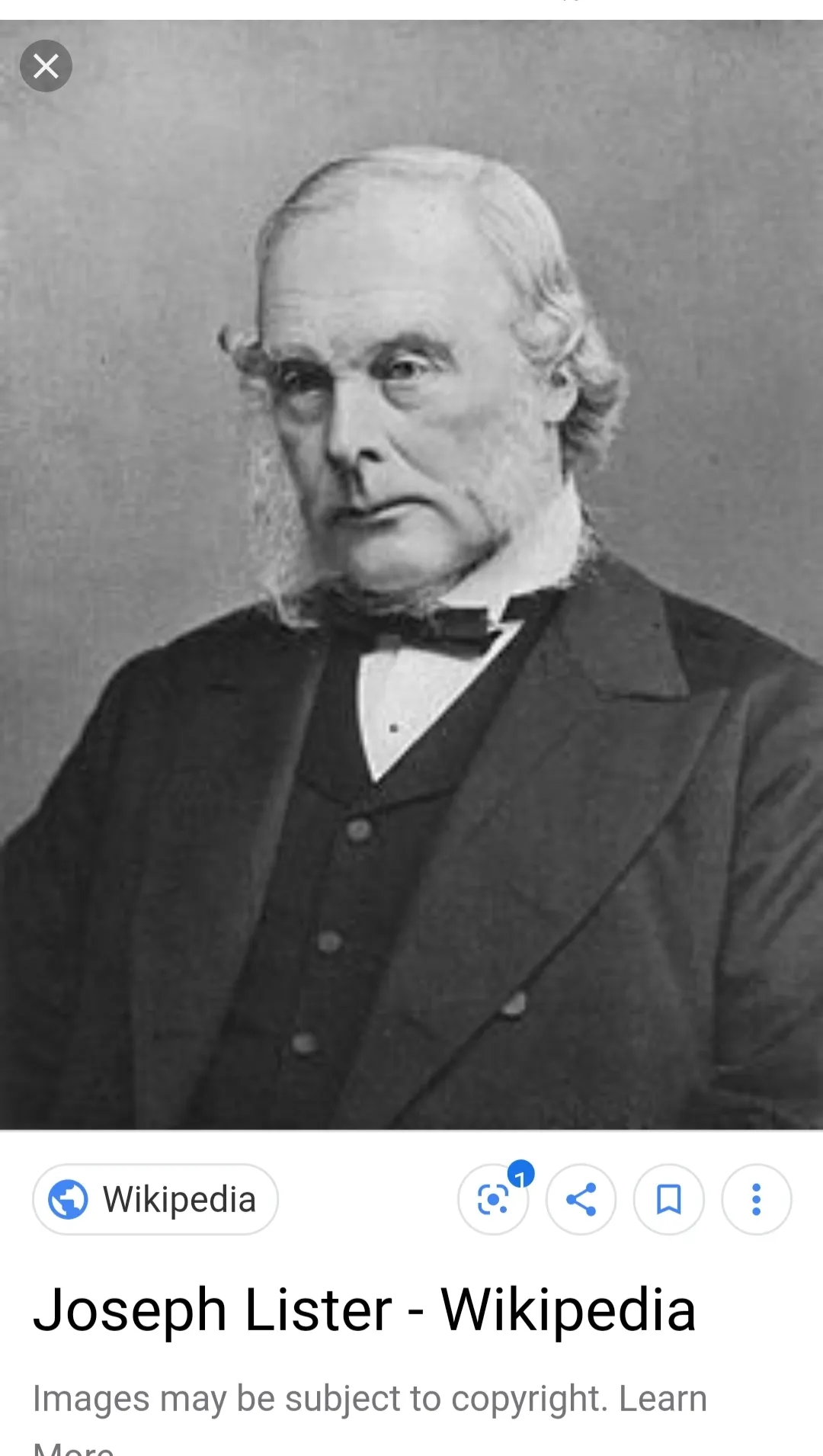 Photo: Joseph Lister, via theexasperatedhistorian.com
For the next few decades, that's more or less what Listerine was: a product for medical professionals. It got sold to dentists, who found it useful. It showed up in some pharmacies, marketed vaguely as a general-purpose antiseptic. At one point, the company even promoted it as a floor cleaner. The brand was alive, but it wasn't exactly thriving.
The problem was that nobody had a reason to buy it regularly. You don't restock a surgical antiseptic the way you restock toothpaste. The Lambert Pharmaceutical Company, which had licensed the formula from Lawrence, needed a new angle — and fast.
Giving a Name to Something Nobody Knew They Had
The pivot came in the early 1920s, and it was genuinely bold. The company's leadership — particularly Gerard Lambert, son of the founder — decided the path forward wasn't to sell Listerine as a medical product at all. It was to sell it as a solution to a social catastrophe that most Americans hadn't yet recognized they were living through.
The condition they chose to amplify was halitosis — an actual medical term for chronic bad breath, but one that had never really entered everyday American vocabulary. Lambert and his team dug up the word from an old British medical text and put it to work. The advertising campaign that followed was, by any measure, one of the most psychologically sophisticated ever run.
The ads didn't lead with the product. They led with the fear. Illustrations showed attractive people being quietly shunned at parties, left standing alone at dances, passed over for promotions — all because of a condition they couldn't detect in themselves. One famous series of ads featured a young woman named Edna who was "often a bridesmaid but never a bride," her romantic prospects ruined by a problem no one had the heart to tell her about. The tagline was devastating in its simplicity: Even your best friends won't tell you.
It worked. Sales went from roughly $115,000 a year in the early 1920s to more than $8 million by the end of the decade.
The Architecture of Manufactured Anxiety
What made the campaign so effective wasn't just the fear — it was the specific kind of fear. Lambert's team had identified something that social scientists would later call "the invisible flaw" problem. Bad breath was the perfect anxiety vehicle because you genuinely couldn't evaluate it yourself. You couldn't look in a mirror and check. You had to take someone else's word for it, which meant you could never fully rule it out.
The ads made that uncertainty feel unbearable. And then they offered relief. Listerine, used daily, would eliminate the threat. The ritual was simple, the reassurance was immediate, and the product was cheap enough that almost anyone could afford it. By framing oral hygiene as a daily defensive act rather than an occasional medical treatment, the company essentially invented a new category of consumer behavior.
Before Listerine's campaign, most Americans didn't think much about their breath in any systematic way. Dental hygiene was improving, but it was still largely about teeth, not about the invisible social signal your mouth was apparently sending across every dinner table and office in the country. After the campaign, breath became a thing you managed — proactively, consistently, with a specific product.
From Pharmacy Shelf to Cultural Default
The lasting legacy of that 1920s pivot isn't just that Listerine became a household name. It's that the campaign fundamentally changed how Americans related to their own bodies in social situations. The idea that ordinary biological realities — breath, body odor, skin — were problems to be solved with commercial products became one of the defining features of 20th-century American consumer culture. Listerine didn't invent that logic alone, but it was among the first to deploy it so precisely and so successfully.
Today, the mouthwash market in the United States is worth well over a billion dollars annually. There are dozens of brands, formulations for sensitive teeth, whitening variants, alcohol-free versions, travel sizes. The bathroom shelf that once held a bar of soap and maybe a tin of tooth powder now routinely stocks four or five separate oral hygiene products.
And underneath all of it, quietly, is the ghost of a surgical antiseptic that couldn't find its market — until someone decided the market was everyone, and the problem was something they'd been too polite to mention.