A Can of Broth and a Century of Feeling Better: The Medical Roots of America's Comfort Food
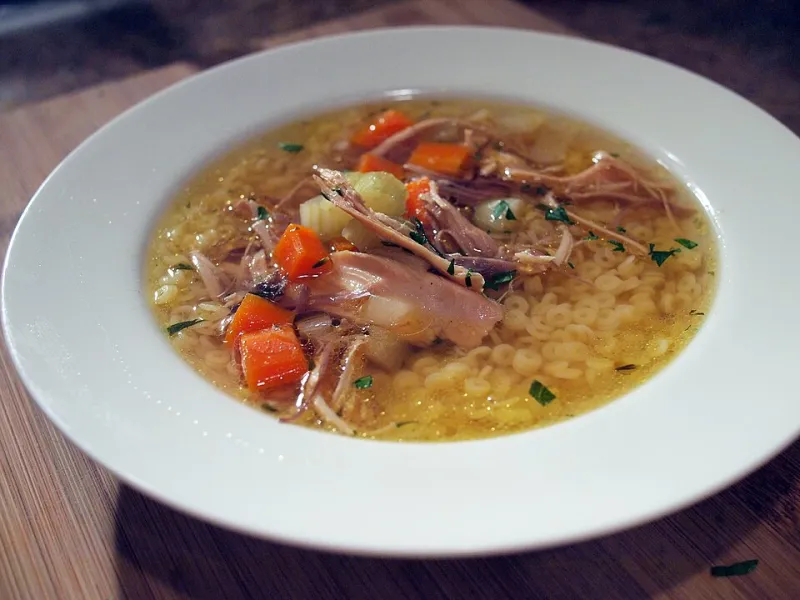
Photo: Hoyabird8, CC BY-SA 3.0, via Wikimedia Commons
A Can of Broth and a Century of Feeling Better: The Medical Roots of America's Comfort Food
You know the ritual. Your throat starts to scratch, your head gets heavy, and before you've even confirmed you're actually sick, your hand is already reaching for that familiar red-and-white can. It's automatic. Almost instinctive. But the reason chicken noodle soup feels like the right answer to almost everything — illness, sadness, homesickness, a bad Tuesday — isn't instinct at all. It's history. Specifically, it's a very deliberate piece of American marketing built on top of a very real medical tradition.
The soup was medicine long before it was comfort food.
The Prescription Nobody Questioned
For centuries across Europe and the Middle East, chicken broth was considered a legitimate therapeutic substance. Jewish communities in particular had long relied on what Yiddish speakers called goldene yoykh — golden broth — as a treatment for colds, fever, and general malaise. When Eastern European immigrants arrived in America in waves during the late 1800s and early 1900s, they brought that tradition with them. Grandmothers who had never set foot in a medical school were dispensing the same remedy that physicians were recommending in hospital wards.
And those physicians weren't wrong to recommend it. Early American hospitals, operating with limited pharmaceutical options, routinely served chicken-based broths to recovering patients. It was warm, digestible, hydrating, and calorie-dense without being taxing on a weakened stomach. Medical texts from the 19th century explicitly categorized chicken broth alongside tinctures and tonics. The soup wasn't a metaphor for healing. It was an actual treatment.
That clinical credibility would become enormously useful to one company in particular.
The Can That Changed Everything
Campbell's had been selling condensed soups since 1897, but for the first half of the 20th century, chicken noodle soup was just one item in a crowded lineup. The product existed. It sold reasonably well. But it hadn't yet become the soup — the one Americans associate with being taken care of.
That shift happened deliberately, in the postwar decades of the 1950s and 1960s, when Campbell's marketing team made a calculated decision to stop selling soup as a convenient food product and start selling it as an emotional experience.
The advertisements from that era are remarkable to look back on. They didn't emphasize flavor or nutrition in any clinical sense. Instead, they centered mothers. Warm kitchens. Sick children tucked under blankets. The imagery was specific and intentional: a can of Campbell's chicken noodle soup wasn't just lunch. It was the thing a good mother gave you. It was the physical expression of being loved and looked after.
The company leaned hard into the soup's pre-existing medical reputation without ever making a single medical claim. They didn't need to. Americans already half-believed that chicken soup had healing properties — the immigrant grandmothers had seen to that. Campbell's simply formalized that belief, attached it to their product, and repeated it across television commercials and magazine spreads for decades.
Nostalgia as an Ingredient
What made the campaign so durable was its understanding of how nostalgia actually works. You don't have to have a memory of something to feel nostalgic for it. Campbell's was selling Americans a version of maternal care that many of them had experienced in some form — a parent or grandparent making soup when they were sick — and connecting it to a product that could reproduce the emotional feeling of that memory on demand, in under five minutes, from a can.
This was genuinely new territory in food marketing. Campbell's wasn't the first company to sell convenience. But they may have been the first to successfully sell the feeling of something homemade while openly admitting the product came from a factory. The red-and-white can became a kind of emotional shortcut. Cracking it open didn't feel like giving up on cooking. It felt like participating in a tradition.
By the time Andy Warhol turned those cans into art in 1962, Campbell's chicken noodle soup had already completed its transformation from hospital staple to cultural icon. Warhol's paintings weren't ironic commentary on mass production so much as honest documentation of how thoroughly the product had embedded itself into American domestic life.
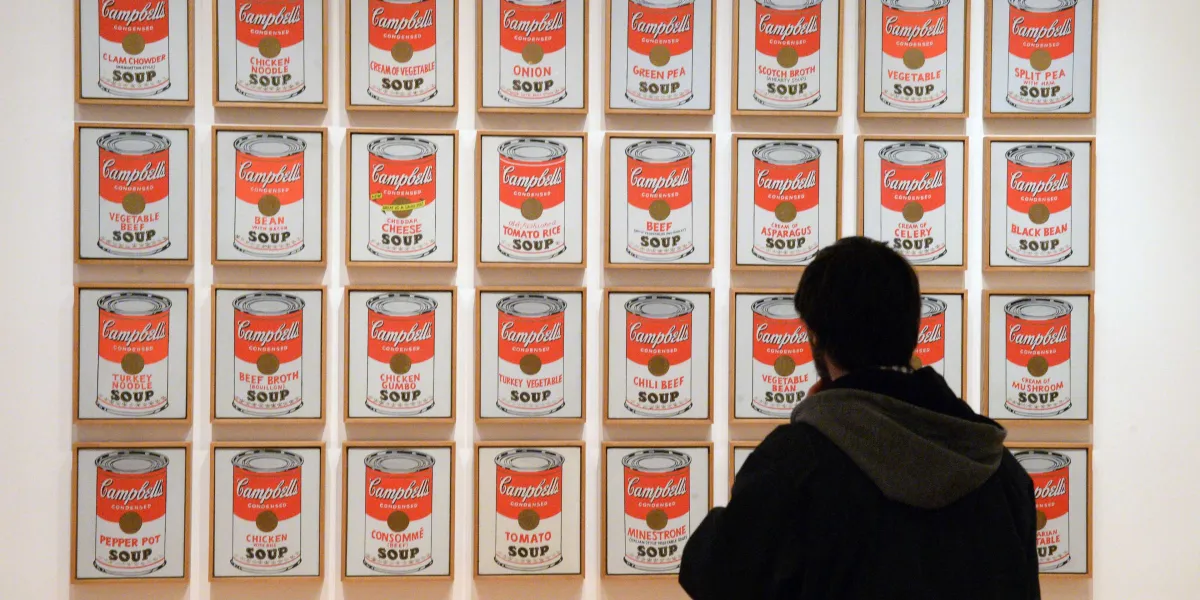 Photo: Andy Warhol, via res.cloudinary.com
Why the Medicine Still Matters
Here's the interesting thing: the science eventually caught up with the grandmothers. A study published in the journal Chest in 2000 found that chicken soup did appear to have mild anti-inflammatory properties that could ease upper respiratory symptoms. The researchers were careful not to overstate the findings, but the headline that chicken soup might actually help when you're sick circulated widely, and it landed on a public that was already primed to believe it.
That's the quiet power of the soup's origin story. The medical tradition that preceded Campbell's marketing wasn't invented by an advertising team — it was real. Hospitals really did prescribe it. Immigrant families really did treat it as medicine. The company simply recognized that a product with genuine therapeutic roots in American cultural memory was worth more than a product that merely tasted good.
Every time you reach for that can when you're under the weather, you're acting out a ritual that stretches back through mid-century television commercials, through immigrant kitchens on the Lower East Side, through 19th-century hospital wards, all the way to a very old and very human belief that warmth, salt, and a little bit of care can make almost anything feel more manageable.
 Photo: Lower East Side, via c2.staticflickr.com
The can is convenient. But the feeling it delivers is ancient.