The Parachute Silk That Dressed America's Athletes

Photo: vintage military surplus nylon parachute fabric 1940s athletic sportswear, via www.knipidee.nl
The Parachute Silk That Dressed America's Athletes
The next time you pull on a windbreaker, zip up a pair of athletic shorts, or pack a lightweight gym bag, take a second to think about where that fabric came from. The odds are good it's some form of nylon or nylon blend. It's everywhere in athletic wear — so common it barely registers as a material choice anymore. But nylon wasn't developed for sport. It wasn't developed for comfort, or style, or performance. It was developed to help soldiers survive jumping out of airplanes. And when the war ended, nobody quite knew what to do with it.
A Fabric Built for War
DuPont introduced nylon to the American public in 1938, initially as a replacement for silk in women's stockings. The debut was a sensation — nylon stockings sold out within hours at department stores across the country, and the material seemed destined for a glamorous consumer future.
Then World War II happened, and the US government had other ideas.
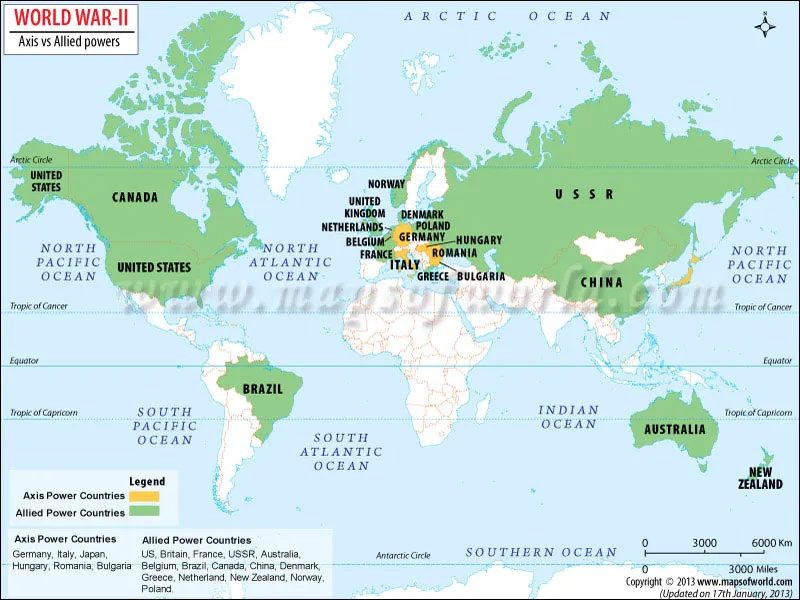 Photo: World War II, via www.mapsofworld.com
Starting in 1942, virtually all nylon production was redirected to the war effort. The military needed it desperately: nylon's tensile strength, light weight, and resistance to mildew made it ideal for parachute canopies, glider tow ropes, flak jacket components, and tire cords. DuPont shifted manufacturing almost entirely to military contracts. For the duration of the war, American women couldn't buy nylon stockings. They painted their legs with foundation and drew seam lines up the back with eyebrow pencil. That's how completely nylon had been absorbed into the war machine.
By 1945, the US military had accumulated enormous stockpiles of nylon goods and raw nylon fabric. The parachute contracts alone had produced material on a staggering scale. When the war ended abruptly, the government and its suppliers were left holding inventory that had been purpose-built for a conflict that was now over.
The Surplus Nobody Wanted
The immediate postwar years created a strange kind of material limbo. Nylon was available — in some cases, almost embarrassingly abundant — but its primary wartime applications had evaporated. Parachute manufacturers were retooling. Military contracts were canceled or scaled back. The fabric that had been among the most strategically important materials in the world suddenly needed a new job.
DuPont pivoted back toward consumer goods, and nylon stockings returned to shelves in 1945 to immediate hysteria — one Pittsburgh store sold out 13,000 pairs in a matter of hours. But stockings couldn't absorb the full volume of nylon production capacity that had been built up during the war years. The material needed more applications, and it needed them fast.
This is where the story takes its unexpected turn.
The Sportswear Experiment
In the late 1940s, a handful of small American sportswear manufacturers began quietly experimenting with military surplus nylon stock. The reasoning was practical rather than visionary: the fabric was available, it was cheap relative to natural alternatives, and its properties — lightweight, quick-drying, strong — were genuinely useful for athletic applications.
Swimwear was one of the first categories to shift. Wool had been the dominant material for swimsuits for decades, with all the problems that implies — it stretched, it sagged when wet, it took forever to dry, and it was genuinely uncomfortable against skin that was supposed to be moving through water. Nylon solved most of those problems immediately. It held its shape, shed water quickly, and moved with the body. By the early 1950s, nylon had largely displaced wool in competitive swimwear.
From there, the material crept into other athletic categories. Nylon windbreakers replaced heavier outerwear for outdoor sports. Nylon linings appeared in athletic jackets. Track pants, warm-up suits, and eventually shorts all began incorporating the fabric. Each adoption was driven by the same basic logic: nylon performed better than the natural fibers it replaced, and it was cost-effective to produce.
Nobody issued a manifesto about synthetic athletic wear. No single designer declared nylon the future of sport. It happened incrementally, manufacturer by manufacturer, category by category, driven by a surplus material looking for purpose.
When Performance Became a Brand Identity
By the 1960s and into the 1970s, the athletic apparel industry had fully internalized nylon as a foundation material, and something more interesting started happening: the synthetic origin of the fabric became a selling point rather than a compromise. Brands began marketing the engineered qualities of their materials — moisture management, aerodynamic weight, durability under stress — as evidence of scientific advancement.
This was a cultural shift as much as a commercial one. American athletic identity had always carried a strain of pragmatic toughness, but the postwar decades added a new layer: the idea that serious athletes used serious materials, and serious materials were increasingly synthetic. The natural fiber traditions of earlier sportswear quietly receded. Cotton was for casual. Nylon — and the performance synthetics that followed in its wake — was for people who meant business.
The brands that would eventually define American athletic culture, from early running gear companies to the sportswear giants of the 1980s and beyond, all built on a material infrastructure that nylon had established. When Nike, Adidas, and others began their explosive growth, they were expanding a category that surplus military fabric had quietly assembled in the decade after the war.
The Irony Woven Into Every Layer
There's something almost poetic about the trajectory. A material engineered to slow a soldier's descent from a blown aircraft — designed, at its most fundamental purpose, to save lives in the most extreme circumstances imaginable — ended up as the substrate for America's leisure culture. The same properties that made nylon ideal for a parachute canopy — light, strong, resistant to tearing — made it ideal for a swimmer's racing suit or a runner's jacket.
The American athletic apparel industry, with all its associations with peak performance, competitive drive, and physical ambition, was quietly built on the back of a government surplus problem. Nobody planned it that way. The fabric just needed somewhere to go.