Stitched for Survival: The Accidental Fashion Revolution Born in a California Gold Field
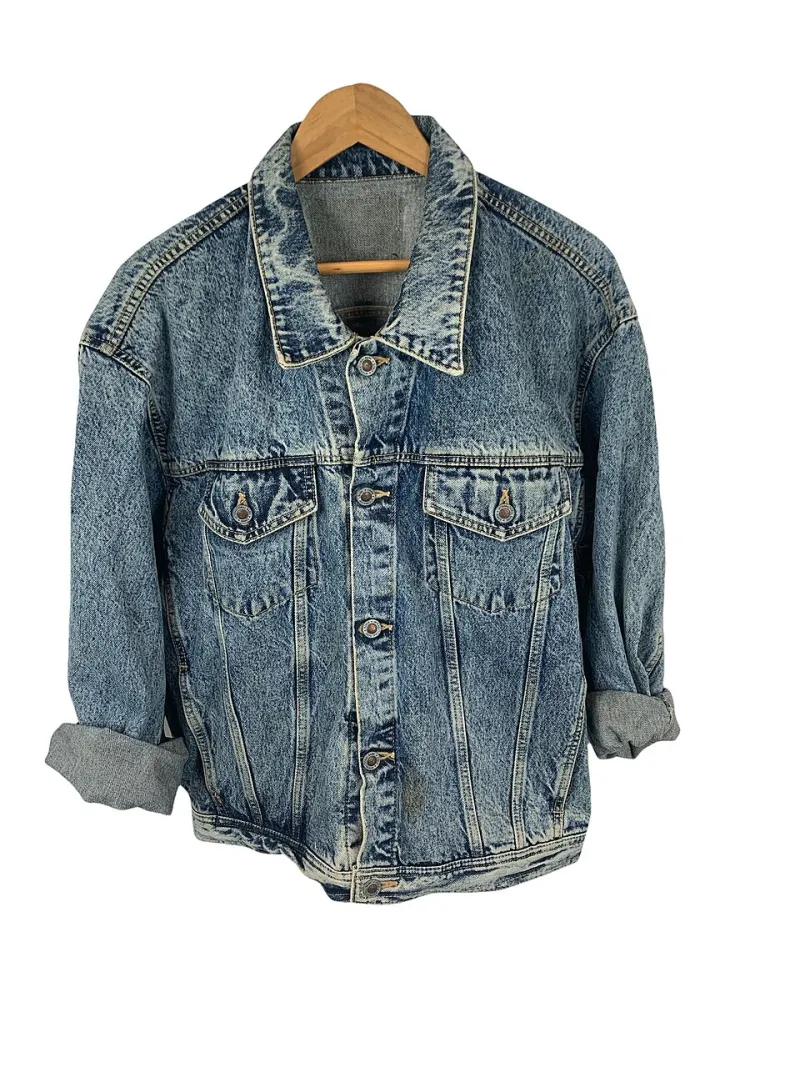
Photo: Vintic clothing, CC BY-SA 4.0, via Wikimedia Commons
The Pants That Were Never Supposed to Be Famous
There's a good chance you're wearing them right now. Or you wore them yesterday. Or they're folded in a drawer within ten feet of wherever you're sitting. Jeans are so embedded in American life that it feels almost strange to ask where they came from — like asking why air exists. But the story behind that five-pocket silhouette is wilder and more accidental than most people realize, and it starts not in a fashion house or a design studio, but in a muddy California mining camp sometime around 1873.
Levi Strauss had been in San Francisco since 1853, running a dry goods business that supplied canvas, thread, and fabric to the booming frontier economy. He wasn't a fashion visionary. He was a merchant solving logistics problems. His partner in the origin story was a Nevada tailor named Jacob Davis, who had been quietly making workwear for laborers when he noticed a pattern: the pockets kept failing. Miners and ranch hands were stuffing their trousers with heavy tools, ore samples, and whatever else needed carrying, and the stress points at the pocket corners simply gave out.
Davis had an idea — reinforce those corners with copper rivets, the same hardware used on horse blankets. It worked. His customers stopped complaining. Word spread. But Davis lacked the capital to patent the design, so he wrote to Strauss proposing a partnership. On May 20, 1873, they received U.S. Patent No. 139,121 for "Improvement in Fastening Pocket-Openings." That date is now officially recognized as the birthday of the blue jean.
Built for Breaking, Not for Wearing Out
The fabric itself had a history before the rivets arrived. Denim — derived from the French phrase serge de Nîmes, referencing a sturdy cloth woven in the southern French city of Nîmes — had been circulating in American markets for decades. It was cheap, dense, and practically indestructible under hard use. Strauss initially used a heavy brown canvas duck cloth before switching to indigo-dyed denim, which became the signature look. That deep blue wasn't an aesthetic choice at the start — indigo dye was simply one of the most available and colorfast options on the market.
The resulting garment was engineered to absorb punishment. Double-stitched seams. A cinch back strap for sizing adjustments before belt loops existed. That orange thread stitching that still shows up on jeans today? Originally chosen because it matched the copper rivets, not because anyone thought it looked cool.
For the first several decades, these pants lived entirely in the working world. Farmers wore them. Railroad workers wore them. Cowboys wore them because they held up in the saddle. The idea that someone might choose to wear denim recreationally would have seemed bizarre to the people who first put them on.
The Moment Everything Shifted
The cultural leap happened gradually, and then all at once. By the 1930s, dude ranches — vacation destinations where Easterners could play cowboy for a week — had introduced a wealthier, more leisured class to denim. They went home with their jeans and kept wearing them on weekends. The garment was picking up a new meaning: rugged freedom, the open West, something that felt authentically American in a way that tailored trousers simply didn't.
World War II accelerated things. American soldiers stationed overseas wore their jeans off-duty, and Europeans encountered the fabric as a symbol of U.S. culture — relaxed, powerful, a little rebellious. When Hollywood leaned into the Western genre in the late 1940s and '50s, the image crystallized. James Dean in Rebel Without a Cause in 1955 didn't just make jeans look good. He made them look like a statement.
Suddenly, the pants that miners had worn to keep their pockets intact were being banned in schools across the country as symbols of juvenile delinquency. That's quite a journey for a piece of workwear.
From Countercultural Symbol to Global Default
The 1960s and '70s pushed denim further into territory its inventors couldn't have imagined. The counterculture adopted it as anti-establishment uniform. Customization — patches, embroidery, bell-bottom flares — turned mass-produced workwear into personal expression. Then came the designer denim era of the late 1970s, when Calvin Klein and Gloria Vanderbilt slapped their names on back pockets and charged prices that would have seemed insane to Jacob Davis.
That transition — from the cheapest practical workwear available to a luxury status marker — is one of the more remarkable flip-flops in fashion history. The same fabric that signaled you worked with your hands was now signaling you could afford not to.
By the 1990s and 2000s, denim had completed its full democratization. It was everywhere, across every price point, every demographic, every occasion. Casual Fridays brought it into offices. Fashion weeks brought it onto runways. A pair of Levi's 501s remained almost unchanged from the 1873 original while simultaneously sitting alongside $400 Japanese selvedge alternatives at boutiques.
Why the Rivet Still Matters
What's remarkable about denim's staying power isn't just that it survived — it's that it never really needed to reinvent itself. The core design Strauss and Davis patented has remained largely intact for over 150 years. Five pockets. Riveted stress points. That orange topstitch. The silhouette has shifted with every decade, but the DNA is the same.
There's something almost poetic about the fact that the most democratic garment in American fashion history started as a purely functional fix for a pocket problem. Nobody sat down and designed jeans to cross class lines, challenge dress codes, or become a global uniform. They were just trying to stop miners from losing their tools.
The copper rivet did the rest.