The Burr That Wouldn't Let Go: How One Frustrated Dog Walk Spawned Fashion's Most Divisive Fastener
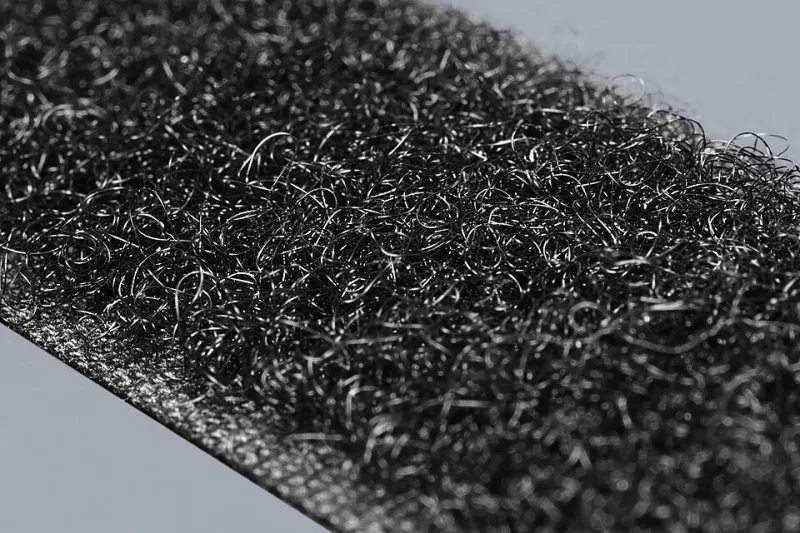
Photo: Alexander Klink, CC BY 3.0, via Wikimedia Commons
The Hike That Changed Closures Forever
George de Mestral was not looking for a billion-dollar idea. He was just trying to get the burrs off his dog.
The year was 1941. De Mestral, a Swiss electrical engineer with a habit of examining things more closely than most people bothered to, had returned from a hunting trip in the Alps with his Irish Pointer. Both of them were covered in the seed pods of the burdock plant — those small, spiky spheres that cling to fabric and fur with an almost personal level of stubbornness. Most people would have picked them off and moved on. De Mestral picked them off and then put one under a microscope.
What he saw was a system. Each burr was covered in tiny hooks — hundreds of them — designed by evolution to catch on the looping fibers of animal fur (or wool socks) and hitch a ride to new territory. It was elegant, simple, and completely mechanical. No adhesive. No heat. Just hooks and loops, working together.
De Mestral spent the next decade figuring out how to replicate it.
From Backyard Curiosity to Industrial Problem
The concept was straightforward. The execution was not. De Mestral's initial attempts to recreate the hook-and-loop system using cotton failed — the hooks didn't hold their shape reliably enough under repeated use. He eventually found his answer in nylon, which had become commercially available in the postwar years and could be woven and then heat-treated to form stiff, resilient hooks.
A French weaver helped him develop the looped side of the equation. The hook side required specialized loom modifications that took years to get right. By 1955, de Mestral had a working product. He filed for a patent and coined the name by combining the French words velours (velvet) and crochet (hook). Velcro.
He was convinced he had invented something that would replace the zipper. The fashion industry disagreed.
The Rejection That Took a Decade
Early response from clothing manufacturers was, to put it charitably, unenthusiastic. The fashion world in the late 1950s was not looking for a new fastener. Zippers were established. Buttons were traditional. Velcro looked utilitarian, sounded scratchy, and had a tendency to collect lint with the same enthusiasm it applied to everything else. High-end designers wanted nothing to do with it.
What saved the invention was the same thing that saves a lot of rejected technologies: a different customer entirely.
NASA adopted Velcro in the early 1960s as a practical solution to the unique challenges of operating in zero gravity, where buttons become nearly impossible and zippers can be awkward in pressurized suits. Astronauts used Velcro to secure equipment, close pockets, and attach objects to surfaces inside capsules. When the space program became a cultural phenomenon, Velcro got a considerable image upgrade. If it was good enough for the Moon, maybe it was good enough for a jacket.
The U.S. military followed, integrating hook-and-loop closures into gear, boots, and flight suits where reliability and speed mattered more than aesthetics. Medical device manufacturers found it useful for blood pressure cuffs and orthopedic braces. Ski boot companies adopted it. The outdoor and sporting goods industries embraced it.
The Children's Shoe Moment
The moment Velcro truly entered the American mainstream had nothing to do with astronauts or soldiers. It had to do with kids who couldn't tie their shoes.
Through the 1970s and '80s, children's footwear began incorporating Velcro straps as an alternative to laces, and the effect on American childhood was immediate and practical. Kids could fasten their own shoes earlier. Morning routines got easier. The design spread to adaptive footwear for elderly and disabled users for the same reason — independence, speed, no fine motor skill required.
For an entire generation of Americans who grew up in the 1980s, the sound of Velcro ripping open is inseparable from childhood — sneakers, lunch boxes, windbreakers, and the scratchy wall hangings in elementary school classrooms where paper letters stuck to felt boards. Velcro had become ambient.
The Fastener Fashion Still Can't Agree On
And yet, the fashion world's original skepticism never fully disappeared. Today, Velcro exists in a strange split reality. In performance wear, athletic gear, tactical clothing, and footwear, it's completely normalized — Nike, New Balance, and countless other brands use it without apology. In streetwear, it periodically resurfaces as a deliberate utilitarian statement, the kind of functional detail that signals you're not trying too hard.
But in formal wear and luxury fashion, the resistance persists. High-end designers tend to treat Velcro the way fine restaurants treat ketchup — technically available, but not something they're going to put on the menu. The ripping sound alone has been cited as a deal-breaker in quiet, refined environments. There's a reason you don't see Velcro on a bespoke suit.
The material also has a practical limitation that its inventor didn't fully anticipate: it wears out. The hooks flatten over time, especially when repeatedly exposed to laundry cycles, and a tired Velcro closure is one of the more frustrating objects in domestic life — still slightly sticky, never quite reliable. The burdock plant, for what it's worth, solved this problem through evolution by simply making new burrs.
What a Burr Leaves Behind
De Mestral died in 1990, having made a comfortable fortune from his invention and watched it spread into applications he never imagined. The original Velcro patent expired in 1978, opening the market to competitors and driving prices down enough that the material became genuinely ubiquitous.
Today, global hook-and-loop fastener production runs into the billions of dollars annually. The technology shows up in hospitals, spacecraft, combat gear, kindergartens, and the occasional avant-garde fashion collection where someone has decided that industrial utility is the point.
All because a Swiss engineer came home from a hike, looked at something annoying under a microscope, and asked a question most people never think to ask: how does that actually work?
It turns out the answer was worth a lot more than the burdock plant ever got credit for.