The Tiny Cut That Speaks Volumes: How a Military Tailoring Shortcut Became Fashion's Most Subtle Status Signal
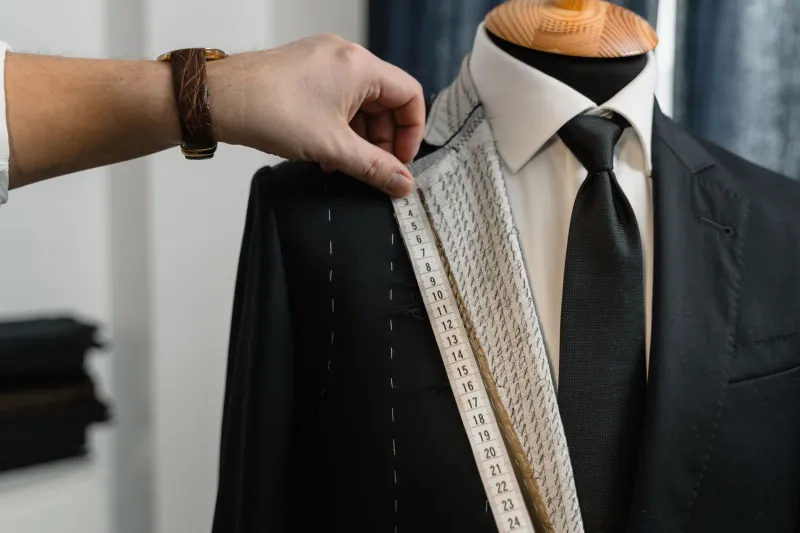
The Detail Hiding in Plain Sight
Look at any suit jacket hanging in any American closet, and you'll find it: a small, angular cut where the lapel meets the collar. Most people assume it's purely decorative, like a buttonhole or pocket square. They're wrong. That tiny notch carries more social and historical weight than almost any other detail in menswear—and most men wearing it have no idea.
This is the story of how a practical tailoring solution became fashion's most subtle class signal, and why it still matters in boardrooms and courtrooms across America today.
Born from Battlefield Necessity
The lapel notch originated in early 19th-century British military uniforms, but not for the reasons you might expect. Military tailors discovered that the stress point where a jacket's collar met its front facing was prone to tearing—especially during the physical demands of military life.
The solution was elegantly simple: instead of trying to sew two pieces of fabric together at a sharp angle (which created weak points), tailors cut a small notch that allowed the pieces to overlap naturally. This distributed stress across a larger area and prevented the catastrophic tears that could leave an officer looking unprofessional in front of his troops.
Class Signals Sewn Into Seams
As military officers returned to civilian life, they brought their superior tailoring with them. But here's where the story gets interesting: different military ranks had developed different notch styles, and these distinctions carried over into civilian fashion.
The "notched lapel"—a simple V-shaped cut—became associated with everyday business wear. The "peaked lapel"—where the notch points upward—remained the domain of formal evening wear and higher-ranking officers. The "shawl lapel"—with no notch at all—became the mark of smoking jackets and dinner wear.
These weren't arbitrary fashion choices. They were a coded language that allowed men to signal their military background, social class, and level of formality without saying a word.
America Breaks the Code
When American ready-to-wear manufacturers began mass-producing suits in the early 20th century, they faced a dilemma. The European class signals embedded in lapel styles didn't translate directly to American democratic ideals, but they couldn't ignore the psychological power these details held.
The solution, developed primarily by American menswear designers in the 1950s, was brilliant in its simplicity: standardize the notched lapel for nearly all business suits. This flattened the most obvious class distinctions while maintaining the sophisticated appearance that the notch provided.
The Subtle Rebellion
But complete standardization was impossible. American tailors and designers found ways to embed status signals into the notch itself—the angle of the cut, the width of the opening, the relationship between the notch and the jacket's button stance.
A shallow, narrow notch suggested machine production and lower price points. A deep, wide notch indicated hand-tailoring and premium construction. The angle could be sharp and modern or soft and traditional. These micro-variations became a secret language among those who knew how to read them.
Why It Still Matters in Modern America
In today's increasingly casual workplace, the lapel notch has become even more significant because it's one of the few remaining details that still communicates formality and attention to quality. When someone does wear a suit, the notch is often the first thing that signals whether they understand professional dress codes.
Lawyers, investment bankers, and other professionals who still live in suit-wearing cultures can often identify each other's tailors, price points, and even career levels based solely on lapel construction. It's a form of professional semaphore that operates below the conscious awareness of most people.
The Digital Age Paradox
Interestingly, as American workplaces have become more casual, the lapel notch has become more important, not less. When suits are worn less frequently, each wearing carries more weight. The quality signals embedded in details like the lapel notch become more concentrated and more noticed by those who understand them.
This has created an interesting paradox: in an era when most Americans rarely wear suits, the subtle status signals within suit construction have become more powerful among those who still do.
Reading the Room (and the Lapel)
The next time you're in a business meeting, courtroom, or formal event, pay attention to the lapels around you. The shallow, machine-stitched notches of department store suits. The deep, hand-padded notches of bespoke tailoring. The slightly outdated angles that suggest vintage pieces or budget alterations.
You're looking at a visual conversation that's been happening for over 200 years—a dialogue about class, profession, attention to detail, and understanding of social codes. Most participants don't even know they're speaking this language, but they're fluent nonetheless.
The Enduring Power of Invisible Details
What makes the lapel notch so fascinating is how it embodies a larger truth about American culture: we've democratized access to the symbols of status while maintaining the subtle hierarchies within them. Anyone can buy a suit with a lapel notch, but not everyone understands what that notch is quietly saying about them.
In a country that officially rejects class distinctions, we've created incredibly sophisticated ways to maintain them through details so small that most people never consciously notice them. The lapel notch isn't just a tailoring technique—it's a perfect metaphor for how status operates in modern America: hidden in plain sight, powerful in its subtlety, and more influential than we'd like to admit.