When Shopping Became Silent: The Crisis That Killed Haggling Forever
The Day America Stopped Talking About Money
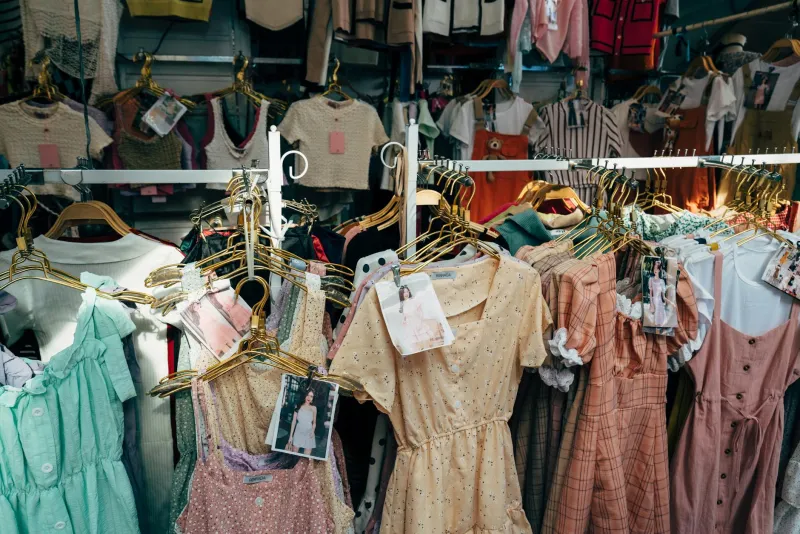
Walk into any clothing store today and you'll see them everywhere: small paper rectangles dangling from sleeves, tucked into collars, pinned to waistbands. Price tags are so ubiquitous that most shoppers barely register their existence. But these seemingly insignificant pieces of paper represent one of the most dramatic shifts in American commerce—the moment when shopping became a silent transaction.
Before the 1870s, buying clothes was a conversation. Every garment's price was negotiable, determined through a back-and-forth between customer and salesperson. Stores employed skilled negotiators who could size up a customer's wealth and adjust prices accordingly. A well-dressed banker might pay double what a factory worker paid for the same shirt, and both transactions were considered perfectly normal.
When the System Broke Down
The turning point came during the retail expansion boom of the late 1860s. Department stores like Macy's in New York and Marshall Field's in Chicago were growing at unprecedented rates, hiring dozens of new salespeople every month to handle increasing foot traffic. The traditional apprenticeship model—where experienced salespeople trained newcomers in the art of price negotiation—simply couldn't keep pace.
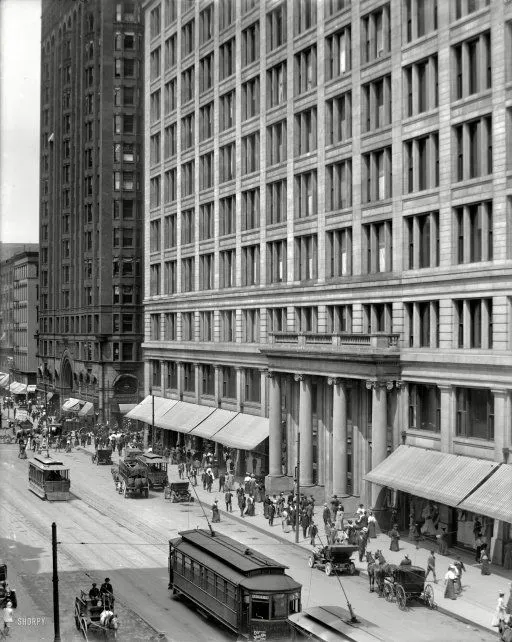 Photo: Marshall Field's, via s-media-cache-ak0.pinimg.com
Store owners faced a nightmare scenario: inexperienced staff were either charging too little (cutting into profits) or too much (driving away customers). Worse, different salespeople were quoting wildly different prices for identical items, creating customer complaints and internal chaos. The elegant dance of retail negotiation had become a free-for-all.
John Wanamaker, owner of Philadelphia's Grand Depot, later described the crisis in his memoirs: "We had clerks asking me hourly what to charge for common items. Our pricing had become more art than business, and art doesn't scale."
The Paper Solution
The solution emerged from pure logistics necessity. In 1870, Wanamaker's store began attaching small paper labels to merchandise with fixed prices written in ink. The initial goal wasn't to revolutionize shopping—it was simply to reduce the constant interruptions from confused staff.
The psychological impact was immediate and unexpected. Customers who had spent generations haggling over every purchase suddenly found themselves in a take-it-or-leave-it environment. The price tag transferred all pricing power from the sales floor to store management, eliminating the personal relationship that had defined retail for centuries.
Other retailers quickly copied the system, not because they loved the idea, but because it solved their staffing problems overnight. A store could now hire anyone who could operate a cash register, regardless of their negotiation skills or product knowledge.
The Death of the Deal
Within a decade, fixed pricing had spread throughout American retail. The change fundamentally altered the shopping experience in ways that still resonate today. Customers who once saw every purchase as a personal victory or defeat now faced uniform, non-negotiable prices.
The shift also created new forms of consumer psychology. Shopping became less about human interaction and more about individual decision-making. The modern concept of "browsing"—wandering through a store without engaging with staff—became possible only after price tags eliminated the need for constant negotiation.
Interestingly, the change wasn't universally welcomed. Many customers missed the personal attention and flexibility of the old system. Some stores tried to maintain hybrid approaches, using price tags as starting points for negotiation, but economic pressure eventually forced most retailers to adopt fixed pricing completely.
The Hidden Revolution
Today's shoppers take fixed pricing so much for granted that the idea of negotiating for a sweater seems almost absurd. But that tiny paper tag represents a massive transfer of power from individual salespeople to corporate pricing strategies. It enabled the rise of chain stores, standardized retail experiences, and ultimately, the modern shopping mall.
The price tag also made possible many retail innovations we now consider essential: sale events, clearance sections, and price comparison shopping. None of these concepts could exist in a world where every price was individually negotiated.
The Legacy in Your Closet
Next time you clip a price tag from a new purchase, consider what that small action represents. You're participating in a retail system that was essentially invented by accident, born from a staffing crisis at 19th-century department stores. That tiny piece of paper carries the weight of a commercial revolution—the moment when American shopping became standardized, impersonal, and ultimately, modern.
The price tag didn't just change how we buy clothes; it changed how we think about value, fairness, and the relationship between buyer and seller. In solving a simple logistical problem, retailers accidentally created the foundation of contemporary consumer culture.