You've Been Tying Your Shoes the Same Way Since 1900. Here's Why.
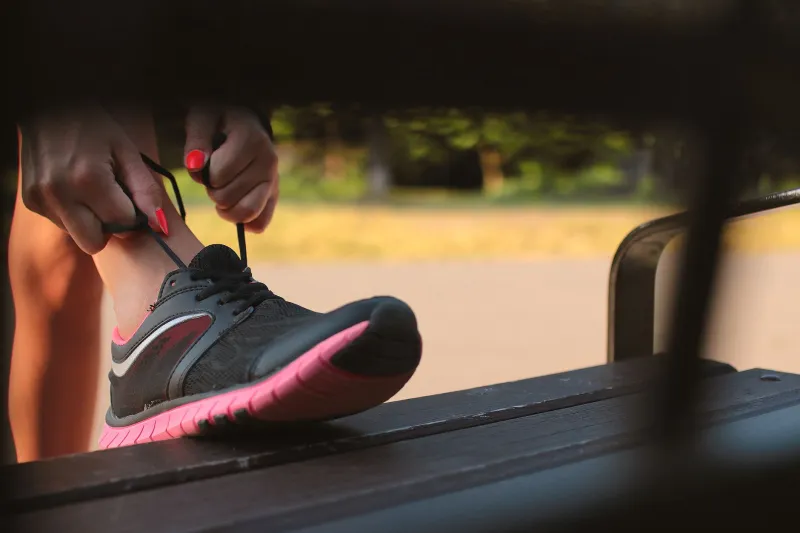
At some point in early childhood, someone sat down with you and a shoe and walked you through a small ritual that you've repeated thousands of times since. Loop, cross, tuck, pull. Or maybe it was bunny ears. Either way, you learned a specific sequence of hand movements, and you've never really questioned it. Almost nobody does.
But here's the thing: the knot you tie every morning—the standard bow that holds your sneakers on—is a relatively modern invention. For most of human history, people fastened their footwear in entirely different ways. The version you know became dominant only in the early 20th century, and the reason it spread so widely has less to do with the knot itself than with a massive, coordinated effort to put the same shoes on millions of children at the same time.
Shoes Used to Be a Different Problem Entirely
For most of recorded history, the concept of "tying" shoes didn't really apply. Ancient sandals were bound to the foot with straps that wrapped around the ankle. Medieval boots were fastened with buckles, buttons, or simple lacing threaded through metal eyelets and tied at the top in a basic overhand knot—functional, but not the double-loop bow anyone would recognize today.
The laced shoe as we know it—with two parallel rows of eyelets running up the front—became widespread in Europe during the early 1800s. But even then, the specific method for finishing the lacing was informal and varied wildly by region and personal habit. Some people tied simple knots. Others looped the lace around the ankle. Many relied on a single loop rather than a finished bow. There was no standard.
In the United States through the mid-1800s, most working adults wore boots rather than laced shoes, and those boots were typically pulled on rather than tied. The idea of a specific, teachable tying method for children simply hadn't become necessary yet.
The Shoe That Changed Everything
Two things happened in the late 19th century that made shoelace tying suddenly important. First, low-cut laced shoes—what we'd now recognize as Oxford-style shoes—became fashionable and affordable for middle-class Americans. Second, compulsory public education expanded dramatically, putting millions of children into schools where they were expected to arrive neatly dressed and self-sufficient.
This created a practical crisis for teachers. Children were showing up with loosely knotted, constantly untied shoes, tripping in hallways, and interrupting class while adults re-tied their laces. Something needed to be standardized.
Around the same period, the physical education movement was gaining momentum in American and British schools. PE instructors and child development advocates were deeply invested in teaching children motor skills in systematic, repeatable ways. Tying shoes became part of that curriculum—not just a life skill, but a developmental milestone that needed a consistent instructional method.
The Victorian Knot Goes to School
The specific bow knot that became standard—cross the laces, form a loop, wrap the other lace around it, push through, pull tight—had been documented in various forms throughout the 1800s in sailing manuals and needlework guides. It's a variation of what knot-makers call a "reef bow," and it's genuinely secure when tied correctly. But it wasn't universally known or taught until educators decided it needed to be.
By the early 1900s, American and British schools had begun incorporating shoe-tying into early childhood education with a standardized method. The "loop swoop and pull" version—where you form one loop first and wrap the lace around it—was particularly popular in American classrooms because it was easier to break into discrete, demonstrable steps. Teachers could show each stage slowly, children could mimic it, and the result was the same bow every time.
The "bunny ears" variation, where you form two loops and knot them together, emerged as an alternative teaching method around the same era. It was slower but more intuitive for very young children who struggled with the coordination required for the standard method. Both approaches produce functionally identical knots—just arrived at differently.
Why One Knot Won
The standardization of shoe-tying didn't happen through any single decree or published guide. It spread through the informal networks of teachers, childcare manuals, and eventually, early 20th-century parenting books that treated shoe-tying as a developmental benchmark alongside reading readiness and basic arithmetic.
By the 1920s and 1930s, American parents were actively coaching their children toward the same knot that their own teachers had taught them. The method became self-replicating. Each generation taught the next the same sequence of movements without ever asking where it came from or whether another approach might work just as well.
What's particularly interesting is that the knot most people tie is actually slightly wrong—or at least structurally weaker than it could be. The standard bow lies horizontally across the shoe when tied correctly, but many people habitually cross their laces in the wrong direction during the first step, producing a "granny bow" that sits vertically and comes undone far more easily. Ian Fieggen, an Australian who runs a website dedicated entirely to shoelace knots, has spent years documenting this phenomenon and estimates that a significant portion of people tie a structurally inferior bow without realizing it.
A Knot That Became Invisible
There's a reason nobody questions how they tie their shoes. The method was absorbed so early in life, repeated so automatically, and never presented as a choice that it became genuinely invisible—just something the hands do. But underneath that automatic gesture is a surprisingly specific piece of cultural transmission: a Victorian-era knot, standardized by early 20th-century educators, passed down through generations of American classrooms without a single student ever asking why.
Next time you reach down to tie your laces, take a second to notice what your hands are actually doing. You're performing a small ritual that was designed over a century ago by people who were simply trying to keep children from tripping in hallways. It worked. It stuck. And now it's just how shoes get tied.